
Caudalie
Vinoperfect Dark Spot Niacinamide Moisturizer
moisturizer · 50 ml · 29 ingredients
- No essential oils
- No plant oils, butters, fatty esters and polysorbates
- With niacinamide
- With squalane
Full ingredient lists, decoded. Free-from facts on every product.
Shop by need · Fungal acne
413 products in our library pass every rule for fungal acne (malassezia): with no plant oils, butters, fatty esters and polysorbates. The best of each type are below, picked by code and updated November 6, 2026.
The catch: 11 of the 28 products below contain silicones; every card shows its flags, so skip those if you avoid it.
If you have fungal acne (Malassezia), the label tells you more than the front of the box. Look for helpful actives such as salicylic acid, zinc pyrithione, ketoconazole, niacinamide and squalane, and remember that ingredients are listed from highest amount to lowest, down to about 1%. Every product on this page was picked from its full ingredient list, the standard INCI list printed on the package.
Caudalie
moisturizer · 50 ml · 29 ingredients

Anua
moisturizer · 60 ml · 48 ingredients

Balea
moisturizer · 50 ml · 21 ingredients

CeraVe
moisturizer · 48 g · 31 ingredients

CeraVe
cleanser · 473 ml · 23 ingredients

CeraVe
cleanser · 473 ml · 20 ingredients

Nivea
cleanser · 150 ml · 16 ingredients

La Roche-Posay
cleanser · 12 g · 24 ingredients

Skin1004
sunscreen · 50 ml · 42 ingredients

Balea
sunscreen · 50 ml · 30 ingredients

Eucerin Sun
sunscreen · 200 ml · 19 ingredients

L'Oréal Paris
sunscreen · 30 ml · 27 ingredients

Anua
serum · 30 ml · 35 ingredients

Balea
serum · 30 ml · 13 ingredients

Balea
serum · 30 ml · 16 ingredients

Catrice
serum · 30 ml · 11 ingredients

Isana
acne treatment · 14 ingredients

Bioderma
acne treatment · 30 ml · 25 ingredients
Bioderma
acne treatment · 30 ml · 25 ingredients

Neutrogena Hydro Boost
acne treatment · 50 ml · 21 ingredients

Nivea
body wash · 150 ml · 10 ingredients

Neutrogena
body wash · 200 ml · 18 ingredients

Vichy
body wash · 200 ml · 16 ingredients
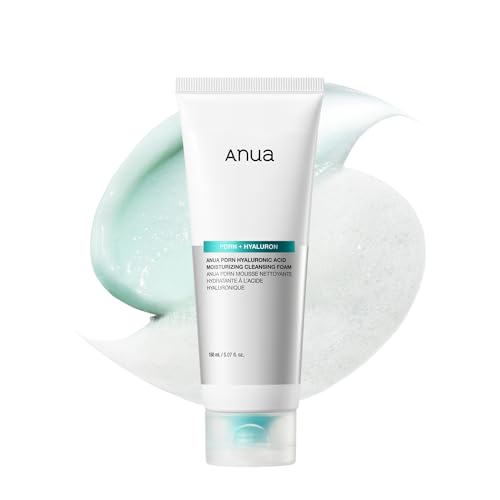
Anua
body wash · 150 ml · 51 ingredients

Catrice
foundation · 10.5 g · 13 ingredients

Catrice
foundation · 30 ml · 37 ingredients

Maybelline
foundation · 30 ml · 28 ingredients

e.l.f.
foundation · 30 ml · 32 ingredients
None of these picks contain plant oils, butters, fatty esters or polysorbates, so those ingredients are left out of this hub. Fragrance matters too. An "unscented" product can still contain a masking fragrance that hides the smell of other ingredients, while "fragrance-free" means no added fragrance, and only the full ingredient list proves it. Fungal acne looks like ordinary acne, so a doctor or dermatologist can confirm it.
Patch test means trying a small amount on a small area first. Apply a little to a spot such as inside the elbow, and wait several days before using it all over. Do this with anything new, every time you start a product, so you know how your skin takes it before you commit.
The full ingredient list, called INCI, is the standard list printed on the label. Ingredients appear from the highest amount to the lowest, down to about 1%. Below that point, the order can vary. "Fragrance-free" means no added fragrance, but only the full list proves it.
Look for these helpful ingredients near the top. Salicylic acid (BHA), an oil-soluble exfoliant, clears inside pores. Zinc pyrithione is an anti-dandruff active that targets scalp yeast. Ketoconazole is an antifungal anti-dandruff active. Niacinamide (vitamin B3) helps with oil, redness, uneven tone and the skin barrier. Fungal acne looks like ordinary acne, so a doctor or dermatologist can confirm it.
Look for salicylic acid, zinc pyrithione, ketoconazole, niacinamide and squalane. Salicylic acid (BHA) is an oil-soluble exfoliant that clears inside pores. Zinc pyrithione is an anti-dandruff active that targets scalp yeast. Ketoconazole is an antifungal anti-dandruff active. Niacinamide is vitamin B3 and helps with oil, redness and uneven tone.
Every pick on this hub is also free of plant oils, butters, fatty esters and polysorbates. Those are the groups our picks leave out. When you shop, scan the full ingredient list on the label, because only that list shows exactly what is inside.
Ingredients are listed from the highest amount to the lowest, down to about 1%. Below that point, the order is free, so the last ingredients can appear in any order. Check the full ingredient list, not just the front of the bottle, to see whether helpful ingredients appear above that point.
Yes. Patch test anything new by applying a little to a small area, such as inside the elbow, for several days. Wait for that period before using it all over. Fungal acne looks like ordinary acne, so a doctor or dermatologist can confirm it.