How to Apply Foundation on Dry Skin Without Flaking
The short answer
Hydrate and prime thoroughly, use a damp sponge with a dewy or satin foundation.
Why Foundation Flakes on Dry Skin
Foundation flaking is not usually a formula problem — it is a skin-surface problem. Dry skin accumulates loose, dehydrated corneocytes (dead skin cells) on its surface that are not properly shedding. When you apply foundation over these, the product adheres to the dead cell layer and moves with it throughout the day. The result: flaking, pilling, and patchy coverage that worsens as the day progresses.
A secondary cause is the formula itself: matte foundations containing high concentrations of oil-absorbing powders (silica, kaolin, talc) actively strip what little moisture is at the skin surface, causing the underlying dry patches to become more visible as the day goes on. The powder particles also collect in fine lines, making texture appear more pronounced rather than smoothed.
The solution works on both fronts — prepare the skin surface correctly, and use a foundation formula that works with rather than against dry skin.
Step 1: Prep the Skin Surface
Exfoliate Gently (1–2 Times Weekly, Not Daily)
Dry skin tends to accumulate surface texture — flakes, rough patches — that foundation catches on. A gentle chemical exfoliant removes this without mechanically irritating the barrier:
- Lactic acid 5–10% (an AHA) is the best option for dry skin; it exfoliates and simultaneously acts as a humectant, improving water retention in the stratum corneum. The Cleveland Clinic and AAD recommend lactic acid for dry skin specifically because it hydrates while it exfoliates — unlike glycolic acid, which is more drying.
- Enzyme exfoliants (bromelain, papain) are a very gentle alternative for skin too sensitive for AHAs.
- Physical scrubs with abrasive particles: avoid on dry, sensitive skin — they remove barrier lipids and worsen the underlying dryness.
Exfoliate the evening before a significant makeup day, not the morning of — freshly exfoliated skin is temporarily more sensitized.
Moisturize With the Right Formula
The moisturizer you apply before foundation sets the foundation (literally) for how well makeup performs. Research confirms that emollient-rich moisturizers containing ceramides significantly increase skin hydration measured up to 24 hours post-application, and studies show subjects reported their skin worked well under makeup after using a ceramide- and humectant-rich formula.
What to look for in a pre-makeup moisturizer:
- Ceramides — restore the lipid bilayer of the stratum corneum, reducing trans-epidermal water loss (TEWL) throughout the day
- Glycerin — a humectant that draws water into the outer skin layers
- Hyaluronic acid — large-molecule HA stays on the surface and plumps the outermost layer visually
- Squalane — a lightweight emollient that mimics skin's own lipids; does not feel greasy and does not interfere with foundation adherence
What to avoid: Thick occlusives (petrolatum, lanolin) as the final layer under makeup — they can prevent foundation from adhering cleanly and create a slippery base.
Apply moisturizer and wait 5–10 minutes before moving to primer or foundation. The skin needs time to absorb surface water content; if foundation goes on over a wet moisturizer layer, it dilutes and performs poorly.
Prime With a Hydrating Primer
A hydrating primer does two things for dry skin:
- Fills the microscopic grooves and texture of the skin surface so foundation sits on a smoother plane
- Adds a film-forming layer that helps foundation adhere without pulling at dry patches
Look for primers containing glycerin, niacinamide, dimethicone (for smoothing), or hyaluronic acid. Avoid primers with denatured alcohol (alcohol denat) high in the ingredient list — alcohol in primers is a major cause of foundation flaking on dry skin, as it dehydrates the surface just before foundation application.
Step 2: Choose the Right Foundation Formula
The Right Foundation Type for Dry Skin
The foundation formula matters at least as much as application technique. Here is how the main formats perform on dry skin:
| Foundation Format | Performance on Dry Skin |
|---|---|
| Liquid dewy / luminous | Best — humectants and oils hydrate the surface; reflective particles disguise dry texture |
| Liquid satin | Excellent — balanced formula performs well without adding unwanted sheen |
| Cushion / skin tint | Very good — typically lightweight, well-hydrated formula; easy to build |
| Liquid matte | Poor without significant prep — oil-absorbing powders worsen dry patches |
| Powder / pressed powder | Avoid as a base — universally drying, emphasizes texture and fine lines |
| Stick foundation | Variable — wax-based sticks can drag; cream-based sticks work if skin is well-prepped |
| Cream foundation | Good — the emollient base is inherently compatible with dry skin |
Key formula ingredients to look for:
- Glycerin, hyaluronic acid, or propylene glycol (humectants that keep moisture at the surface)
- Squalane or jojoba ester (lightweight emollients)
- No or minimal silica/kaolin (the oil-absorbing powders that cause dry patches to worsen)
Ingredients to avoid:
- Alcohol denat in the first five ingredients (drying)
- Mattifying agents prominently featured: "sebum-absorbing," "ultra-matte," "oil control" claims signal a formula not suitable for dry skin
Step 3: Application Technique
Application method makes a significant difference on dry skin — the right tool and motion prevents the dragging and pulling that creates uneven coverage and lifts flaky patches.
Use a Damp Makeup Sponge
A dampened beauty sponge (soaked in water and wrung until barely moist) is the single most effective tool for dry-skin foundation application. The sponge:
- Deposits foundation without pressing or dragging — the stippling motion places product without disturbing the skin surface
- Adds a thin layer of water to the formula, making it more fluid and blendable
- Leaves a more natural, skin-like finish than a brush
How to dampen: Run the sponge under cool water until saturated, then wring firmly until no water drips. It should feel damp, not wet.
How to apply: Stipple (press and lift repeatedly) — do not drag or wipe across the skin. Start at the center of the face and work outward. On dry patches around the nose and mouth, use very light pressure and fewer passes.
What Not to Do
- Do not use a flat brush with dragging strokes — this technique lifts flaky skin cells and creates streaks
- Do not apply foundation with dry fingers — fingers deposit oils unevenly and drag the product
- Do not layer heavily over dry areas — one thin layer is better than multiple passes; if coverage is needed, spot-apply with a small brush after the first layer has set
Step 4: Set Without Powdering Out
Setting is where dry-skin foundation routines most often go wrong. Loose translucent powder — the standard setting method — creates a cakey, flat finish on dry skin and emphasizes fine lines dramatically.
Setting Options for Dry Skin
| Setting Method | Result on Dry Skin |
|---|---|
| Hydrating setting mist | Best — preserves dewy/satin finish; sets makeup via film-forming agents without adding powder |
| Very light translucent powder under-eye only | Acceptable — targeted powder prevents creasing in the under-eye area where dewy formulas tend to migrate |
| Loose powder all over face | Avoid — intensifies dry patches, looks cakey |
| Pressed compact powder | Avoid as a setting step — heavy powder load with wax binders is not compatible with a dewy base |
Hydrating setting mist technique: After foundation application, close eyes and mist from 25–30 cm distance. Let it air-dry for 30 seconds — do not fan or blot. The film-forming ingredients in the spray create a micro-layer that holds the foundation without powder.
Common Problems and Fixes
Foundation Is Settling Into Fine Lines
This is almost always a moisturizer issue — insufficient prep, or a primer/moisturizer that has not fully absorbed. Fix: remove and reapply with 10 minutes between moisturizer and foundation application. Try mixing a small drop of your moisturizer directly into the foundation before applying.
Foundation Is Pilling on Application
Pilling (small rubber-like balls of product) happens when the foundation formula is incompatible with the primer or moisturizer below it — usually when layering products with different base ingredients (water-based over silicone-based, or vice versa). A 2024 PMC study on skincare product pilling confirmed that dry skin with high pH is particularly prone to this issue. Fix: use all water-based or all silicone-based layers; do not mix base types.
Foundation Looks Patchy by Midday
Usually caused by localized dry patches absorbing the formula. Fix: reapply a small amount of foundation with a damp sponge to the affected area; press (do not wipe). Carry a small tube of the foundation for touch-ups.
Skin Looks Gray or Chalky
This is the wrong formula — typically a matte or powder formula on dry skin. The oil-absorbing agents are stripping surface moisture. Switch to a dewy or satin formula. A midday hydrating mist can temporarily revive a chalky look.
Step by step
- 1
Exfoliate gently the night before
Apply a lactic acid (5–10%) chemical exfoliant to dry skin 1–2 nights per week to remove the loose, dehydrated cell layer that foundation clings to. Rinse after the product's recommended time. Do not exfoliate the morning of makeup application — freshly exfoliated skin is more sensitized and foundation can look blotchy.
- 2
Apply a ceramide moisturizer and wait 5–10 minutes
Choose a moisturizer containing ceramides, glycerin, and/or hyaluronic acid — ingredients that restore the surface lipid layer and retain water at the skin surface. Apply all over the face. Wait a full 5–10 minutes before the next step; wet moisturizer underneath foundation dilutes the formula and prevents proper adhesion.
- 3
Apply a hydrating primer
Smooth a glycerin- or dimethicone-based hydrating primer over moisturized skin. Avoid primers with alcohol high in the ingredient list. Press with fingertips rather than wiping. Let it sit for 1–2 minutes before foundation — this allows the primer to fill in surface texture and form a smooth, even base.
- 4
Choose a dewy or satin liquid foundation
Select a liquid formula labeled dewy, luminous, or radiant — these contain humectants and emollients that work with dry skin rather than stripping its remaining moisture. Avoid powder foundations, ultra-matte formulas, and any product prominently marketing oil control or sebum absorption.
- 5
Dampen a makeup sponge and stipple on foundation
Soak a makeup sponge in cool water, then wring it firmly until barely damp. Dispense foundation onto the back of your hand. Dab the sponge into the product and press (stipple) it onto the face using a bouncing motion — do not wipe or drag. Work from the center outward. On dry patches, use very gentle pressure and minimal passes.
- 6
Spot-conceal and build coverage only where needed
After the first layer of foundation has set (30–60 seconds), use a small brush or your fingertip to press a small amount of the same foundation or concealer onto areas needing more coverage. Pressing rather than rubbing ensures you add coverage without lifting the base layer.
- 7
Set with a hydrating mist, not powder
Close your eyes and mist a hydrating setting spray from 25–30 cm. Let it air-dry for 30 seconds; do not blot or fan. If you have creasing under the eyes, you may dust the under-eye area only with a very small amount of translucent powder before the mist. Avoid applying loose or pressed powder all over — it will emphasize dry patches and fine lines.
Products that fit: dry skin
Picked by code from each product's full ingredient list.
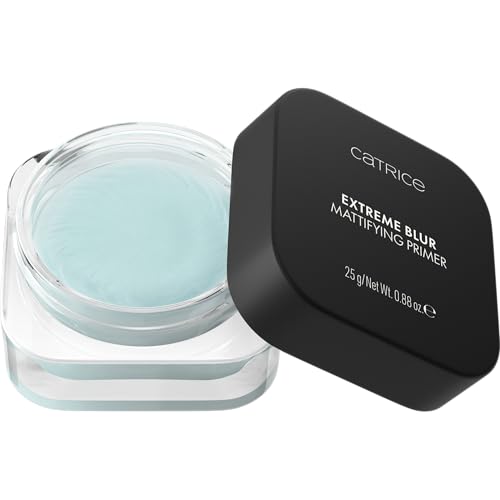
Catrice
Extreme Blur Mattifying Primer
primer · 25 g · 38 ingredients
- No drying alcohol
- With ceramides
- With glycerin
- With hyaluronic acid

Catrice
Aqua Splash Capsules Primer
primer · 60 g · 56 ingredients
- No drying alcohol
- With ceramides
- With glycerin
- With hyaluronic acid

e.l.f.
Stay Cool Primer Stick
primer · 17 g · 24 ingredients
- No drying alcohol
- With glycerin
- With hyaluronic acid
- With shea butter

Essence
Silky Blur Hydrating Longwear Concealer
concealer · 10 ml · 26 ingredients
£5.66−19%Amazon UK
- No drying alcohol
- With glycerin
- With hyaluronic acid
- With squalane
Amazon UK prices as of 6 November 2026, 06:19 GMT; Amazon sets the final price at checkout.
Frequently asked questions
What is the best foundation formula for dry skin in 2026?
Liquid dewy or satin foundations remain the best-performing category for dry skin. Look for formulas with glycerin, hyaluronic acid, or squalane in the first several ingredients, and avoid any formula that prominently promotes oil control, long-wear mattifying effects, or sebum absorption. Cushion foundations are also an excellent option — their watery, compressed-sponge delivery system produces a skin-like finish that is inherently suited to dry skin without the risk of cakey application.
Why does my foundation look flaky even after moisturizing?
There are three common causes. First, you may not be waiting long enough between moisturizer and foundation — 5–10 minutes is necessary for the moisturizer to absorb. Second, surface skin texture (loose flakes) may not be addressed with regular gentle exfoliation. Third, your foundation formula may be too mattifying — oil-absorbing powders in matte foundations grip onto dry patches and amplify the flaking appearance. Try a dewy liquid formula with a damp sponge after addressing surface texture.
Can I use setting powder on dry skin?
Sparingly and strategically, yes. A light dusting of translucent setting powder under the eyes (where coverage tends to crease) is useful without creating a cakey appearance all over. However, using loose or pressed powder as a full-face setting step on dry skin almost always results in an overly flat, dry, accentuated-texture look. A hydrating setting mist is a much more compatible setting method for dry skin overall.
Does exfoliating help foundation apply better on dry skin?
Yes, consistently and significantly. The AAD notes that dry skin accumulates loose, flaky cells at the surface that make it feel rough and look scaly. Foundation catches on these cells, creating an uneven, flaky appearance. Gentle chemical exfoliation (lactic acid, specifically, because it also hydrates) 1–2 times per week removes this texture so foundation sits on a smooth surface. Avoid daily exfoliation — over-exfoliation damages the barrier and worsens dryness.
Is primer necessary for dry skin before foundation?
For most dry skin types, a hydrating primer significantly improves how long foundation lasts and how evenly it applies. However, it adds a step and an additional formulation layer that must be compatible with both the moisturizer below and the foundation above. If you consistently experience pilling (small balls of product rolling up), the primer and foundation may be base-incompatible. Test removing the primer first; some people find moisturizer alone provides sufficient base.
Sources
- 01Dermatologists' top tips for relieving dry skin — American Academy of Dermatology (aad.org). AAD recommends ceramide-containing moisturizers to seal moisture in and recommends gentle fragrance-free cleansers for dry skin; excessively dry skin can worsen to dermatitis without proper care.
- 02Dry Skin (Xeroderma): Symptoms, Causes, Treatment — Cleveland Clinic. Dry skin causes rough texture and flaking due to reduced moisture; ceramide moisturizers reduce visible gray-white dryness; the condition worsens in low humidity and cold climates.
- 03In Vitro and In Vivo Evaluation of an Emollient-Rich Moisturizer Developed to Address Three Critical Elements of Natural Moisturization — PubMed Central / Journal of Cosmetic Dermatology, 2025-01-01. Emollient-rich moisturizers containing ceramides, hyaluronic acid, and NMF ingredients significantly increased skin hydration; 100% of subjects reported the product worked well under their makeup after 2 weeks of twice-daily use.
- 04Understanding the causes of skincare product pilling — PubMed Central / International Journal of Cosmetic Science, 2024-08-01. Dry skin (low sebum, low hydration, high skin pH) is significantly more prone to makeup pilling when foundation is layered over a base formulation; product base incompatibility (water vs. silicone) is a primary driver.
- 05Moisturizers — StatPearls — NCBI Bookshelf / National Library of Medicine. Humectants (glycerin, hyaluronic acid, lactic acid) attract and bind water in the stratum corneum; lactic acid is particularly effective for dry skin as it simultaneously exfoliates and improves water retention — the scientific basis for using lactic acid as a pre-makeup exfoliant.