
Bioderma
Cicabio Cream
moisturizer · 100 ml · 28 ingredients
- Fragrance-free
- No essential oils
- With hyaluronic acid
- With glycerin
- With centella asiatica
Full ingredient lists, decoded. Free-from facts on every product.
Ingredient dictionary
Also listed as: Isoparaffin
A light, clear mixture of branched hydrocarbons, refined from petroleum, that helps formulas spread smoothly and feel less greasy on skin. It is on the label of 17 products in our library. Checked against our library November 6, 2026.
C13-14 Isoparaffin belongs to a group of isoparaffinic hydrocarbons. These are made by refining petroleum and separating out molecules with 13 to 14 carbon atoms. Their branched shape keeps them liquid at room temperature and gives them a light, clear feel.
Formulators use it because it spreads easily and leaves little residue, so it can make a rich cream feel lighter. It shows up often in moisturizers, sunscreens and acne products, where a non-greasy finish matters. It has a very mild or almost no odor and does not usually feel sticky.
Good for
Suits people who want a smooth, lightweight feel in moisturizers, sunscreens and acne products without heavy grease.
It is widely used in cosmetics and is generally well tolerated. Like any ingredient, it can bother a person with very sensitive skin. Patch testing a new product on a small area first is a sensible habit, especially if you have a known sensitivity.
It feels light on the skin, which is why it is often chosen where a non-greasy finish matters. Whether a product suits your pores depends on the whole formula and your skin. Try a small amount first and see how your skin responds over a few days.
Bioderma
moisturizer · 100 ml · 28 ingredients

Embryolisse
body lotion · 75 ml · 20 ingredients
£11.99Amazon UK
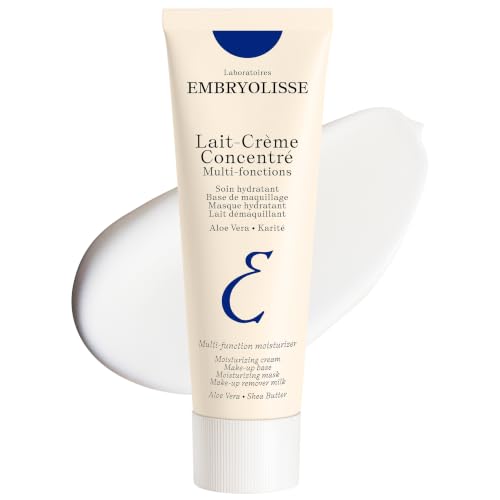
Embryolisse
makeup remover · 30 ml · 20 ingredients
£7.95−3%Amazon UK

Neutrogena
eye cream · 15 g · 22 ingredients
£12.42−46%Amazon UK

Makeup Revolution
foundation · 55 ml · 26 ingredients

Neutrogena
eye cream · 15 ml · 28 ingredients

Footmender
foot cream · 150 ml · 15 ingredients
£36.99Amazon UK

Aveeno
moisturizer · 50 ml · 25 ingredients
£9.98−17%Amazon UK
Amazon UK prices as of 6 November 2026, 05:32 GMT; Amazon sets the final price at checkout.