Sensitive Skin: Causes, Triggers & How to Soothe It
The short answer
Sensitive skin is a syndrome affecting roughly 50–60% of women and 30–40% of men, defined by stinging, burning, or tightness in response to stimuli that should not normally provoke a reaction.
What Is Sensitive Skin?
Sensitive skin is not a cosmetic quirk — it is a well-defined clinical syndrome. The International Forum for the Study of Itch (IFSI) defines it as a syndrome of unpleasant sensations (stinging, burning, pain, pruritus, and tingling) in response to stimuli that should not provoke such sensations and that cannot be explained by another skin disease.
That distinction matters. A person with sensitive skin is not simply reacting to a product that is too strong for anyone; they are reacting to products and environmental inputs that most people tolerate without issue. The condition was first formally described by Maibach in 1987 as "Cosmetic Intolerance Syndrome," and the intervening decades of research have confirmed it as a real, measurable physiological phenomenon.
How Common Is It?
Very common — arguably the dominant skin type in modern populations. A 2020 systematic review and meta-analysis across 26 studies and 51,783 individuals found:
- 71% of people report some degree of sensitive skin
- 40% describe it as moderate to very sensitive
- Women (45%) are affected at higher rates than men (33%), with women 1.74× more likely to report it
- Rates are similar across ethnicities and geographies, though exact figures vary by survey method
These numbers mean sensitive skin is the rule, not the exception — which is precisely why the skincare industry has invested so heavily in barrier-focused, fragrance-free formulations.
The Two Root Mechanisms
1. Impaired Skin Barrier
The outermost layer of your skin — the stratum corneum — functions as a physical barrier. It is built from corneocytes (dead, keratin-filled cells) cemented together by a lipid matrix of ceramides, cholesterol, and free fatty acids. When this matrix is intact, it:
- Prevents transepidermal water loss (TEWL)
- Blocks irritants, allergens, and microbes from penetrating
- Maintains the slightly acidic skin pH (~4.5–5.5) that keeps harmful bacteria in check
In sensitive skin, the stratum corneum is measurably thinner and has higher TEWL than unaffected skin. This means small molecules — including fragrances, preservatives, surfactants, and even water — can penetrate further and reach nerve fibers and immune cells that they would not normally contact.
2. Overactive Sensory Nerves (TRPV1 Hyperactivation)
Even when the barrier is only mildly compromised, the sensory nervous system in sensitive skin responds disproportionately. The key driver is the transient receptor potential vanilloid 1 (TRPV1) channel — a heat- and pain-sensing receptor on sensory nerve fibers in the skin.
In sensitive skin, TRPV1 expression is upregulated and its activation threshold is lowered. Stimuli that normally require temperatures above 43°C to activate TRPV1 can do so at much lower temperatures. Once activated, TRPV1-bearing nerve fibers release neuropeptides (substance P, calcitonin gene-related peptide/CGRP) that:
- Produce burning and stinging sensations
- Trigger mast cell degranulation and low-grade inflammation
- Create a self-reinforcing cycle of barrier damage and neural sensitization
This neurosensory component explains why sensitive skin can produce vivid stinging and burning without any visible redness — the subjective experience is real even when there is no objective sign to measure.
Common Triggers
Research using odds ratios ranks the most common triggers in sensitive skin populations:
| Trigger | Odds Ratio (vs. non-sensitive skin) |
|---|---|
| Fragranced cosmetics | 7.12 |
| Humid / wet air | 3.83 |
| Air conditioning | 3.60 |
| Temperature variation | 3.53 |
| Water exposure | 3.46 |
| Sun exposure | ~2.5 |
| Emotional stress | ~2.0 |
Fragranced Products
Fragrance is the highest-odds trigger by a significant margin. The term "fragrance" on a label can represent any of hundreds of individual chemicals, and many — including linalool, limonene hydroperoxides, and cinnamal — are known contact allergens and irritants. Even "natural" fragrances (essential oils) contain the same sensitizing compounds.
Temperature and Environment
Rapid temperature changes, low humidity, air conditioning, cold wind, and sun exposure all challenge a barrier that is already functioning below optimal capacity. Low humidity in particular increases TEWL, which further compromises the barrier.
Physical Exfoliants and Harsh Surfactants
Scrubs, loofahs, and high-concentration chemical exfoliants (glycolic acid, salicylic acid) strip the stratum corneum. Sulfate-heavy surfactants (sodium lauryl sulfate, SLS) are particularly damaging — they interact with lipid membranes and are well-documented as barrier disruptors at concentrations used in cleansers.
Stress and Sleep Deprivation
Psychological stress elevates cortisol and catecholamines, which directly reduce barrier function and amplify neurogenic inflammation. Sleep deprivation shows similar effects via inflammatory cytokine upregulation.
Sensitive Skin vs. Allergic Contact Dermatitis vs. Eczema
These conditions overlap and are easily confused:
| Sensitive Skin | Allergic Contact Dermatitis | Atopic Eczema | |
|---|---|---|---|
| Mechanism | Barrier + neurosensory | IgE/T-cell immune reaction | Filaggrin defect + barrier + immune |
| Visible signs | Usually none | Rash, blisters, oozing | Redness, scaling, lichenification |
| Timing | Immediate (minutes) | Delayed (24–72 hours) | Chronic with flares |
| Patch test | Negative | Positive for allergen | Positive for some allergens |
| Management | Barrier repair, avoidance | Allergen avoidance | Prescription therapy, barrier |
If reactions are visible, delayed, or do not respond to basic barrier care, a dermatologist and patch testing are the appropriate next steps — not more product swapping.
What Doesn't Cause Sensitive Skin
Some widely held beliefs do not hold up:
"Sensitive skin just needs lighter products." Not necessarily. The weight or texture of a formulation is far less important than its ingredient profile. A lightweight serum with multiple fragrance components and a high alcohol content can cause far more irritation than a richer cream with ceramides and no fragrance.
"Sensitive skin is a food allergy." While systemic food reactions can occasionally manifest in skin, most facial sensitivity to products is not driven by dietary factors. Contact allergens in products are the primary culprit.
"Natural or 'clean' products are safer for sensitive skin." Natural ingredients include many of the most potent sensitizers — essential oils (tea tree, lavender, citrus), botanical extracts, and preservatives all appear commonly in "natural" formulations and can trigger reactions in sensitive skin.
How to Soothe Sensitive Skin: The Evidence-Based Approach
Step 1: Strip Back the Routine
More products means more potential triggers. A sensitive skin routine needs a maximum of four steps: cleanser, treatment (optional, one active), moisturizer, SPF. Eliminate everything else.
Step 2: Rebuild the Barrier
The stratum corneum repairs itself when given barrier-identical lipids. A moisturizer containing all three physiological barrier lipids in roughly equimolar proportions — ceramides, cholesterol, and free fatty acids — provides the raw materials for repair. Products containing only one or two of these components show slower barrier recovery than those with all three.
Step 3: Switch to Fragrance-Free
Read every product label and eliminate fragrance (also listed as "parfum"), essential oils, and botanical extracts. This one change addresses the highest-odds trigger and is consistently recommended by the AAD and dermatologists across the literature.
Step 4: Use Gentle, pH-Balanced Cleansers
Choose a cleanser with a pH below 6 (close to the skin's natural ~5). High-pH cleansers disrupt the acid mantle and activate irritating enzymes; SLS-free formulas avoid direct lipid disruption. Avoid physical scrubbing.
Step 5: Patch Test Before Committing
Apply any new product to a small area (inner forearm or jaw) for 48–72 hours before full-face use. Allergic reactions often appear 24–48 hours after exposure, not immediately.
Step 6: Identify Your Specific Triggers
Keep a simple log: date, products used, environmental factors, symptoms. Most people with sensitive skin have 2–3 primary triggers, not a universal reactivity to everything. Identifying and avoiding those triggers reduces reactions far more effectively than switching to expensive "sensitive skin" product lines.
Ingredients That Support Sensitive Skin
Barrier Repair
- Ceramides (CER NP, CER EOS, CER NS): The lipid cornerstone of the stratum corneum; measurably reduced in sensitive and compromised skin
- Cholesterol: Essential co-lipid; formulations with all three barrier lipids outperform ceramide-only products
- Fatty acids (palmitic, stearic, linoleic acid): Structural components of the lamellar lipid matrix
Hydration and Soothing
- Glycerin: Humectant; draws water into the stratum corneum; well tolerated by virtually all skin types
- Hyaluronic acid: Potent humectant; does not rebuild the lipid barrier but significantly improves surface hydration
- Niacinamide (2–4%): Stimulates ceramide synthesis, reduces redness, strengthens barrier — one of the most versatile actives for sensitive skin
- Colloidal oatmeal: FDA-approved skin protectant; reduces itch and inflammation; well tolerated
Calming
- Bisabolol (from chamomile): Anti-inflammatory; reduces redness
- Allantoin: Soothes and protects irritated skin; low sensitization potential
- Panthenol (provitamin B5): Promotes skin repair and hydration
What to Avoid
The following ingredients are disproportionately problematic in sensitive skin:
- Fragrance / parfum — most common trigger
- Essential oils (lavender, peppermint, citrus, tea tree) — potent sensitizers despite "natural" status
- Alcohol denat / isopropyl alcohol — barrier-disruptive at concentrations used in toners and serums
- Sodium lauryl sulfate (SLS) — aggressive surfactant; documented barrier disruptor
- High-concentration AHAs/BHAs without a buffer protocol
- Retinol at high concentration without gradual introduction
- Menthol and camphor — activate cold-sensing TRPM8 receptors; cause stinging in sensitized skin
When to See a Dermatologist
A simple skin barrier repair strategy resolves the majority of sensitive skin presentations. See a board-certified dermatologist if:
- Reactions include visible redness, blistering, swelling, or oozing — these suggest a contact allergy requiring patch testing
- Symptoms persist despite 4–6 weeks of a simplified, fragrance-free barrier-focused routine
- You suspect an underlying condition (rosacea, perioral dermatitis, seborrheic dermatitis, eczema) — these require different management
- Reactions are worsening rather than improving with basic care
The standard diagnostic tool is the lactic acid sting test: application of 10% lactic acid to the nasolabial fold produces stinging in approximately 25% of people with sensitive skin but not in non-sensitive controls — a simple, objective confirmation of the syndrome.
Products that fit: sensitive skin
Picked by code from each product's full ingredient list.

Naturium
Marshmallow Root Barrier Balm
moisturizer · 50 g · 58 ingredients
£21.60−20%Amazon UK
- Fragrance-free
- No essential oils
- No drying alcohol
- No MI/MCI
- No menthol, camphor and witch hazel
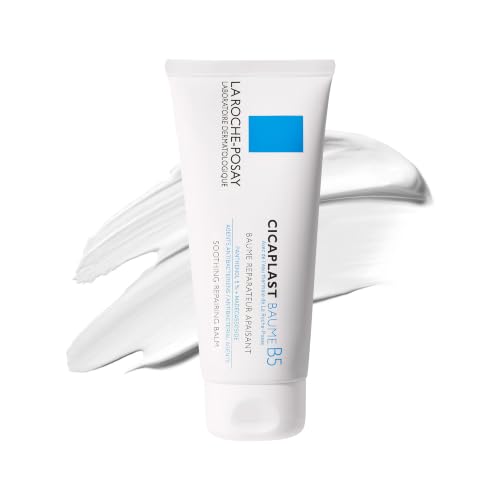
La Roche-Posay
Cicaplast Baume B5 Soothing Repair
moisturizer · 100 ml · 33 ingredients
- Fragrance-free
- No essential oils
- No drying alcohol
- No MI/MCI
- No menthol, camphor and witch hazel

Beauty of Joseon
Red Bean Water Gel
moisturizer · 99.9 ml · 58 ingredients
- Fragrance-free
- No essential oils
- No drying alcohol
- No MI/MCI
- No menthol, camphor and witch hazel

Uriage
Xemose C8+ Lipid-Replenishing Anti-Itch Balm
moisturizer · 500 ml · 24 ingredients
£19.30−17%Amazon UK
- Fragrance-free
- No essential oils
- No drying alcohol
- No MI/MCI
- No menthol, camphor and witch hazel
Amazon UK prices as of 6 November 2026, 05:32 GMT; Amazon sets the final price at checkout.
Frequently asked questions
What does the latest evidence say about managing sensitive skin in 2026?
A 2025 comprehensive review in Annals of Dermatology confirms the core management principles remain constant: barrier repair with ceramide-dominant moisturizers, fragrance avoidance, trigger identification, and simplification of the routine. Emerging treatment directions include topical neuromodulators that target TRPV1 directly (capsaicin desensitization, cannabinoids), but these are not yet mainstream clinical practice. The evidence for fragrance-free, ceramide-rich, minimal-ingredient routines as the first-line standard is strong and consistent.
Is sensitive skin a real skin condition, or just marketing language?
It is real. The International Forum for the Study of Itch formally defined sensitive skin as a clinical syndrome in 2017, and peer-reviewed research consistently documents measurable differences in stratum corneum thickness, transepidermal water loss, and TRPV1 nerve activity between people who report sensitive skin and those who do not. It is not a diagnostic category in the traditional medical sense, but it reflects genuine physiological differences, not simply low tolerance to new products.
Can sensitive skin be cured permanently?
Not in most cases — but it can be controlled so effectively that it becomes a non-issue in daily life. The syndrome reflects a combination of genetic barrier predisposition (often linked to filaggrin gene variants) and neural sensitivity that does not fully reverse. However, consistent barrier maintenance, fragrance avoidance, and trigger elimination can reduce reactivity substantially over months to years. Many people with severe sensitive skin in their 20s find it significantly better managed by their 30s and 40s with the right routine.
Does diet affect sensitive skin?
Minimally, for most people. There is no strong controlled evidence that specific foods directly cause facial sensitive skin reactions in the absence of a true systemic allergy. Some individuals notice correlations with alcohol, spicy food, or high-sugar diets, likely through inflammatory and vasodilatory pathways, but this is anecdotal and highly individual. Food allergy testing is not a first-line investigation for sensitive skin unless there are accompanying systemic symptoms (hives, gastrointestinal symptoms, swelling).
Are expensive 'sensitive skin' product lines actually better?
Not necessarily. Price is not a reliable proxy for suitability in sensitive skin. A product is appropriate for sensitive skin if it is fragrance-free, contains barrier-supportive ingredients (ceramides, glycerin, fatty acids), uses gentle cleansing agents, and has a short, low-risk ingredient list. Many pharmacy-available options from brands like CeraVe, Vanicream, and La Roche-Posay meet all these criteria at a fraction of the cost of premium 'sensitive' lines.
Why does my skin react to water when I wash my face?
This is a classic sign of both significant barrier impairment and sensory nerve hyperactivation. Hard water (high in calcium and magnesium ions) is particularly problematic — it alters the skin's pH and interferes with the lipid barrier. Even soft water can trigger stinging in highly sensitized skin because the nerves are primed to over-respond. Using a non-rinse micellar water or a very gentle low-pH cleanser, followed immediately by a ceramide-rich moisturizer, typically reduces water-induced stinging over several weeks.
Sources
- 01Comprehensive Approaches to Diagnosis and Treatment of Sensitive Skin — PubMed Central / Annals of Dermatology, 2025-01-01. Sensitive skin defined as a syndrome by IFSI (2017); pathophysiology involves TRPV1 hyperactivation, impaired barrier (increased TEWL, thin SC), and neurogenic inflammation (CGRP); top triggers ranked by odds ratio: fragranced cosmetics 7.12, humid air 3.83, AC 3.60, temperature variation 3.53, water 3.46.
- 02Sensitive Skin: An Ascending Concept (Anais Brasileiros de Dermatologia) — PubMed Central, 2017-08-01. Sensitive skin first described by Maibach 1987; mechanisms are increased SC permeability and sensorineural dysfunction via TRP channels (TRPV1, TRPM8, TRPA1); prevalence varies by geography (UK women 51.4%, Brazil women 45.7%, Japan 54.47%).
- 03The prevalence of self-declared sensitive skin: a systematic review and meta-analysis — Journal of the European Academy of Dermatology and Venereology / Johns Hopkins University, 2020-01-01. Meta-analysis of 26 studies (51,783 individuals) found 71% report some degree of sensitive skin; 40% moderate to very sensitive; women 45%, men 33%; women 1.74× more likely to report sensitive skin (RR 1.741).
- 04The skin barrier: an extraordinary interface with an exceptional lipid organization — PubMed Central, 2024-01-01. Stratum corneum lipid matrix (ceramides, cholesterol, free fatty acids in equimolar ratio) forms the only continuous permeation pathway; disruption in atopic dermatitis reduces CER EOS and CER NP, shortens FFA chain length, reduces orthorhombic packing density, and increases TEWL.
- 05TRPV1: A promising therapeutic target for skin aging and inflammatory skin diseases — PubMed Central / Frontiers in Pharmacology, 2023-03-01. TRPV1 is widely expressed in keratinocytes, sensory nerve fibers, and immune cells; its activation threshold is lowered in sensitive skin; TRPV1 antagonists reduce TEWL and accelerate barrier recovery; TRPV1 activation by capsaicin retards barrier repair in mouse and human skin.
- 06Allergic Contact Dermatitis to Fragrances — PubMed / Dermatologic Clinics, 2020-07-01. Fragrance is among the most common causes of allergic contact dermatitis; prevalence of fragrance allergy in patch-test populations ranges 5–11%; female sex and sensitive skin are risk factors; linalool and limonene hydroperoxides are important emerging allergens.