Type 4 Coily Hair (4A, 4B, 4C): The Complete Care System
The short answer
Type 4 coily hair needs maximum moisture, minimal manipulation, protective styles.
Understanding Type 4 Coily Hair
Type 4 hair — coily, kinky, Afro-textured — is the most structurally complex and care-intensive hair type in the 1–4 André Walker classification system. It is also the most diverse: the three subtypes (4A, 4B, 4C) span from defined S-coils through z-pattern kinks to densely packed coils with minimal visible pattern. Across all three, two structural truths apply: the hair is structurally the driest of any hair type, and it is the most mechanically fragile.
The Three Subtypes
| Subtype | Pattern | Curl Diameter | Definition | Shrinkage |
|---|---|---|---|---|
| 4A | S-coil | ~pencil-width | Moderate definition | ~60–70% |
| 4B | Z-angle / kink | Very tight | Minimal definition | ~65–75% |
| 4C | Dense, packed coil | Tightest | Little to no defined pattern | ~75%+ |
A 2026 systematic review published in the Journal of Cosmetic Dermatology confirmed that high-curl-pattern hair types require distinct care strategies from lower-curl-pattern types, and that the clinical literature increasingly recognizes type 4 hair as a distinct category warranting specialized dermatological guidance.
The Biology: Why Type 4 Hair Is Structurally Fragile and Dry
Cross-Section and Sebum Distribution
Every strand of type 4 hair has a highly elliptical — almost ribbon-like — cross-section. This is the most extreme form of the elliptical curvature that defines all textured hair. The consequence for moisture is severe: scalp sebum migrates down the hair shaft by capillary action, and capillary action along an elliptical surface is geometrically less efficient than along a circular one. For type 4 hair, which completes multiple full rotations within just centimeters of shaft length, the sebum gradient from scalp to ends is extreme — the ends of long 4C hair may receive virtually no sebum at all.
This is not a scalp production problem; it is a delivery problem. The scalp may produce adequate sebum, but the geometry of the fiber prevents it from reaching where it is needed.
Cuticle Thickness and Mechanical Fragility
Research published in PMC confirms that Afro-textured hair has the thinnest cuticle layer of the three major ethnic hair types studied (Asian, European, African). A thinner cuticle means less structural protection for the cortex beneath. Combined with the high curl curvature — which creates stress concentration at the inner face of every bend — type 4 hair has a lower breaking threshold than straight or wavy hair of the same diameter.
A 2019 International Journal of Trichology review (PMC6894537) confirmed that curl curvature correlates directly with mechanical fragility. For type 4, this means every manipulation event — detangling, brushing, heat styling, tight styling — carries a higher cost than for lower-curl types.
High Porosity as the Norm
The raised cuticle at inner-curl curves across thousands of bends per inch means that most type 4 hair is inherently high-porosity — moisture enters easily but exits just as fast. This compounds the sebum-delivery problem: even moisture applied externally tends to evaporate before it can be retained.
The Core Type 4 Care System
1. Reduce Manipulation to the Minimum
This is the first principle of type 4 hair care, before any product discussion. Every combing, brushing, and restyling event causes micro-breakage at the inner-curve cuticle lift points. The cumulative effect determines length retention.
Practical targets:
- Detangle once per wash day, under conditioner — never daily and never dry.
- Style into a protective or low-manipulation style after wash day and leave in for 3–7 days.
- Refresh daily with a mist spray and gentle finger manipulation only.
2. Cleanse Gently and Infrequently
Frequency: once weekly to once every two weeks for most type 4 hair. Co-washing (cleansing conditioner) mid-week is appropriate if needed for scalp freshness without a full shampoo wash.
Product: sulfate-free shampoos are the default. The AAD recommends gentle cleansers for curly and coily hair to preserve the limited natural oils these hair types can deliver to the lengths. Sulfates are effective surfactants but remove oils at a rate that coily hair cannot replenish through sebum migration alone.
Clarifying: once a month, use a gentle low-sulfate or sulfate-containing shampoo to remove silicone and product buildup. Follow immediately with deep conditioning.
3. Pre-Poo Treatment
Before every shampoo wash, apply a penetrating oil to the lengths 30–60 minutes before shampooing. Coconut oil is the most research-supported choice: secondary ion mass spectrometric studies confirm it penetrates the hair cortex (unlike mineral oil, which only coats the surface), reducing protein loss and blunting the sharp water absorption during washing.
This pre-poo step reduces hygral fatigue — the damage caused by the repeated swelling-drying cycle that every wash introduces. For 4C hair especially, it is a significant protective measure.
4. Condition Every Wash
Apply a rich rinse-out conditioner from mid-shaft to ends after every shampoo. Detangle at this step, in sections, using a wide-tooth comb or fingers from ends to roots. Leave on for 5+ minutes; for 4B and 4C hair, 10–15 minutes before rinsing provides noticeable additional moisture delivery.
5. Deep Condition Weekly — with Heat
A weekly deep conditioning mask applied for 30 minutes under a hooded dryer or warm shower cap is the foundational maintenance step for type 4 hair. Published hair cosmetics research confirms that targeted moisturizing treatments with extended contact time produce significantly better moisture outcomes than rinse-out conditioner alone.
Moisture mask ingredients: shea butter, mango butter, aloe vera, honey, avocado oil, castor oil, glycerin, panthenol.
Protein mask (monthly): hydrolyzed keratin, hydrolyzed silk protein — maintains tensile strength and elasticity. Signs protein is needed: strands snap rather than stretching 20–30% then returning; curls lose definition. Always follow protein with a moisture treatment at the same session.
6. LOC or LCO Method on Soaking-Wet Hair
Apply all styling products while hair is dripping wet.
LOC method (recommended for 4A and 4B):
- L — Liquid: water-based leave-in conditioner (glycerin, aloe, panthenol)
- O — Oil: penetrating oil first (coconut oil), then sealing oil (castor, olive)
- C — Cream: rich butter cream (shea-heavy curl cream or hair butter)
LCO method (often preferred for 4C): applying the cream before the oil seals moisture more effectively for very high-porosity hair where oil alone cannot slow moisture exit fast enough.
Gel or custard overlay (optional): applied over cream for definition on wash-and-go styles.
7. Style Low-Manipulation
Wash-and-go: apply LOC/LCO stack, define sections by raking or shingling gel through, air dry or diffuse on low heat.
Twist-out: two-strand twists applied to LOC-moisturized hair, dried overnight, unraveled for a more defined, elongated pattern with less shrinkage than a wash-and-go.
Braid-out: three-strand braids applied similarly, producing a more wave-like elongated pattern.
Bantu knots: small flat coils pinned against the scalp that when unraveled produce a stretched, defined ringlet pattern.
8. Protective Styles
Protective styles that tuck hair ends away from manipulation and environmental exposure are the primary tool for type 4 length retention. Research from PMC confirms that frequent manipulation is the leading external cause of breakage in textured hair.
Common protective styles for type 4 hair:
- Box braids, cornrows, individual twists
- Faux locs, goddess locs
- Wig over natural hair (with proper care underneath)
- Sew-in weaves with natural leave-out protected
Rules:
- Always moisturize before installing.
- Spray weekly with a diluted leave-in conditioner while in the style.
- Never install tight at the hairline — traction alopecia is a progressive, potentially irreversible hair loss condition documented in Black women who wear chronically tight styles.
- Remove after 4–6 weeks maximum.
- Detangle gently over a full session after removal.
Overnight Care
The overnight period is when much of the benefit of wash-day moisture can be lost.
Pineapple: gather hair into a very loose, high ponytail with a satin scrunchie — not an elastic. This protects the curl and moisture without tension.
Satin bonnet or silk pillowcase: the AAD specifically recommends these for curly and coily hair. Cotton pillowcases absorb moisture from the hair and create friction that roughs the cuticle and causes frizz and breakage over a night.
Moisturize the length before pineappling: for 4C hair, a light spritz of water plus a small amount of leave-in on the lengths before night wrapping helps replenish moisture that the previous day evaporated.
Subtype-Specific Notes
4A
Retains the most visible curl definition in the type 4 group. Wash-and-go styles produce visible coils with defined shape. The LOC method with medium-weight creams typically works well. Deep conditioning weekly is still essential, though 4A hair sometimes tolerates slightly less intensive moisture protocols than 4B or 4C.
4B
The Z-angle pattern has minimal visible definition in wash-and-go styles; twist-outs and braid-outs are often more practical for day-to-day definition. 4B benefits from the same heavy moisture protocol as 4C. Detangling requires particular care — the angular kink pattern creates more single-strand knots ("fairy knots") than S-coil types.
4C
The most challenging to moisture-retain of any hair type. Shrinkage of 75%+ from wet length is common — 12 inches wet may appear 3 inches dry. The LOC or LCO method with the heaviest butters and oils (shea butter, castor oil, heavy cream) is the minimum effective protocol. Protective styling is particularly valuable for 4C given how dramatically manipulation contributes to breakage at this curl tightness. See the dedicated 4C hair care guide for the full protocol.
What to Avoid
| Practice | Why to Avoid |
|---|---|
| Daily combing or brushing | Each pass through tight coils causes breakage; minimize to once per wash day under conditioner |
| Heat styling without protectant | Permanently alters disulfide bonds; repeated use eliminates curl pattern |
| Tight styles at the hairline | Traction alopecia risk — a documented, progressive hair loss condition |
| Skipping deep conditioning | Cumulative dryness and breakage; not a scalp health issue, a shaft health issue |
| Sulfate shampoos weekly | Strips oil type 4 hair cannot replace via sebum migration |
| Brushing dry hair | Causes mass breakage; detangle only wet, under conditioner |
Ingredient Guide
Prioritize:
- Humectants: glycerin, aloe vera, honey, panthenol, sodium PCA
- Penetrating oils: coconut oil (most research-backed), avocado oil, olive oil
- Heavy sealing butters: shea butter, mango butter
- Sealing oils: castor oil, jama oil, argan oil
- Protein in balance: hydrolyzed keratin, hydrolyzed silk, rice protein (monthly only)
Limit or avoid:
- Sulfate shampoos for regular washing
- Isopropyl alcohol, SD alcohol, denatured alcohol high in the ingredient list
- Daily heat tools (blow dryers on high, flat irons) without protectant
- Petrolatum and heavy mineral oil as primary moisturizers (coat without penetrating; block moisture entry over time)
Products that fit: curly hair
Picked by code from each product's full ingredient list.

Redken
Acidic Grow Full System Scalp & Hair Serum
hair oil · 100 ml · 26 ingredients
£20.15−40%Amazon UK
- Sulfate-free
- Silicone-free
- No drying alcohol
- With glycerin
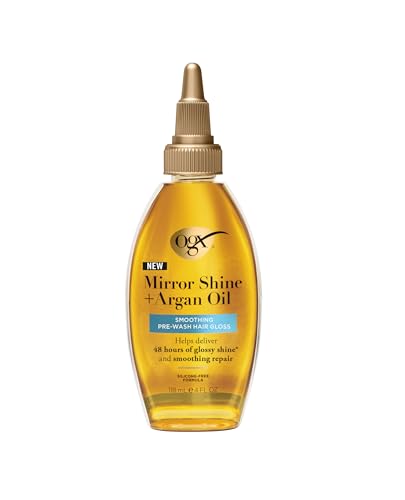
OGX
Mirror Shine + Argan Oil Pre-Wash Hair Gloss
hair oil · 118 ml · 8 ingredients
£5.00−50%Amazon UK
- Sulfate-free
- Silicone-free
- No drying alcohol

Balea
Professional Hair Oil Dream Curls 1 x
hair oil · 100 ml · 23 ingredients
£7.90−7%Amazon UK
- Sulfate-free
- Silicone-free
- No drying alcohol
- With vitamin E
Amazon UK prices as of 6 November 2026, 04:30 GMT; Amazon sets the final price at checkout.
Frequently asked questions
What does the latest research say about type 4 hair care in 2026?
A 2026 systematic review published in the Journal of Cosmetic Dermatology confirmed that high-curl-pattern hair (types 3C through 4C) requires specialized clinical and cosmetic care strategies distinct from lower-curl types, and that the field has historically under-researched this group despite it representing a large proportion of patients seeking dermatologic hair care. Separately, a 2024 MDPI Cosmetics review on genomic variation in textured hair highlighted the importance of personalized, porosity-appropriate care and flagged that incompatible mass-market products formulated without Afro-textured hair in mind frequently cause scalp damage and hair fragility.
How do I tell 4A, 4B, and 4C apart?
Wet your hair with plain water, stretch a section to its natural wet state, then release. 4A forms a visible, defined S-coil. 4B forms a tighter, angular Z-pattern — less defined, with visible kinks rather than smooth curves. 4C has minimal visible curl pattern when released and springs tightly into a dense, compressed mass. Most people have two or more subtypes on different sections of their head (crown, nape, and edges often differ). Care for the driest, tightest sections first.
Why does type 4 hair break so easily?
Two structural facts combine: type 4 hair has the thinnest cuticle of any typed hair (confirmed by research on ethnic hair structural differences), and the high curl curvature concentrates mechanical stress at the inner face of each bend. Every time a tight coil is manipulated — pulled by a comb, brushed, put in a tight style — force is applied at these stress-concentration points. Minimizing manipulation frequency and ensuring hair is properly conditioned before any detangling are the most effective interventions. Pre-poo oiling further protects by coating the cuticle before the mechanical stress of washing.
Can type 4 hair grow long?
Yes. Type 4 hair grows at roughly the same scalp rate as other types (approximately 0.5 inches per month on average). The reason many people with type 4 hair struggle with length retention is breakage, not growth failure — hair grows but breaks at a similar rate, resulting in no net length gain. Addressing breakage through low-manipulation styling, protective styles, consistent deep conditioning, and gentle detangling is the mechanism through which long type 4 hair is achieved. Shrinkage also conceals length that is already there.
Does type 4 hair need protein treatments?
Yes, but in measured amounts. Type 4 hair has high cysteine content and a complex disulfide bond structure, making it both dependent on protein for structural integrity and sensitive to protein overload. Monthly protein treatments (hydrolyzed keratin or silk protein) maintain elasticity and tensile strength. Signs of protein need: strands snap rather than stretching and returning, curls feel limp, or hair has been chemically processed. Signs of protein overload: hair feels stiff, crunchy, or brittle without improved definition — reduce protein frequency and increase moisture.
Is it safe to color or relax type 4 hair?
Both are possible but carry elevated risk for type 4 hair given its already-thin cuticle and high mechanical fragility. Chemical relaxers permanently break disulfide bonds to straighten the curl — once relaxed, the curl does not return without new growth. Bleaching raises porosity further and weakens the already-thin cuticle. If coloring 4A–4C hair, work with a stylist experienced in Afro-textured hair, use bond-building treatments (Olaplex or equivalent) during processing, never lift more than 2 levels per session, and intensify moisture protocols to twice-weekly deep conditioning post-treatment. Avoiding overlapping chemicals on the same section is essential.
Sources
- 016 curly hair care tips from dermatologists — American Academy of Dermatology (aad.org). AAD recommends gentle cleansers to preserve natural oils, satin or silk bonnets to reduce friction, and loose protective pineapple styles overnight for coily hair.
- 02The what, why and how of curly hair: a review — PubMed Central / International Journal of Trichology, 2019-12-01. Higher curl curvature produces greater mechanical fragility, impaired sebum distribution, and faster moisture loss; these traits peak in type 4 hair.
- 03Classification of High Curl Pattern Hair: A Systematic Review and Clinical Perspective — PubMed Central / Journal of Cosmetic Dermatology, 2026-01-01. High-curl-pattern hair (types 4A–4C) requires distinct clinical care; the field has historically under-researched this group; curl tightness is the primary determinant of care strategy.
- 04The Genomic Variation in Textured Hair: Implications in Developing a Holistic Hair Care Routine — MDPI Cosmetics, 2024-01-01. Afro-textured hair has unique structural properties; incompatible products cause scalp damage and hair fragility; personalized, porosity-appropriate care is essential.
- 05Hair Cosmetics: An Overview — PubMed Central / International Journal of Trichology, 2015-01-01. Afro-textured hair has thinner cuticle layers than Asian or European hair; oils reduce hygral fatigue; targeted moisturizing treatments significantly outperform water alone.
- 06Secondary ion mass spectrometric investigation of penetration of coconut and mineral oils into human hair fibers — PubMed / Journal of Cosmetic Science, 2001-01-01. Coconut oil penetrates the hair cortex and reduces protein loss; mineral oil only coats the surface.
- 07The exposome impact on hair health — PubMed Central / Frontiers in Medicine, 2025-01-01. Afro-textured hair has thinner cuticle layers than Asian or Caucasian hair types, making it more susceptible to breakage under mechanical and environmental stress.