Best Sunscreen for Oily Skin That Won't Cause Breakouts
The short answer
The best sunscreen for oily skin is an oil-free gel or water-based SPF 30+.
Why Oily Skin Cannot Skip Sunscreen
Oily skin is not protected from UV damage by its own sebum. Sebum does not absorb ultraviolet radiation — it provides no meaningful SPF. Without daily sunscreen, oily and acne-prone skin is fully exposed to:
- UVB radiation (290–320 nm): causes sunburn, DNA damage (cyclobutane pyrimidine dimers), and is the primary driver of squamous cell carcinoma risk.
- UVA I and II radiation (320–400 nm): penetrates deeper into the dermis, generates reactive oxygen species, degrades collagen, and is the dominant cause of photoaging — fine lines, laxity, and dyspigmentation.
There is an additional reason oily, acne-prone skin specifically needs daily SPF: post-inflammatory hyperpigmentation (PIH). When a breakout heals, it often leaves behind a flat, discolored mark. UV exposure dramatically intensifies PIH, turning a mild pink or red mark into a persistent dark spot. Skipping sunscreen actively worsens the marks left by pimples.
The only legitimate objection to sunscreen for oily skin is formulation — and that is entirely solvable.
Mineral vs. Chemical Sunscreens: What the Evidence Shows
Mineral (Inorganic) Sunscreens
Mineral sunscreens use inorganic particles — zinc oxide (ZnO) and titanium dioxide (TiO₂) — to partially absorb, reflect, and scatter UV radiation.
Zinc oxide is the broadest-spectrum UV filter approved by the FDA. A StatPearls review published on NCBI confirms that zinc oxide is the broadest UVA and UVB reflector currently approved — it protects against UVB, UVA II (320–340 nm), and UVA I (340–400 nm). Additionally, zinc oxide has documented skin-soothing properties, making it particularly appropriate for sensitive and acne-prone skin. The anti-inflammatory properties of zinc are well established; zinc gluconate and zinc PCA are used orally and topically for acne treatment.
Titanium dioxide is highly effective in the UVB range and UVA II but does not provide meaningful UVA I protection. For full UVA coverage, zinc oxide or avobenzone must be present in the formula. The combination of ZnO + TiO₂ provides excellent broad-spectrum coverage — this is why the AAD recommends sunscreens containing both for acne-prone skin.
Traditional mineral sunscreens left a white cast — the primary reason they have been avoided by many consumers, especially those with medium-to-deep skin tones. Modern micronized and nano-particle formulations (particularly in tinted mineral sunscreens) have substantially reduced this problem, and newer fluid mineral formulas are nearly invisible on most skin tones.
For oily skin specifically: zinc oxide has an inherently mattifying quality in mineral formulas, and many mineral sunscreens designed for oily skin incorporate silica or starch to further absorb shine. The texture of mineral sunscreens has improved dramatically; gel and fluid mineral SPFs are available across all price points.
Chemical (Organic) Sunscreens
Chemical sunscreens use organic (carbon-based) UV-absorbing molecules that convert UV radiation into heat. The major filters and their coverage:
| Chemical Filter | Coverage |
|---|---|
| Avobenzone | UVA I (360–400 nm) — the only FDA-approved chemical filter that covers deep UVA |
| Octinoxate | UVB |
| Octocrylene | UVB + short UVA |
| Homosalate | UVB |
| Octisalate | UVB |
| Oxybenzone | UVB + some UVA II |
For broad-spectrum chemical protection: a formula must include avobenzone (for deep UVA coverage), since the other common chemical filters only cover UVB and shallow UVA.
Chemical sunscreens are not inherently comedogenic. Many chemical formulas designed for oily skin are gel-textured, water-based, and contain no oils whatsoever — they absorb far more elegantly than many mineral formulas and are better suited to daily re-application. A PMC review of photoprotection in acne-prone skin noted that lightweight chemical mist formulas have higher cosmetic acceptability and lead to better adherence in people with acne-prone skin compared to mineral sunscreens.
Potential concerns with chemical filters:
- Oxybenzone: This filter has received scrutiny due to endocrine-disruption concerns in animal and in vitro studies; a 2024 PMC review of sunscreen UV filter endocrine effects acknowledged that several chemical filters (including oxybenzone) have demonstrated estrogenic activity in vitro. The FDA has not categorized oxybenzone as unsafe, but those who prefer to avoid it can easily find formulas without it.
- Some chemical filters (especially avobenzone) degrade in UV light unless stabilized by a photo-stabilizer (octocrylene, Tinosorb S, Helioplex). Look for "broad-spectrum photostable" or equivalent language on the label.
- Texture and formulation still matter: even oil-free chemical sunscreens can clog pores if they contain heavy emollients or waxes. Read the full ingredient list regardless of filter type.
What Textures Work Best for Oily Skin
The texture of a sunscreen determines whether it will work on oily skin far more than the filter type.
| Texture | Suitability for Oily Skin | Notes |
|---|---|---|
| Gel (water-based) | Excellent | Absorbs quickly; no visible residue; ideal for most oily skin |
| Water-based fluid | Excellent | Thin, elegant; re-applies easily; suits all skin tones |
| Mist or spray | Excellent | Minimal residue; excellent for midday re-application |
| Tinted fluid (mineral) | Good | Provides slight coverage and mattifying effect; check for oil-free label |
| Lightweight lotion | Good | Depends on emollient system — check ingredient list |
| Cream | Moderate | Can work if oil-free; many are too heavy for oily skin |
| Stick | Poor | Typically waxy and occlusive; generally too heavy |
| Balm / serum-SPF hybrids with oils | Poor | Oils defeat the purpose for oily skin |
Look specifically for: oil-free, non-comedogenic, fragrance-free, water-based or gel formula on the packaging.
Ingredient Red Flags in Sunscreen for Oily Skin
| Ingredient | Why to Avoid |
|---|---|
| Coconut oil | High comedogenicity — clogs follicles |
| Isopropyl myristate | Documented comedogen; avoid in any SPF formula |
| Heavy waxes (beeswax, carnauba) | Occlusive; traps sebum in follicles |
| Fragrances / parfum | Sensitizer; no UV protective function |
| Lanolin | Heavy, potentially allergenic, occlusive |
| High-concentration alcohol (SD alcohol denat.) | Strips barrier; triggers compensatory sebum |
Ingredients That Benefit Oily Skin in Sunscreen
Beyond UV filters, some sunscreen formulations include actives that are actively beneficial for oily and acne-prone skin:
- Niacinamide — sebum-reducing, anti-inflammatory, barrier-strengthening; an excellent addition to an oily-skin SPF.
- Silica or kaolin — physical sebum-absorbing agents that improve mattification throughout the day.
- Zinc (as zinc gluconate or zinc PCA) — antimicrobial and sebostatic; pairs well with mineral zinc oxide UV filter.
- Dimethicone — non-comedogenic silicone emollient that contributes to smooth application without grease.
- Glycerin — non-comedogenic humectant that prevents the tightness some people experience with oil-free formulas.
SPF Level: What You Actually Need
The minimum dermatological recommendation is SPF 30, which blocks approximately 97% of UVB radiation. SPF 50 blocks approximately 98%, and SPF 100 blocks approximately 99%. The incremental difference above SPF 30 is small — but real, particularly for high UV-exposure situations.
For oily skin living in low-to-moderate UV index environments and wearing sunscreen consistently and correctly, SPF 30 is adequate. For those with:
- History of acne with significant PIH (hyperpigmentation)
- History of photosensitizing prescription medications (doxycycline, isotretinoin)
- High UV exposure environments (outdoor work, beaches, high altitude)
...SPF 50 is the more appropriate recommendation.
Broad-spectrum is non-negotiable. "Broad-spectrum" means protection against both UVB and UVA. A product with SPF 30 but no UVA filter protects against sunburn but not photoaging or PIH worsening.
Application Tips for Oily Skin
Amount: The standard recommendation is approximately 1/4 teaspoon (1.25 ml) for the face — most people apply far less than this. Underapplication reduces effective SPF significantly. A gel texture is actually easier to reach the right amount because it spreads well.
Timing: Apply sunscreen as the final morning skincare step, after moisturizer, and allow 1–2 minutes for absorption before going outdoors.
Re-application: Dermatologists recommend re-applying every 2 hours during outdoor exposure. For oily skin, a mist SPF or SPF powder is the most practical re-application format that does not disrupt makeup or dramatically increase shine.
Primer/foundation: Many foundations and BB creams contain SPF, but they are typically applied in too thin a layer to achieve the stated SPF. Do not rely on makeup for your sole sun protection.
What to Avoid in Sunscreen Marketing Language
- "Reef-safe" — not a regulated claim; has no relevance to whether a sunscreen is suitable for oily skin.
- "Natural" — no regulatory definition; irrelevant to comedogenicity.
- "Physical block" — an older marketing term for mineral sunscreens; inorganic filters primarily absorb (not physically block) UV radiation; the term is scientifically imprecise.
- "Invisible" — meaningful for skin tone compatibility but says nothing about comedogenicity or oil-free status; check the ingredient list.
Our picks: the best sunscreens for oily skin
Picked by code from each product's full ingredient list.
 1
Skin1004
Madagascar Centella Hyalu-Cica Water-Fit Sun Serum Lightweight SPF 50+ PA
sunscreen · 50 ml · 42 ingredients
- Fragrance-free
- No essential oils
- With niacinamide
- With hyaluronic acid
 2
e.l.f.
Hydrating Camo CC Cream
sunscreen · 30 g · 41 ingredients
£12.99−19%Amazon UK
- Fragrance-free
- No essential oils
- With niacinamide
- With hyaluronic acid
 3
La Roche-Posay
Effaclar Duo+M SPF30 Anti-Blemish Moisturiser
sunscreen · 40 ml · 33 ingredients
£18.00Amazon UK
- No essential oils
- With niacinamide
- With salicylic acid
 4
Balea
Face Cream Niacinamide SPF 30
sunscreen · 50 ml · 25 ingredients
- Fragrance-free
- No essential oils
- With niacinamide
 5
Balea
Fluid Beauty Expert UV Protection SPF 50
sunscreen · 50 ml · 30 ingredients
- Fragrance-free
- No essential oils
- With hyaluronic acid
Isdin
Foto Ultra Redness Spf50
sunscreen · 50 ml · 34 ingredients
- Fragrance-free
- No essential oils
- With niacinamide
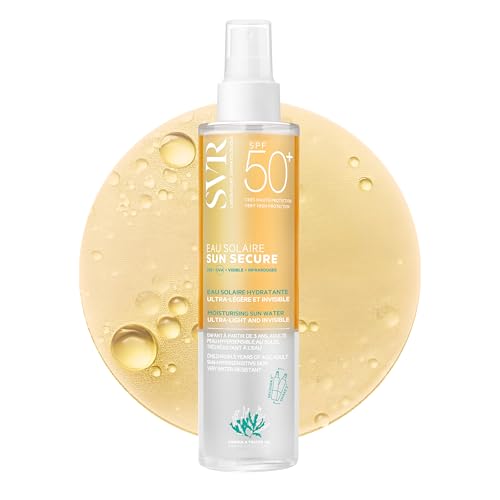 7
SVR
SUN SECURE Sun Water SPF50+ Invisible Sun Cream Spray Face & Body
sunscreen · 200 ml · 22 ingredients
£27.50Amazon UK
- No essential oils
- With niacinamide
 8
SVR
SUN SECURE Sun Water SPF50+ Invisible Sunscreen Spray Face & Body
sunscreen · 100 ml · 17 ingredients
£22.50Amazon UK
- No essential oils
- With niacinamide
Amazon UK prices as of 6 November 2026, 04:30 GMT; Amazon sets the final price at checkout.
Frequently asked questions
Is mineral or chemical sunscreen better for oily acne-prone skin in 2026?
Both can work well for oily, acne-prone skin when the formulation is right — oil-free, non-comedogenic, and fragrance-free. Mineral sunscreens with zinc oxide are preferred by the AAD for acne-prone skin specifically because zinc oxide is non-comedogenic, provides the broadest UV spectrum of any single filter (UVB + UVA I + UVA II), and has anti-inflammatory properties. However, many people with oily skin find lightweight chemical gel formulas more cosmetically elegant and more reliably re-applied. The best sunscreen is the one you will actually use every day — choose based on texture preference, provided the ingredient list passes the non-comedogenic screen.
Will sunscreen make my oily skin worse or cause more breakouts?
A properly formulated sunscreen should not cause breakouts. The breakout association with sunscreen typically stems from formulas containing comedogenic emollients (coconut oil, isopropyl myristate, heavy waxes) or fragrances. Oil-free, non-comedogenic gel or water-based sunscreens do not worsen oily skin or acne. If you have broken out from sunscreens in the past, the issue is the formula — try a fragrance-free, oil-free gel SPF with a short, clean ingredient list rather than avoiding sunscreen altogether.
How do I re-apply sunscreen over makeup if I have oily skin?
Mist sunscreens and SPF setting sprays are the most practical re-application option for oily skin wearing makeup. Shake the bottle, hold it about 30 cm from the face, and spray evenly for 2–3 seconds; press gently into the skin with clean hands. SPF powders with mineral filters (zinc oxide or titanium dioxide) are a second option — they offer simultaneous mattification and sun protection. Avoid liquid or lotion re-application over makeup, which disrupts coverage.
Does SPF in foundation count as sun protection for oily skin?
No — not reliably. The SPF printed on a foundation reflects the protection measured when applied at 2 mg/cm², but the average person applies foundation at one-quarter to one-fifth of that density. Additionally, foundation wear is reduced by sebum on oily skin, which dilutes the SPF over time. Foundation SPF is a bonus, not a substitute. Apply a dedicated SPF underneath your makeup.
Can a sunscreen help control oiliness as well as protect from UV?
Some sunscreens formulated for oily skin include sebum-absorbing agents (silica, starch, kaolin) that provide temporary mattification — measurable for 4–6 hours post-application. A few include niacinamide, which has clinical evidence for reducing sebum excretion rate with regular use. These are genuine benefits on top of UV protection. However, sunscreen is not a long-term sebum management tool — for that, niacinamide serums and salicylic acid treatments in your main skincare routine do the primary work.
Sources
- 01Sunscreens and Photoprotection — StatPearls — NCBI Bookshelf / StatPearls. Zinc oxide is the broadest UVA and UVB reflector approved by the FDA; avobenzone is the only chemical filter providing true UVA I coverage beyond 360 nm; broad-spectrum SPF 30+ is the standard dermatological recommendation.
- 02Titanium dioxide and zinc oxide nanoparticles in sunscreens: focus on their safety and effectiveness — PubMed Central / Nanomaterials and Nanotechnology, 2013-10-01. Zinc oxide provides uniform UVA I + UVA II + UVB protection; titanium dioxide is more effective in UVB and UVA II but does not cover UVA I; their combination delivers comprehensive broad-spectrum coverage.
- 03Photoprotection according to skin phototype and dermatoses: practical recommendations from an expert panel — PubMed Central / Dermatology and Therapy, 2021-07-01. For acne-prone skin, mist/spray chemical sunscreens have higher cosmetic acceptability and better adherence than mineral formulas; mineral sunscreens may be chalky but zinc oxide has anti-inflammatory benefits.
- 04How to control oily skin — AAD Patient Education — American Academy of Dermatology (aad.org). AAD recommends sunscreens containing zinc oxide and titanium dioxide for acne-prone skin; avoid fragrances and oils in sunscreen formulas.
- 05Endocrine and Reproductive Health Considerations of Sunscreen UV Filters: Insights from a Comprehensive Review 2014–2024 — PubMed Central / International Journal of Environmental Research and Public Health, 2024-01-01. Several chemical UV filters including oxybenzone have demonstrated estrogenic activity in vitro; zinc oxide and titanium dioxide are considered among the safest UV filters currently available.