Why Is My Skin So Oily? 7 Real Causes Explained
The short answer
Skin oiliness is caused by excess sebum secretion from sebaceous glands.
Why Does the Skin Produce Sebum?
Sebum — the oily substance that makes skin shine — is not a mistake. It is a deliberately synthesized lipid mixture secreted by sebaceous glands embedded in the dermis. Healthy sebum production waterproofs the skin surface, prevents excessive evaporative water loss, carries fat-soluble antioxidants (vitamin E, squalene) to the skin surface, and has mild antimicrobial properties that contribute to skin microbiome balance.
The problem begins when sebaceous glands overproduce. The excess sebum pools on the surface, interacts with dead keratinocytes, and creates the visible shine and textural changes of oily skin — along with a higher risk of congested pores, blackheads, and inflammatory acne. A 2021 PMC study across 48,630 employees found that seborrheic skin predicted acne with an odds ratio of 3.59.
Understanding which of the seven causes below applies to you determines which interventions are worth trying — and which are irrelevant to your specific case.
1. Genetics
The most powerful determinant of your skin's oil production is one you did not choose: your genes.
Sebaceous gland density — the number of glands per square centimeter of skin — and baseline gland size are largely inherited. Genetic differences in the sensitivity of sebocyte androgen receptors also determine how strongly your glands respond to circulating androgens. If both of your parents had persistently oily skin, statistical probability strongly favors you inheriting the same predisposition.
This is why some people can eat whatever they want, use whatever products they like, live in a dry climate, and still have oily skin — while others with gentle routines, low stress, and humid environments have naturally dry skin.
What can be done: No topical treatment changes gland density. Management focuses on modulating gland activity with appropriate actives (niacinamide, salicylic acid, retinol) and maintaining a clean follicular environment.
2. Androgen Hormones
The biochemical master regulator of sebum production is androgens — testosterone, dihydrotestosterone (DHT), and weaker precursor androgens like DHEA-S.
Sebaceous glands express androgen receptors on sebocytes (the secretory cells). When testosterone or DHT binds these receptors, it signals the gland to enlarge and increase sebum synthesis. A 2024 PubMed review confirmed that androgen-mediated sebum excess is considered a necessary early step in acne vulgaris pathophysiology.
DHT is notably more potent than testosterone at the receptor and is locally synthesized within the sebaceous gland from testosterone by the enzyme 5-alpha reductase. Critically, DHT appears to be selective for facial sebaceous glands — this is why acne and oiliness preferentially affect the face rather than, say, the shins.
Estrogen counteracts androgen activity on sebocytes through multiple pathways — which is why oiliness is more common in men than women at equivalent ages, and why estrogen-containing oral contraceptives often reduce oiliness and acne in women.
What this means for you: If your oiliness is driven primarily by androgen activity, skincare management alone may be insufficient. Dermatologists can prescribe oral spironolactone, combined oral contraceptives, or in severe cases, isotretinoin — all of which reduce androgen-driven sebum production.
3. Puberty and Life-Stage Hormonal Shifts
Androgen-driven sebum production does not operate at a constant level — it changes markedly across life stages, and understanding this explains many of the oiliness patterns people experience.
Puberty: Rising androgen levels in both sexes stimulate dormant sebaceous glands, producing the characteristic oily skin and acne of adolescence. Sebum output peaks in the mid-to-late teens.
Menstrual cycle: Progesterone, elevated in the luteal phase (post-ovulation), has weak androgenic properties. Many women notice increased facial shine and breakouts in the week before menstruation, when progesterone peaks and estrogen dips.
Pregnancy: Hormonal changes during pregnancy can worsen or improve oily skin depending on the trimester and individual. The first trimester often sees increased oiliness.
Perimenopause and menopause: Declining estrogen removes its counterbalancing effect on androgens. Some women experience a resurgence of oiliness, acne, and breakouts at perimenopause.
Hormonal contraceptives: Combined (estrogen + progestogen) oral contraceptives typically reduce oiliness and acne. Progestogen-only contraceptives with high androgenic activity may worsen them.
4. Humidity, Heat, and Climate
Temperature and humidity directly affect sebum secretion rate. Warm temperatures lower the viscosity of sebum, making it flow more easily from the gland to the surface. Humidity maintains moisture at the skin surface, which some evidence suggests permits greater sebum spread.
The practical consequence: skin that is moderately oily in a cool, dry climate can become significantly oilier in a hot, humid one. This is not a permanent change in sebaceous gland activity — it is a physiological response to the environment.
What can be done: Climate-related oiliness is managed with blotting papers, mattifying SPF, and possibly adjusting cleanser frequency to account for increased sweat and sebum — but the underlying gland activity has not changed.
5. Over-Cleansing and Harsh Skincare Products
This is the cause most often overlooked because it is counterintuitive: aggressive attempts to remove oil can worsen oiliness.
The mechanism is straightforward. When harsh cleansers, alcohol-based toners, abrasive scrubs, or excessive exfoliation strip the skin of its surface lipid layer, the skin interprets this as barrier compromise. The response is to increase sebum production to restore the protective film. The result is a feedback loop — the more aggressively you remove oil, the more the glands produce.
Clinical and dermatological consensus (including AAD guidance) confirms that oily skin should be cleansed only twice daily using a gentle, non-stripping cleanser. Cleansing more often, using cleansers with sulfate detergents, or applying alcohol products actively worsens sebum output.
Specific products that trigger this cycle:
- Cleansing wipes used repeatedly during the day
- Denatured alcohol toners (listed as SD alcohol, denatured alcohol, or alcohol denat.)
- Physical scrubs with walnut shells, salt, or microbeads
- Astringents with high alcohol content
- Foaming cleansers with SLS as the primary surfactant
What can be done: Remove these products first. Many people find a substantial normalization of sebum output in 4–6 weeks after eliminating barrier-stripping products — before adding any actives.
6. Stress
Chronic stress reliably worsens oily skin and acne, and the mechanism is now reasonably well-understood at the cellular level.
The stress response involves:
- Elevated cortisol (the primary stress glucocorticoid), which can stimulate sebaceous gland activity.
- Increased corticotropin-releasing hormone (CRH), which acts on CRH receptors on sebocytes to upregulate sebum production directly.
- Increased substance P (a neuropeptide released by sensory nerves in the skin during stress), which further stimulates sebaceous glands.
A PMC review of sebaceous gland regulation confirmed that CRH and substance P receptors are expressed on human sebocytes and respond to stress-related signaling.
What can be done: Stress-management interventions (sleep, exercise, mindfulness) reduce cortisol and CRH levels — and there is evidence this has downstream benefits for skin, though it has not been studied in isolation from other confounders.
7. High Glycaemic Index Diet
Of all the dietary factors studied in relation to oily skin and acne, high glycaemic index (GI) foods have the most plausible mechanistic and observational support.
High GI carbohydrates (refined sugars, white rice, white bread, processed snacks) cause rapid spikes in blood glucose, which drive up insulin and insulin-like growth factor-1 (IGF-1). IGF-1 is a direct stimulus for sebocyte proliferation and sebum synthesis — it acts on sebaceous glands similarly to androgens. Multiple observational studies have found associations between high-GI dietary patterns and acne severity in adolescents and adults.
Dairy — particularly skim milk — has also been associated with acne and oiliness in some cohort studies, possibly due to hormonal content (bovine IGF-1, casein-derived peptides).
The evidence is observational, not from randomized controlled trials, so categorical dietary prescriptions are premature. However, reducing refined carbohydrate intake is a low-risk, low-cost modification that may benefit oily and acne-prone skin — and has obvious unrelated health benefits.
What is not supported: Eliminating chocolate, fried foods, or specific foods based on historical folk advice. The GI connection is the most robust dietary signal; individual food sensitivities vary.
Diagnosing Your Cause
Most people with oily skin have multiple contributing factors — genetics + androgens is the most common combination, with environmental factors layered on top. The diagnostic framework below helps identify your dominant drivers:
| Pattern | Likely Cause |
|---|---|
| Oily skin since puberty, family members also oily | Genetics + androgen sensitivity |
| Oily in summer, normal or dry in winter | Climate and humidity |
| Oiliness worsened after changing skincare products | Barrier disruption from harsh products |
| Oiliness peaks in the week before period | Hormonal — luteal phase androgen/estrogen ratio |
| Oiliness worsened with new job, relationship, or life stress | Stress-driven CRH/cortisol |
| Oiliness accompanies irregular periods, hair thinning, hirsutism | Possible androgen excess — see a doctor |
| Oiliness worse with fast food, high-sugar diet | High-GI dietary factor |
When the underlying cause is identifiable, interventions can be matched accordingly. Skincare management handles the majority of cases well. When a medical cause is suspected — particularly hormonal imbalance — a dermatologist or endocrinologist can assess hormone levels and offer prescription-strength options.
Products that fit: oily skin
Picked by code from each product's full ingredient list.

Kiko Milano
Nourish & Protect Daily Hair Serum
hair oil · 100 ml · 14 ingredients
- No essential oils
- With hyaluronic acid
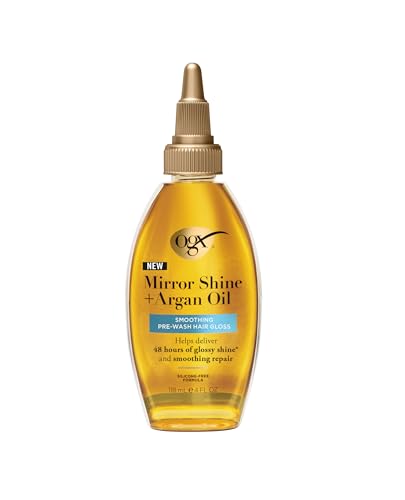
OGX
Mirror Shine + Argan Oil Pre-Wash Hair Gloss
hair oil · 118 ml · 8 ingredients
£5.00−50%Amazon UK
- No essential oils

Balea
Professional Hair Oil Dream Curls 1 x
hair oil · 100 ml · 23 ingredients
£7.90−7%Amazon UK
- No essential oils
- With vitamin E

OGX
Bond Protein Repair Sealing Hair Serum
hair oil · 50 ml · 25 ingredients
£6.00−50%Amazon UK
- No essential oils
- With glycerin
- With panthenol
- With keratin
Amazon UK prices as of 6 November 2026, 06:19 GMT; Amazon sets the final price at checkout.
Frequently asked questions
Can oily skin suddenly develop in adulthood even if it was not oily before?
Yes — and it is more common than people expect. The most frequent adult-onset triggers are hormonal changes (perimenopause in women, androgen fluctuations from stress or endocrine conditions), new skincare products that disrupt the barrier, a change in climate, or a shift to a higher-GI diet. If oily skin develops suddenly in adulthood without an obvious environmental explanation — especially if accompanied by acne, irregular periods, or hair changes — a hormonal evaluation by a dermatologist or endocrinologist is worthwhile.
Does washing your face more often make oily skin worse?
Yes, in most cases. Cleansing more than twice daily strips the skin's surface lipids, signals barrier compromise, and triggers compensatory sebum production. The AAD recommends cleansing twice daily (and after sweating heavily). If your skin becomes oily again two hours after cleansing, the cause is high sebaceous gland activity — not insufficient cleansing. Use blotting papers for midday oil control rather than additional cleansing.
Is there a medical condition that causes sudden severe oiliness?
Yes. Conditions associated with androgen excess — polycystic ovary syndrome (PCOS), congenital adrenal hyperplasia, Cushing's syndrome, and certain tumors — can cause pronounced oiliness alongside other signs. In men, hypogonadism treatment with testosterone can increase oiliness significantly. If your oiliness is sudden, severe, or accompanied by menstrual irregularities, hair thinning, unwanted hair growth, or significant unexplained weight changes, see a healthcare provider for hormonal evaluation.
Can stress alone cause oily skin?
Stress alone can worsen pre-existing oiliness, but it is unlikely to be the sole cause of clinically significant seborrhea in someone with otherwise non-oily skin. The mechanism is real — CRH and substance P receptors on sebocytes respond to stress — but the magnitude of the effect is generally smaller than the effect of genetics or androgen levels. Stress is best understood as an amplifying factor rather than a primary cause.
Why is my T-zone oily but my cheeks are dry?
This is the classic combination skin pattern. Sebaceous gland density is not uniform across the face — it is highest in the T-zone (forehead, nose, chin), where the skin can produce significantly more sebum per square centimeter than the cheeks. Combination skin means your skin behaves as genuinely oily in the T-zone and normal-to-dry on the cheeks. The right approach is a skin-type-agnostic routine: gentle cleanser, lightweight non-comedogenic moisturizer across the full face, BHA targeted to the T-zone only. Avoid applying clay masks to the already-dry cheeks.
Sources
- 01Prevalence and Associated Diseases of Seborrheic Skin in Adults — PubMed Central / Frontiers in Medicine, 2021-09-01. Seborrheic skin predicted acne (OR 3.59) and rosacea (OR 1.45) in a study of 48,630 employees; seborrhea is defined as overactivity of sebaceous glands resulting in excess sebum secretion.
- 02The cutaneous effects of androgens and androgen-mediated sebum production and their pathophysiologic and therapeutic importance in acne vulgaris — PubMed / Journal of the American Academy of Dermatology, 2024-01-01. Androgens (testosterone, DHT) are the primary regulators of sebum production; DHT is selective for facial sebocytes; androgen-mediated sebum excess is a necessary early step in acne pathophysiology.
- 03Sebaceous-immunobiology is orchestrated by sebum lipids — PubMed Central / Frontiers in Immunology, 2018-02-21. CRH, substance P, IGF-1, and androgen receptors are all expressed on human sebocytes; environmental, hormonal, and neurogenic signals regulate sebaceous gland activity.
- 04How to control oily skin — AAD Patient Education — American Academy of Dermatology (aad.org). AAD recommends cleansing only twice daily; over-cleansing triggers more oil production; harsh products worsen barrier integrity and sebum output.
- 05Hormonal treatment of acne vulgaris: an update — PubMed Central / Clinical, Cosmetic and Investigational Dermatology, 2016-08-01. Estrogen counteracts androgen-driven sebum production via multiple pathways including SHBG regulation and direct sebocyte counter-action; menstrual cycle fluctuations affect sebum output via progesterone androgenicity in the luteal phase.
- 06Cosmeceuticals in acne vulgaris: from mechanism of action to clinical application — PubMed Central / Biomedicines, 2025-01-01. High glycaemic index foods elevate IGF-1 and insulin, which promote sebocyte proliferation and sebum synthesis; high-GI dietary pattern is associated with acne severity in observational studies.