Glycerin in Hair Products: When It Helps & When It Causes Frizz
The short answer
Glycerin hydrates hair in moderate humidity but pulls moisture out in very dry air.
What Is Glycerin and Why Is It in Everything?
Glycerin (also called glycerol) is a naturally occurring trihydric alcohol — a colorless, odorless, viscous liquid produced as a byproduct of soap manufacturing and biodiesel production, or synthesized from propylene. It is one of the most ubiquitous ingredients in cosmetics and personal care: estimated to appear in approximately 25–35% of all hair care formulations.
Its appeal to formulators is substantial:
- It is inexpensive
- It is safe and well-tolerated (the Cosmetic Ingredient Review Expert Panel confirmed glycerin's safety in cosmetics in 2019)
- It is an effective humectant at a wide range of concentrations
- It improves the texture, spreadability, and feel of formulations
- It has mild antimicrobial properties
For hair care specifically, glycerin's function is to attract and retain water in the hair shaft — reducing the dryness that leads to brittleness, breakage, and frizz.
How Glycerin Works on Hair: The Humectant Mechanism
Glycerin is hygroscopic — it has a strong affinity for water molecules, which it binds via hydrogen bonding. When applied to hair in a leave-in conditioner, styler, or deep treatment, glycerin molecules distribute along the hair shaft and attract water from two sources:
- The surrounding air (atmospheric moisture)
- The hair's own internal water (when atmospheric moisture is insufficient)
Which source glycerin draws from is determined almost entirely by the relative humidity of the environment — specifically the dew point, the temperature at which air becomes saturated with water vapor.
Research on glycerin's moisture retention properties (published in Scientific Reports, 2022) found that glycerin solutions maintain moisture content proportional to their concentration, and that the moisture-holding capacity increases with glycerin concentration up to approximately 60–70% weight. In hair care products, glycerin is typically used at 1–10% by weight — concentrations sufficient to attract and hold meaningful moisture under the right conditions, but not at the extreme levels needed for maximum saturation.
When Glycerin Helps
Moderate Humidity Conditions
In climates with dew points roughly between 35°F and 65°F (2°C and 18°C) — typical spring and fall weather in most temperate regions, or controlled indoor environments — glycerin performs as intended:
- It draws atmospheric water into the hair shaft, increasing cortex hydration
- Hydrated hair is more elastic, less prone to breakage, and lies smoother
- Frizz, which results from the cuticle lifting irregularly in response to moisture imbalance, is reduced when the cortex is already adequately hydrated
This is why glycerin-heavy products often work well for many people and are widely praised as moisturizing staples.
All Hair Types Benefit in the Right Conditions
Glycerin is not hair-type specific in its fundamental function — it helps hydrate regardless of curl pattern. However, curly and coily hair types (which tend to have more irregularly shaped cortex cells and a more porous cuticle) benefit most visibly from humectants, because their hair loses moisture faster between wash days. High-porosity hair, which has raised cuticle scales that allow easy moisture entry and exit, sees the most dramatic response to glycerin — both positive and negative depending on the dew point.
When Glycerin Causes Frizz
Low Dew Point (Below ~35°F / 2°C)
In very dry air — common in heated indoor spaces in winter, arid climates, or cold outdoor winter conditions — there is insufficient atmospheric moisture for glycerin to draw from the environment. Instead, glycerin fulfills its water-attracting mandate by pulling moisture from the hair's own interior — from the cortex outward toward the dry surface. The result: hair feels drier after the product than before application. Repeated use in these conditions can cause measurable increases in brittleness.
This is not a product defect or a myth. It is the established behavior of humectants in low-humidity environments, noted across the dermatological literature on humectants: "In conditions of low humidity, humectants attract moisture from the lower layers of the skin" — a principle that applies equally to the keratin matrix of hair.
Very High Dew Point (Above ~65°F / 18°C)
In tropical climates, humid summer weather, or any environment with very high ambient moisture, glycerin can work too well: it draws excessive atmospheric water into the cuticle, causing the hair fiber to swell. Hair cuticle cells are layered like roof tiles — when the cortex swells unevenly (hygroscopic swelling), the cuticle lifts and becomes irregular. This is exactly the structural condition that produces frizz.
People in humid climates who switch from glycerin-heavy to glycerin-free products and experience less frizz are observing this mechanism directly.
The Concentration Factor
Glycerin listed higher in the ingredient list (closer to position 1–5) indicates a higher concentration and more potent humectant activity — and a higher risk of humidity-dependent problems. Glycerin appearing further down the list (position 10+) is present in smaller amounts and less likely to cause noticeable frizz issues in most climates. Reading the ingredient list is the first step in understanding whether glycerin in a product will be beneficial or problematic for your environment.
Glycerin in Hair Care Products: Where It Appears
| Product type | Typical glycerin position | Humidity sensitivity risk |
|---|---|---|
| Deep conditioners | Often position 3–6 | Medium (rinsed out; less residual) |
| Rinse-out conditioners | Position 4–8 | Low (rinsed out) |
| Leave-in conditioners | Position 2–5 | High (remains on hair) |
| Curl creams and gels | Variable (1–10+) | High if top 5; low if low-list |
| Shampoos | Often position 5–10 | Very low (fully rinsed) |
The most significant glycerin effects — both positive and negative — come from leave-on products, because the glycerin remains on the hair and continues to respond to ambient humidity. In rinse-out products, most glycerin is washed away, leaving a smaller residual effect.
Alternatives to Glycerin
For people in climates with problematic dew points, several alternative humectants perform similarly in moderate conditions without the extreme-humidity downsides:
| Humectant | Key properties | Best for |
|---|---|---|
| Panthenol (Pro-Vitamin B5) | Water-binding; also coats and softens the cuticle | Most hair types, all climates |
| Aloe vera | Water-based humectant + lightweight conditioning | Fine to medium hair |
| Honey | Complex humectant; also has mild conditioning properties | Dry, coily, and high-porosity hair |
| Sorbitol | Slightly less hygroscopic than glycerin; more stable in dry conditions | Dry climates |
| Sodium PCA | Naturally occurring humectant in skin and hair; high moisture affinity | Low-porosity or fine hair |
| Hydrolyzed proteins | Attract and hold water while also reinforcing cortex structure | Damaged or high-porosity hair |
How to Know If Glycerin Is Causing Your Frizz
If you live in a climate with significant seasonal humidity variation, glycerin is worth investigating as a variable. A simple elimination test:
- For four weeks, use a leave-in conditioner and styling product that are glycerin-free (check the full ingredient list).
- Compare your hair's frizz, texture, and moisture level to your usual baseline with glycerin products.
- If frizz is noticeably lower, glycerin in your leave-on products is likely a contributing factor for your climate.
Conduct this test during the season that causes you the most frizz issues. People in the American South or Southeast Asia in summer, or in cold dry climates in winter, are most likely to see a difference.
Should You Avoid Glycerin Entirely?
No — for most people in temperate climates with moderate humidity, glycerin is a beneficial, well-tolerated humectant that improves hair hydration. Blanket avoidance is not warranted. The ingredient's reputation for causing frizz comes from its behavior in extremes that only apply to a subset of climates and hair types.
A more nuanced approach:
- Temperate, moderate humidity: glycerin is generally beneficial in all product types
- Very humid summers / tropical climates: consider glycerin-free or low-glycerin leave-on products during peak humidity months
- Dry winters / arid climates: pair glycerin products with an occlusive oil or sealing layer to trap the attracted moisture before it evaporates (the principle behind the LOC method)
- High-porosity, easily-frizzed hair: more sensitive to glycerin extremes than low-porosity hair; worth monitoring
For the LOC and LCO methods, glycerin-containing leave-ins can be excellent 'L' layer choices in temperate conditions, paired with an oil to seal moisture before it can escape.
For comprehensive moisture layering, also see the deep conditioning guide and leave-in conditioner guide.
Products with glycerin
Picked by code from each product's full ingredient list.

Anua
Heartleaf 80% Moisture Soothing Ampoule
serum · 30 ml · 18 ingredients
£22.00Amazon UK
- Fragrance-free
- No essential oils
- With hyaluronic acid
- With glycerin
- With panthenol

Anua
Heartleaf LHA Moisture Peeling Gel
exfoliant · 120 ml · 23 ingredients
- Fragrance-free
- No essential oils
- With hyaluronic acid
- With glycerin
- With salicylic acid

Balea
Anti-Wrinkle Eye Cream Q10
eye cream · 15 ml · 22 ingredients
£4.22Amazon UK
- Fragrance-free
- No essential oils
- With glycerin
- With vitamin C
- With panthenol
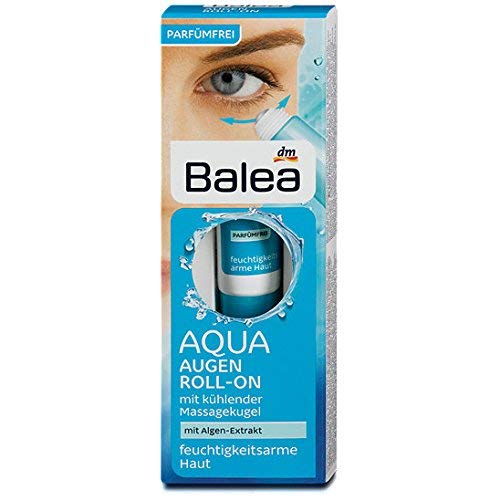
Balea
Aqua Eye Roll-On
deodorant · 15 ml · 22 ingredients
£5.49Amazon UK
- Fragrance-free
- No essential oils
- With hyaluronic acid
- With glycerin
- With panthenol
Amazon UK prices as of 6 November 2026, 06:08 GMT; Amazon sets the final price at checkout.
Frequently asked questions
What does the current evidence say about glycerin in hair care?
Glycerin is a well-established humectant with decades of use in cosmetics and a favorable safety profile confirmed by the Cosmetic Ingredient Review Expert Panel (2019). Research on glycerin's moisture-retention properties confirms it binds and retains water effectively at relevant concentrations. Its humidity-dependent behavior — helping in moderate humidity, potentially causing frizz in extremes — is consistent with the established science of humectant function. There are no new safety concerns, and the evidence supports use in moderate climates for most hair types.
What dew point range is 'safe' for glycerin in hair products?
Most hair care practitioners working with humectant behavior use a dew point range of approximately 35–65°F (2–18°C) as the 'glycerin-friendly' window. Below 35°F, there is insufficient atmospheric moisture for glycerin to draw from the air, and it may pull from the hair's own moisture reservoir. Above 65°F, atmospheric moisture is so abundant that glycerin can over-hydrate the cuticle, causing swelling and frizz. These thresholds are practical guidelines from the curly hair community rather than hard scientific cutoffs — individual hair porosity, product concentration, and layering practices all shift the actual response.
Is glycerol the same as glycerin?
Yes — glycerol and glycerin refer to the same compound (C₃H₈O₃, 1,2,3-propanetriol). 'Glycerin' is the cosmetic ingredient name used on product labels in the US and EU. 'Glycerol' is more common in scientific literature. Both mean the same trihydric alcohol with the same properties.
Why does glycerin cause frizz in humidity if it's supposed to add moisture?
Frizz is caused by uneven moisture absorption — specifically, the cuticle swelling and lifting irregularly when the hair cortex takes on water asymmetrically. In high humidity, glycerin acts as a highly effective channel for atmospheric water to enter the hair fiber rapidly. If the hair absorbs more water than its internal structure can accommodate uniformly, the cuticle lifts unevenly. This is why the same ingredient that reduces frizz in dry-to-moderate conditions can create it in high humidity — it is working as a humectant in both cases, but in the humid context, it is working too aggressively.
Can I use glycerin products on low-porosity hair?
Yes, but with caveats. Low-porosity hair has tightly closed cuticles that resist both water and product absorption. Glycerin applied to low-porosity hair may sit on the surface rather than penetrating effectively, leaving a sticky or tacky feel. Applying glycerin products to hair that is already damp (not dry), and using steam or a warm environment to help open the cuticle slightly, improves glycerin's effectiveness on low-porosity hair. In high humidity, even low-porosity hair can experience some glycerin-related frizz, though it tends to be less pronounced than in high-porosity hair.
Sources
- 01Moisture retention of glycerin solutions with various concentrations: a comparative study — Scientific Reports (Nature Publishing Group), 2022-06-16. Moisture-retention capacity of glycerin increases with concentration from 0 to 60 wt%; glycerin at 60–70 wt% shows negligible weight change during evaporation, confirming strong water-binding capacity at higher concentrations.
- 02Safety Assessment of Glycerin as Used in Cosmetics — International Journal of Toxicology / Cosmetic Ingredient Review, 2019-10-01. Glycerin is safe as used in cosmetics; it is a well-known humectant and conditioning agent in personal care products; it attracts and holds water via hygroscopic action and has an established safety profile.
- 03Moisturizers: The Slippery Road — PubMed Central / Indian Journal of Dermatology, 2016-05-01. In low-humidity environments, humectants attract moisture from deeper tissue (or in the case of hair, from the cortex) rather than from the air — causing dryness rather than hydration; glycerin is most effective as a humectant in moderate-humidity conditions.
- 04On Hair Care Physicochemistry: From Structure and Degradation to Novel Biobased Conditioning Agents — PubMed Central / Polymers (MDPI), 2023-01-24. The hair cuticle's lipid and protein structure controls moisture movement into and out of the cortex; conditions that cause cuticle lifting produce frizz through asymmetric hygroscopic swelling; humectants affect the moisture equilibrium of the hair fiber.
- 05Hair Cosmetics: An Overview — PubMed Central / Journal of Clinical and Diagnostic Research, 2015-04-01. Humectants including glycerin are widely used in conditioning formulations to improve moisture content of the hair shaft; leave-on products retain humectants on the hair fiber for prolonged moisturizing effect.