Do Protective Styles Actually Help Hair Grow Faster?
The short answer
Protective styles do not speed up hair growth.
The Core Question: Does Hair Grow Faster in Protective Styles?
No — and the misunderstanding is worth explaining clearly, because it shapes how people care for their hair.
Human scalp hair grows during the anagen phase of the hair growth cycle. During anagen, hair follicle cells divide roughly every 23–72 hours at the hair bulb, extruding a new strand at an average rate of 0.3–0.4 millimeters per day. Across the scalp, approximately 85–90% of follicles are in anagen at any given time. The result is a widely cited average: approximately 0.5 inches (1.25 cm) per month, or about 6 inches (15 cm) per year.
This rate is biologically determined by:
- Genetics — the primary driver of anagen duration (ranging from 2–7 years per strand) and strand diameter
- Nutrition — iron, ferritin, vitamin D, protein, and zinc all play documented roles in follicle cycling
- Hormonal status — androgens, estrogens, and thyroid hormones directly regulate the hair cycle
- Scalp health — chronic inflammation, seborrheic dermatitis, and folliculitis can shorten anagen
A braid, wig, or twist does not reach the follicle. It does not alter the rate of cell division at the hair bulb. It does not extend anagen or prevent catagen. Hair grows exactly as fast whether it is loose, braided, or tucked under a wig.
What Protective Styles Actually Do: The Retention Mechanism
The real benefit is retention — keeping the hair that grows from breaking off before it accumulates as length.
Consider two scenarios with the same follicle:
Scenario A — No protective style: Hair is manipulated daily (combing, brushing, heat styling). Each handling event applies mechanical stress to the shaft. The ends, which are the oldest and most weathered part of each strand, are particularly vulnerable. If breakage at the ends keeps pace with growth at the root, net visible length stays the same or increases very slowly.
Scenario B — Protective style worn correctly: Ends are tucked away. Daily manipulation is reduced from once or twice per day to near-zero. Heat is not applied for weeks. Environmental friction (against shoulders, collars, pillow) is eliminated. The strand grows at the same rate at the root — but now most of that growth survives to the point where it can be measured.
Over a 3–6 month period, this difference in breakage rate compounds into a meaningful difference in retained length.
The Evidence Basis
There is currently no randomized controlled trial directly comparing hair length retention in protective vs. non-protective styling over a defined period — the logistics of such a study are challenging, and the research has not been done. What the published literature does establish:
-
Mechanical breakage is a major obstacle to length retention in Afro-textured and chemically processed hair. A 2025 narrative review in JEADV confirmed that Afro-textured hair's elliptical shaft and retro-curved follicle produce uneven sebum distribution and increased susceptibility to tangling, knotting, and mechanical failure. The same review identified braids, twists, and cornrows as styles that "minimize interstrand friction, retain hair moisture, and ease hair management."
-
Hair fibers become increasingly fragile with length. A 2025 review on hair longevity (PMC) noted that "hair fibers longer than 12 cm will start to show some signs of damage at the distal ends due to grooming and product use." Reducing those grooming events preserves the distal fiber.
-
Reducing manipulation events directly reduces a primary breakage vector. Each combing or brushing pass applies a measurable tensile force to the hair shaft. Protective styles that eliminate daily combing eliminate the most frequent repeated stress on the hair fiber.
The mechanism is consistent and well-supported even in the absence of a direct RCT: less manipulation → less breakage → more retained length.
How Much Retention Benefit to Expect
The benefit is real but depends on hair type, style, and adherence:
Afro-Textured and Natural (Type 3C–4C) Hair
The greatest beneficiaries. The combination of high curvature (many stress-concentration points along the shaft), elliptical shaft morphology, and typically lower moisture retention means that daily manipulation causes more cumulative damage than in straighter hair types. A properly worn protective style over 6–8 weeks can meaningfully shift the balance between breakage and retention.
Chemically Relaxed or Bleached Hair
High porosity and compromised cuticle integrity from chemical processes make these hair types similarly vulnerable to mechanical breakage. A protective style reduces the manipulation that would otherwise stress already-weakened cuticle edges.
Wavy and Curly (Type 2–3B) Hair
Some benefit, but less pronounced than in highly textured hair. These types are less prone to the severe mechanical breakage that makes protective styling most impactful.
Straight Hair (Type 1)
Least benefit from protective styling in terms of breakage prevention, as the shaft morphology distributes stress more evenly. Protective styles may still be useful for reducing heat dependency or managing highly processed straight hair.
The Tension Trap: When Protective Styles Impede Growth
Ironically, protective styles worn incorrectly can actively reduce hair density and growth — by damaging the follicle itself.
Traction alopecia develops when repetitive tension is applied to the same follicles over time. The AAD identifies cornrows, tight braids, ponytails, locs, and hair extensions as common causes. Early traction alopecia presents as:
- Thinning at the temples, hairline, and edges
- Perifollicular redness, bumps, or pustules along the hairline
- Scalp pain during and after installation
- The "fringe sign" — retained short hairs at the margin of a thinning zone, found in approximately 90% of traction alopecia cases
Caught early, traction alopecia is reversible by eliminating the tension source. Left unaddressed, follicular scarring becomes permanent — and no protective style benefit compensates for permanently destroyed follicles.
The three most common mistakes:
- Too tight at installation — particularly at the hairline, where follicles are finer and more susceptible
- Worn too long — beyond 6–8 weeks, new growth matting and accumulated tension begin causing root stress
- No scalp care — neglecting the scalp under a protective style leads to seborrheic dermatitis and folliculitis, both of which can shorten anagen and impair growth
Scalp Health Is the Real Lever
If the goal is maximizing retention and supporting healthy hair growth, scalp health matters more than any particular style:
- Iron and ferritin: Iron deficiency is one of the most common reversible causes of hair shedding in women. Serum ferritin below 30 ng/mL is associated with increased telogen shedding in multiple studies.
- Vitamin D: Low vitamin D levels have been associated with shorter anagen duration in some studies.
- Protein intake: Hair is primarily keratin (protein). Severe caloric or protein restriction causes telogen effluvium within 3–5 months.
- Scalp inflammation: Chronic seborrheic dermatitis or folliculitis creates an inflammatory microenvironment that can impair follicle cycling.
A protective style on an unhealthy scalp or a nutritionally depleted person will not compensate for those upstream deficits.
The Retention-Optimized Protective Style Protocol
For those whose primary goal is maximizing retained length:
- Choose a low-tension style — knotless braids, loose twists, or a wig over a satin wig cap and loosely cornrowed natural hair
- Moisturize before installation — braid dry, brittle hair and it will break extensively at removal
- Cleanse scalp every 1–2 weeks — use diluted sulfate-free shampoo via a nozzle applicator; follow with lightweight oil or leave-in to scalp and exposed shaft
- Do not exceed 6–8 weeks per install; give hair 1–2 weeks open between installs
- Monitor hairline actively — check temples and edges every two weeks; any pain, bumps, or thinning means loosening or removal immediately
- Remove gently — unravel, do not pull; detangle in sections from ends to roots while saturating with conditioner
See When Protective Styles Cause Damage for the full clinical guide to risk signs and traction alopecia.
Products that fit: thinning hair
Picked by code from each product's full ingredient list.

Klorane
Strengthening & Stimulating Conditioner
conditioner · 200 ml · 26 ingredients
- No essential oils
- With caffeine
- With niacinamide
- With panthenol
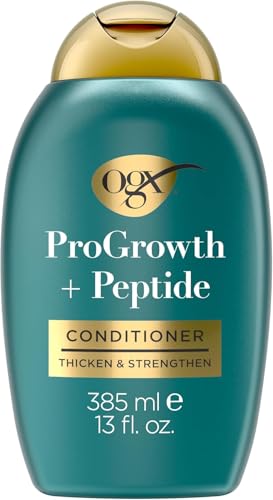
OGX
ProGrowth + Peptide Conditioner
conditioner · 385 ml · 19 ingredients
- No essential oils
- With niacinamide
- With peptides
- With panthenol

The Body Shop
Shea Intense Repair Conditioner
conditioner · 250 ml · 21 ingredients
- No essential oils
- With peptides
- With panthenol
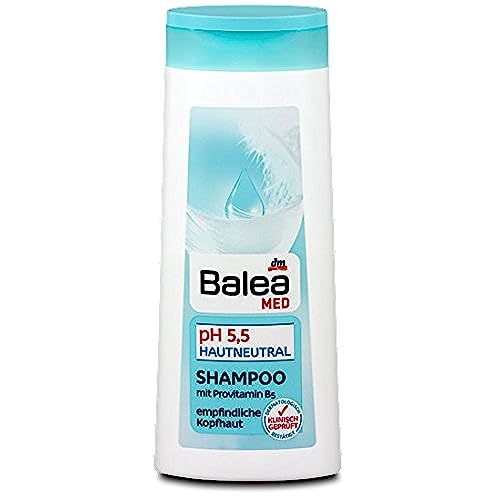
Balea
Med pH Skin Neutral Shampoo ProvitaminB5
shampoo · 300 ml · 26 ingredients
- No essential oils
- With niacinamide
- With panthenol
Frequently asked questions
What does the latest evidence say about protective styles and hair growth in 2026?
The most current review evidence — including a 2025 narrative review in JEADV on afro-textured hair care and a 2025 PMC review on hair longevity — confirms that protective styles do not accelerate hair growth. They reduce mechanical breakage, which allows more of the biological growth to accumulate as retained length. No randomized controlled trial has directly measured length retention in protective vs. non-protective styling, but the mechanism (fewer manipulation events = less breakage = more retained length) is consistent with established hair fiber biology. The evidence is strongest for Afro-textured and chemically processed hair types.
Why do some people say their hair 'grew so much' in protective styles?
They are experiencing length retention, not accelerated growth. If someone normally trims or loses an inch per month to breakage but then retains most of that inch while in a protective style for three months, they emerge with three inches more length than they would have had otherwise — even though their follicles were growing at the same rate throughout. The subjective experience of 'faster growth' reflects reduced breakage over the style period, which is a real and valuable outcome, just not the mechanism often assumed.
How long should I stay in a protective style to see a length retention benefit?
Most people notice a meaningful retention difference over 6–8 weeks minimum. Shorter periods (2–3 weeks) don't allow enough growth accumulation to be visually apparent. The style should come out no later than 8 weeks to prevent matting, scalp buildup, and the tension accumulation that causes traction alopecia. After removal, many people find they have 0.5–1 inch more length than they had going in — which reflects the growth that occurred minus the reduced breakage.
Can wearing protective styles too often cause hair loss?
Yes — when they are installed with tension, particularly at the hairline and temples, or worn beyond 6–8 weeks without release. The AAD specifically warns against continuous wear of braids, cornrows, and extensions, noting that ongoing tension can cause traction alopecia — a hair loss condition that starts reversible but becomes permanent if follicles scar. Protective styles should be rotated with open-hair periods rather than worn back-to-back without breaks.
Should I use a wig or braids for the best retention?
It depends on your scalp's sensitivity and your maintenance capacity. Wigs offer the most flexibility — near-zero daily manipulation and weekly scalp access — but are only protective when worn over moisturized, loosely secured natural hair with a satin wig cap. Knotless braids offer excellent retention with lower maintenance frequency (every 1–2 weeks versus weekly for wigs) but require professional installation to avoid tension risk. Either option outperforms unprotected daily styling for breakage reduction, provided installation and scalp care are managed properly.
Sources
- 01Afro-textured hair care: a narrative review and recommendations for dermatologists — PMC / JEADV, 2025-01-01. Afro-textured hair's elliptical shaft and retro-curved follicle create increased susceptibility to tangling and mechanical breakage; single/knotless braids, cornrows, and two-strand twists minimize interstrand friction and support moisture retention.
- 02Hair Longevity — Evidence for a Multifactorial Holistic Approach — PMC / Skin Health and Disease, 2025-03-01. Hair fibers longer than 12 cm accumulate mechanical damage at distal ends from grooming and product use; reducing manipulation events is central to preserving hair fiber integrity over time.
- 03Hairstyles that pull can lead to hair loss — American Academy of Dermatology (aad.org). The AAD warns that tight hairstyles — cornrows, braids, ponytails, locs, and extensions — cause traction alopecia; pain at the scalp means the style is too tight; ongoing tension leads to permanent hair loss.
- 04Traction Alopecia: Clinical and Cultural Patterns — PMC / American Journal of Dermatology, 2021-10-01. Traction alopecia from tight styling begins as reversible, non-scarring hair loss and progresses to permanent follicular loss if tension is not removed; the fringe sign appears in approximately 90% of cases.
- 05How to prevent hair damage from a weave or extensions — American Academy of Dermatology (aad.org). AAD recommends wearing extensions/weaves for 2–3 months maximum; hair must be moisturized and conditioned before installation; pain indicates excessive tension that must be addressed immediately.