Cortisol Face: How Chronic Stress Shows Up on Your Skin
The short answer
Chronic stress raises cortisol, degrading collagen and causing puffiness.
What Is "Cortisol Face"?
"Cortisol face" emerged as a popular social media concept — primarily on TikTok and Instagram — to describe a cluster of perceived facial changes that creators attributed to high cortisol from chronic stress: facial puffiness and roundness, redness, persistent acne, and a general appearance of "puffy" or "swollen" features.
Dermatologists and endocrinologists have broadly responded that while the underlying biology is real, the framing conflates two distinct phenomena that require different responses:
-
The genuine skin effects of chronically elevated cortisol — which include collagen loss, barrier impairment, acne, skin thinning, and transient puffiness — are scientifically documented and occur across a spectrum from everyday chronic stress to frank endocrine disease.
-
Cushing's syndrome — the medical condition in which pathologically extreme, sustained cortisol excess produces the characteristic "moon face" (dramatic bi-facial fat redistribution), buffalo hump, central obesity, skin atrophy, purple striae, and easy bruising — which requires clinical investigation, not lifestyle adjustment.
Understanding which category applies to you determines whether the right response is better sleep and stress management, or a GP referral.
What Cortisol Actually Does to Facial Skin
Collagen Degradation and Accelerated Aging
Cortisol is the most potent endogenous inhibitor of collagen synthesis. At the cellular level, it operates through glucocorticoid receptors (GR) on dermal fibroblasts:
- Upregulates MMP-1 and MMP-8 — the matrix metalloproteinases that cleave existing collagen fibers. These are the same enzymes that UV radiation activates, making chronic stress an additive aging force alongside sun damage.
- Downregulates collagen type I and type III gene expression — reducing the rate at which fibroblasts produce new structural collagen. A 2021 PMC study (PMC8125628) demonstrated that cortisol exposure in human dermal fibroblast cultures significantly reduced collagen type I expression.
- Reduces hyaluronic acid synthase expression — depleting the dermal matrix of the molecule responsible for tissue turgor and moisture retention.
- Downregulates LOXL1 — an enzyme critical to elastin crosslinking; its suppression predicts elastin network impairment over time.
The clinical consequence: the skin loses its structural density, becomes thinner, and forms fine lines more readily. A 2025 exploratory clinical study (PMC11743297) found that moderately stressed subjects showed a 32.9% increase in microrelief alterations (skin texture and fine lines) and significantly decreased dermal antioxidant capacity compared with non-stressed controls.
Puffiness and Fluid Retention
Cortisol has dose-dependent effects on fluid balance. At moderate elevations (chronic psychological stress), it has mild mineralocorticoid-like actions that promote sodium and water retention — contributing to transient facial puffiness, particularly noticeable after nights of poor sleep (which also elevates cortisol through a different mechanism: failure of nocturnal cortisol suppression).
This puffiness is real but typically modest and reversible with rest, hydration, and stress reduction. It is fundamentally different from the dramatic, fixed, bilateral facial fat redistribution (cushingoid "moon face") of Cushing's syndrome.
Acne and Sebum Overproduction
Stress-elevated cortisol acts through two pathways to worsen acne:
- Direct sebaceous stimulation: Cortisol and CRH receptors are expressed on sebocytes. Stress activates these receptors, increasing sebum lipid production.
- Androgen co-elevation: Adrenal androgens (DHEAS, androstenedione) are co-secreted with cortisol during HPA-axis activation, providing an additional androgen signal to sebaceous glands.
The typical clinical presentation is increased inflammatory lesions — papules and pustules — particularly along the jawline and chin in women, during periods of high stress.
Redness and Vascular Changes
Cortisol and catecholamines alter vascular reactivity. In susceptible individuals (particularly those with rosacea-prone skin), chronic stress can worsen:
- Persistent facial erythema (background redness)
- Flushing episodes
- Visible capillary dilatation
Skin also appears more reactive and sensitive during high-stress periods due to barrier impairment.
Skin Thinning and Barrier Disruption
Glucocorticoids impair keratinocyte differentiation and ceramide synthesis. The result is:
- A thinner, more fragile epidermis
- Higher transepidermal water loss (drier, tighter-feeling skin)
- Increased sensitivity to irritants and allergens
- Impaired wound healing
This is the same mechanism by which long-term topical corticosteroid overuse causes skin atrophy — chronic endogenous cortisol excess creates an analogous (though usually milder) effect from within.
Cushing's Syndrome: The Medical Distinction
Cushing's syndrome is a serious endocrine disorder characterized by pathologically prolonged and extreme cortisol excess. It is NOT caused by ordinary psychological stress. Its causes are:
- Pituitary adenoma (Cushing's disease): A pituitary tumor secreting excess ACTH, which drives excessive cortisol production — the most common endogenous cause
- Adrenal tumor: A tumor producing cortisol directly
- Ectopic ACTH tumor: A non-pituitary tumor (often in the lung) producing ACTH
- Exogenous corticosteroids: Long-term use of oral or high-dose inhaled/topical corticosteroids is the most common cause overall
Cushing's Syndrome Skin Features
The skin and facial changes in Cushing's syndrome are clinically distinct from stress-related changes:
| Feature | Stress-related cortisol effects | Cushing's syndrome |
|---|---|---|
| Facial appearance | Mild, transient puffiness | True moon face: dramatic, fixed bilateral rounding with fat in cheeks and temporal fossae |
| Fat distribution | Minimal/none | Truncal obesity + supraclavicular/dorso-cervical ("buffalo hump") fat pads |
| Skin striae | Not a feature | Wide (>1 cm), violaceous (purple-pink) stretch marks on abdomen, thighs, breasts |
| Skin thickness | Mildly reduced over time | Marked skin thinning and fragility; easy bruising with minimal trauma |
| Other features | Acne, dullness, fine lines | Muscle weakness, hypertension, osteoporosis, hirsutism, glucose intolerance |
The Cleveland Clinic and NIH both emphasize that Cushing's syndrome is rare and almost never results from ordinary day-to-day psychological stress — the cortisol elevation from psychological stress is orders of magnitude below the sustained levels required to produce cushingoid features.
Do Stress-Reduction Supplements and "Cortisol Blockers" Work?
The wellness market has capitalised on cortisol anxiety with a range of adaptogen supplements marketed as "cortisol control." A sober assessment:
- Ashwagandha (Withania somnifera): Has several small RCTs showing modest reductions in self-reported stress and some showing reduced salivary cortisol in stressed adults. Effect sizes are modest. Evidence in the context of skin outcomes specifically is absent.
- Rhodiola rosea: Some evidence for reduced stress perception; cortisol data are inconsistent.
- Phosphatidylserine: Two older small studies suggested blunted cortisol response to exercise stress; evidence is insufficient to recommend for skin.
- Vitamin C: Antioxidant that supports cortisol metabolism; true deficiency impairs adrenal function, but supplementation above dietary adequacy has not been shown to lower cortisol meaningfully.
- "Cortisol blockers": No supplement blocks cortisol secretion at the HPA level without pharmaceutical-grade intervention. Products marketed with this claim are not supported by evidence.
The most evidence-backed cortisol-reducing interventions are not supplements:
- Sleep (7–9 hours): The single most impactful cortisol-reducing daily variable
- Aerobic exercise: Acutely raises cortisol but over time improves HPA-axis regulation and stress resilience
- Mindfulness-based stress reduction (MBSR): Multiple RCTs show reduced perceived stress and some show reduced cortisol awakening response
- Cognitive behavioral therapy (CBT): Most evidence for sustained cortisol normalisation in clinically stressed populations
Skincare for Cortisol-Related Skin Changes
If you have documented stress-related skin changes (acne flares, increased skin roughness and fine lines, puffiness, sensitivity), the following evidence-backed interventions support skin while you address root causes:
Anti-aging and Collagen Support
- Retinol or tretinoin (PM): Directly upregulates collagen type I via nuclear RAR receptors — the most evidence-based counter to cortisol-driven collagen degradation
- Topical vitamin C (L-ascorbic acid, AM): Antioxidant that reduces oxidative skin damage and supports collagen synthesis (required cofactor for hydroxylation)
- Broad-spectrum SPF 30+ (AM): UV damage and cortisol both degrade collagen via MMP upregulation; removing UV as an additive factor is essential
Barrier and Hydration Support
- Ceramide-rich moisturizer: Replenishes the barrier lipids that cortisol-impaired keratinocyte differentiation reduces
- Hyaluronic acid: Replaces dermal hyaluronic acid depleted by cortisol
- Niacinamide: Strengthens barrier, reduces inflammation, and mild sebum-regulating effect
Puffiness Management
- Cold compress in the morning: Temporary vasoconstriction to reduce tissue fluid
- Lymphatic drainage facial massage: Some evidence for reducing morning facial puffiness by supporting lymphatic clearance
- Reduce alcohol and sodium: Both cause fluid retention that adds to cortisol-mediated puffiness
When to See a Doctor
See a GP or endocrinologist promptly if you notice:
- Unexplained round, full face that has developed over months without corresponding overall weight gain
- Wide purple or violet stretch marks (wider than typical silver/white striae) on the abdomen, thighs, or breasts
- Easy bruising with minimal trauma; skin that seems very thin
- Unexplained central weight gain with relatively thin limbs
- Proximal muscle weakness (difficulty rising from a chair, climbing stairs)
- Hypertension without an obvious lifestyle cause
- Irregular periods or hormonal symptoms in women not explained by other causes
These signs, particularly in combination, warrant blood and urine cortisol testing to rule out Cushing's syndrome. Do not rely on social media self-diagnosis of "cortisol face" if these symptoms are present.
For stress-related skin changes without these features, the appropriate management is addressing sleep, stress, and skin routine — not endocrine investigation.
Products that fit: sensitive skin
Picked by code from each product's full ingredient list.

Naturium
Marshmallow Root Barrier Balm
moisturizer · 50 g · 58 ingredients
- Fragrance-free
- No essential oils
- No drying alcohol
- No MI/MCI
- No menthol, camphor and witch hazel
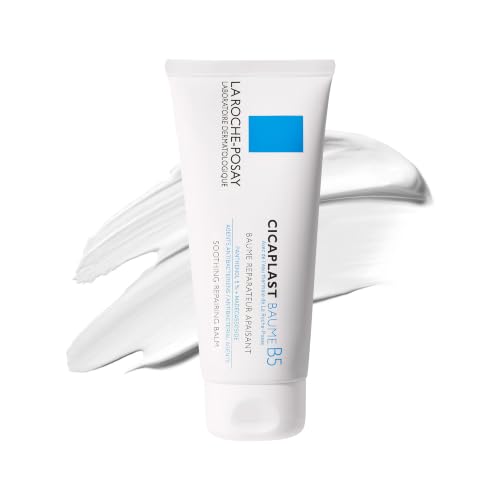
La Roche-Posay
Cicaplast Baume B5 Soothing Repair
moisturizer · 100 ml · 33 ingredients
- Fragrance-free
- No essential oils
- No drying alcohol
- No MI/MCI
- No menthol, camphor and witch hazel

Beauty of Joseon
Red Bean Water Gel
moisturizer · 99.9 ml · 58 ingredients
- Fragrance-free
- No essential oils
- No drying alcohol
- No MI/MCI
- No menthol, camphor and witch hazel

Uriage
Xemose C8+ Lipid-Replenishing Anti-Itch Balm
moisturizer · 500 ml · 24 ingredients
- Fragrance-free
- No essential oils
- No drying alcohol
- No MI/MCI
- No menthol, camphor and witch hazel
When to see a professional
See a GP or endocrinologist promptly if you develop: unexplained progressive facial rounding; wide violaceous (purple-pink) stretch marks on the abdomen, thighs, or breasts; easy bruising with minimal trauma; markedly thin, fragile skin; central weight gain with thin limbs; proximal muscle weakness; or hypertension without clear lifestyle cause. These signs may indicate Cushing's syndrome, a treatable medical condition requiring clinical evaluation and cortisol testing. For stress-related skin changes without these features (mild puffiness, stress acne, skin texture changes), management is lifestyle and skincare-based; see a dermatologist if skin conditions significantly impair quality of life.
Frequently asked questions
Is 'cortisol face' a real medical condition in 2026?
"Cortisol face" is not a medical diagnosis — it is a social media term. However, it references two real phenomena. First, the skin effects of chronically elevated cortisol (from any sustained stress source) are scientifically documented: collagen degradation, sebum increase, barrier impairment, puffiness, and accelerated aging. These are genuine and clinically supported. Second, the dramatic facial rounding that inspired the trend most closely resembles features of Cushing's syndrome — a genuine medical diagnosis characterized by pathological cortisol excess from a tumor or corticosteroid use. Ordinary psychological stress does not produce Cushing's-level cortisol concentrations. Dermatologists and endocrinologists have consistently stated that social media representations conflate mild stress-related changes with the much more extreme presentation of Cushing's.
How do I know if my puffy face is from stress or something more serious?
Stress-related puffiness tends to be transient, worse in the morning after poor sleep, and accompanied by other recognisable stress signs (acne flares, tiredness, irritability). It improves with rest, hydration, and stress reduction. Concerning features that warrant a physician visit include: puffiness that is persistent and progressive over months; true bilateral facial rounding that has changed your face shape; wide violaceous (deep purple-pink) stretch marks; easy bruising; central weight gain with thin limbs; or muscle weakness. If in doubt, a GP can order a 24-hour urinary free cortisol, salivary cortisol rhythm, or 1 mg dexamethasone suppression test to screen for Cushing's syndrome.
Can cortisol really age your face faster?
Yes — within the documented range of chronic stress. The mechanism is well-characterized: cortisol upregulates collagenases (MMP-1, MMP-8) and suppresses new collagen synthesis in fibroblasts, depletes hyaluronic acid, and impairs the epidermal barrier. A 2025 clinical study found that moderately stressed individuals showed measurably more skin microrelief alterations and fine lines than their non-stressed counterparts. Years of chronic HPA-axis hyperactivation represent a meaningful additive load on skin aging alongside UV exposure and genetics.
Do cortisol supplements or 'cortisol blockers' improve skin?
No supplement has demonstrated clinical evidence for meaningful cortisol blockade or skin improvement through cortisol reduction in rigorous trials. Ashwagandha has the most consistent (though modest) RCT data for reducing perceived stress and, in some studies, salivary cortisol — but skin-outcome evidence is absent. The most evidence-backed interventions for lowering chronic cortisol are lifestyle-based: adequate sleep (the most powerful), aerobic exercise, MBSR, and CBT. Combining these with retinol and barrier-supportive skincare addresses both the root cause and its skin-level consequences.
What skincare ingredients counteract cortisol's collagen-degrading effects?
Retinol and tretinoin are the most evidence-backed ingredients for directly countering cortisol-driven collagen loss — they activate nuclear RAR receptors in fibroblasts, upregulating collagen type I synthesis and suppressing MMP activity (the same enzymes cortisol upregulates). Topical vitamin C supports collagen hydroxylation (a required step in collagen fiber formation) and scavenges the reactive oxygen species elevated by cortisol. Peptides may offer modest fibroblast stimulation. SPF is non-negotiable: UV and cortisol both degrade collagen via MMP upregulation, and sun protection removes one of two major inputs.
How long does it take for skin to recover when stress levels improve?
Transient effects like puffiness and morning redness often normalize within days to a week of stress reduction and improved sleep. Acne flares may take two to four weeks to settle as sebum production and inflammation normalize. Structural changes — skin texture, fine lines, barrier competence — improve more slowly, on a timeline similar to retinol results (eight to twelve weeks for surface-level improvements; longer for dermal density changes). The longer stress has been chronic, the longer recovery takes. Pairing stress reduction with retinol and barrier-supportive skincare accelerates visible improvement.
Health information, not medical advice.
Beauty Comparison is an independent editorial publication. This page is researched and sourced to the authorities listed below, but it is general information — not a diagnosis or a substitute for personalised advice from a qualified doctor, dermatologist or pharmacist. If your symptoms are severe, spreading, painful, or not improving, see a healthcare professional.Sources
- 01Impact of Chronic Moderate Psychological Stress on Skin Aging: Exploratory Clinical Study and Cellular Functioning — PubMed Central (PMC11743297), 2025-01-01. Moderately stressed subjects showed 32.9% more microrelief alterations and fine lines; cortisol downregulated collagen type I, type III, TIMP1, and LOXL1 in human dermal fibroblasts; increased cortisol and epinephrine have deleterious impact on both keratinocytes and fibroblasts.
- 02AP Collagen Peptides Prevent Cortisol-Induced Decrease of Collagen Type I in Human Dermal Fibroblasts — PubMed Central (PMC8125628), 2021-05-01. Cortisol exposure significantly reduced collagen type I expression in human dermal fibroblast cultures, confirming the direct molecular mechanism by which elevated cortisol degrades dermal collagen.
- 03The brain-skin connection: A narrative review of neuroendocrine and immune pathways — PubMed Central (PMC12701686), 2025-01-01. HPA axis activation releases cortisol, catecholamines, and androgens; peripheral nerves release substance P and CGRP; these collectively increase skin inflammation, impair barrier, increase sebum, and impair wound healing.
- 04Cushing Syndrome: What It Is, Symptoms and Treatment — Cleveland Clinic. Cushing's syndrome causes moon face (bi-facial fat redistribution), buffalo hump, truncal obesity, violaceous stretch marks, easy bruising, thin skin, and muscle weakness; most commonly caused by corticosteroid use or pituitary/adrenal tumor — not by ordinary psychological stress.
- 05Cushing's Syndrome — Endotext — NCBI Bookshelf (NBK279088). Clinical features of Cushing's syndrome include moon facies, supraclavicular fat pads, buffalo hump, skin atrophy, purpura, hirsutism, acanthosis nigricans, and central obesity; caused by ACTH-producing tumor, adrenal tumor, or exogenous glucocorticoid use.
- 06The Role of Cortisol in Chronic Stress, Neurodegenerative Diseases, and Psychological Disorders — PubMed Central (PMC10706127), 2023-12-01. Chronic stress leads to HPA axis dysregulation and persistently elevated cortisol; at skin level this drives collagenase upregulation, barrier impairment, and fluid retention — but these are dose-dependent and do not reach the level of Cushing's syndrome from psychological stress alone.
- 07Stress and Skin: An Overview of Mind Body Therapies as a Treatment Strategy in Dermatology — PubMed Central (PMC8480446), 2021-09-01. Mind-body therapies including MBSR and CBT have clinical evidence for reducing stress-related skin flares in psoriasis, eczema, and acne; lifestyle stress reduction is the evidence-based first approach to cortisol-mediated skin changes.