Hormonal Acne: Causes, Patterns & How to Treat It
The short answer
Hormonal acne is driven by androgen fluctuations that increase sebum and cause cyclical breakouts.
What Is Hormonal Acne?
Hormonal acne is acne that is predominantly driven or worsened by fluctuations in androgenic hormones — primarily testosterone and its more potent derivative dihydrotestosterone (DHT). These hormones stimulate sebaceous (oil) glands to enlarge and produce more sebum, setting off the four-factor cascade that produces every acne lesion: excess oil, abnormal follicular cell shedding, Cutibacterium acnes colonisation, and inflammation.
It is not a completely separate disease from acne vulgaris but rather a hormonally dominant subtype. The distinction matters because it guides treatment: standard topical therapy alone often delivers incomplete or short-lived results when an underlying androgen driver is unaddressed.
Who Gets Hormonal Acne?
Hormonal acne is most common in adult women, but it affects anyone with a functioning androgen pathway. Specific groups at elevated risk include:
- Adult women aged 25–40 — one of the most consistently described epidemiological features of adult acne; 20–40% of women who develop adult-onset acne do so after the age of 25.
- Women with PCOS — polycystic ovary syndrome accounts for more than 90% of cases of overall hyperandrogenism in women and is a leading cause of persistent adult acne.
- Perimenopausal women — as estrogen levels decline, the relative androgen influence on sebaceous glands increases.
- Pregnant and postpartum women — dramatic hormonal shifts can trigger new or worsened acne at any trimester and after delivery.
- Adolescents of all sexes — androgen surges at puberty are the primary reason acne peaks in the teenage years.
- Men on testosterone therapy or anabolic steroids — exogenous androgens strongly drive sebum overproduction and can trigger severe nodulo-cystic acne.
The Mechanism: Why Hormones Drive Acne
Androgen receptors are expressed in sebaceous glands, follicular keratinocytes, and dermal papilla cells. When testosterone and DHT bind these receptors:
- Sebaceous glands enlarge and dramatically increase sebum output.
- Follicular keratinocyte proliferation accelerates, forming the microcomedone plug.
- The sebum-rich, anaerobic environment feeds C. acnes colonisation.
- The resulting immune response produces inflammation — the redness, swelling, and pain of a breakout.
DHT is approximately five times more potent than testosterone at androgen receptors. It is formed locally in the skin by the enzyme 5α-reductase acting on circulating testosterone — meaning even women with normal circulating testosterone levels can have hormonally driven acne if their skin has high local 5α-reductase activity or receptor sensitivity.
Estrogen exerts a protective counter-effect: it down-regulates sebaceous gland activity and supports the skin barrier. The drop in estrogen relative to androgens — before menstruation, during perimenopause, or in PCOS — tips the balance toward acne.
The Menstrual Cycle Pattern
Many women notice a predictable monthly pattern: breakouts that worsen in the seven to ten days before menstruation (the luteal phase), when estrogen falls and progesterone dominates, then partly resolve after the period begins. This cyclical flare is a reliable clinical indicator of hormonally modulated acne.
How to Recognize Hormonal Acne: The Clinical Pattern
No laboratory test is required to diagnose hormonal acne in otherwise healthy women with a typical presentation. The following features together constitute the characteristic pattern:
Characteristic features:
- Lower-face predominance: Jaw, chin, neck, and occasionally the lower cheeks — the androgen-sensitive distribution.
- Inflammatory lesion type: Predominantly deep, tender papules and pustules rather than surface-level comedones (though blackheads and whiteheads can co-exist).
- Deep cystic lesions: Nodules and cysts concentrated on the jaw and chin in severe cases.
- Cyclical worsening: A reliable premenstrual flare pattern in women.
- Adult onset or persistence: Acne that begins or continues well beyond adolescence, particularly in women.
When it may indicate an underlying hormonal disorder:
Consult a dermatologist or endocrinologist for evaluation if acne is accompanied by any of the following:
- Irregular or absent menstrual cycles
- Excess facial or body hair (hirsutism)
- Scalp hair thinning or loss
- Unexplained weight gain, particularly around the abdomen
- Polycystic ovaries on imaging
These signs may indicate PCOS, congenital adrenal hyperplasia, or another endocrinopathy requiring targeted medical management beyond acne treatment alone.
Treatment: The Full Evidence-Based Ladder
Treatment is matched to severity and the role of hormonal factors. The AAD's 2024 updated guidelines for acne management inform this ladder.
Step 1 — Topical Therapy First
Standard topical acne treatments work for hormonal acne and are always the foundation:
- Topical retinoids (adapalene 0.1% OTC; prescription tretinoin, tazarotene, trifarotene): Normalize follicular cell turnover, prevent microcomedone formation, and reduce inflammation. First-line by AAD 2024 guidelines.
- Benzoyl peroxide (2.5%–10%): Kills C. acnes, reduces inflammation, and — critically — prevents the antibiotic resistance that can develop if antibiotics are used alone.
- Combination products: Fixed-dose combinations pairing adapalene with benzoyl peroxide outperform either ingredient used alone and are specifically recommended in the 2024 AAD guidelines.
For mild-to-moderate hormonal acne, a consistent topical routine — applied once daily at night — is the sensible starting point. Allow 8–12 weeks before judging results.
Step 2 — Topical Clascoterone (Anti-Androgen, Topical)
Clascoterone 1% cream is the first FDA-approved topical treatment that directly targets androgen receptors in the skin. It blocks testosterone and DHT from binding androgen receptors in sebaceous glands and follicular cells, reducing sebum output at the source without systemic hormonal effects. This makes it suitable for both males and females.
The 2024 AAD guidelines discuss clascoterone as an option addressing the hormonal pathway topically, with some experts noting it could be considered a first-line agent given its mechanism and safety profile. It can be combined with topical retinoids and benzoyl peroxide.
Step 3 — Systemic Hormonal Treatments (Women Only)
When topical therapy alone is insufficient and the patient is a woman not trying to conceive, systemic hormonal options are highly effective:
Combined Oral Contraceptives (COCs)
Three formulations are FDA-approved specifically for the treatment of acne in females:
- Norgestimate + ethinyl estradiol (Ortho Tri-Cyclen and generics)
- Norethindrone acetate + ethinyl estradiol (Estrostep Fe and generics)
- Drospirenone + ethinyl estradiol (Yaz and generics)
COCs reduce acne by suppressing ovarian androgen production and increasing sex hormone-binding globulin (SHBG), which binds free testosterone and reduces its availability to the skin. The AAD 2024 guidelines conditionally recommend COCs based on moderate-certainty evidence. Different formulations have generally similar efficacy; choice is guided by individual contraceptive needs, comorbidity profile, and access.
COCs are not appropriate for women with a personal or family history of estrogen-sensitive conditions, venous thromboembolism, migraines with aura, or smoking in women over 35. These contraindications require individual assessment.
Spironolactone
Spironolactone is an anti-androgen agent that has been used for acne for more than 30 years. It works through several mechanisms:
- Competes with testosterone and DHT at androgen receptors in the skin
- Inhibits 5α-reductase, reducing DHT formation
- Increases SHBG levels, lowering circulating free testosterone
Dose: Typically 50–100 mg/day for acne, with some patients benefiting from up to 200 mg/day. Higher doses carry greater risk of side effects (menstrual irregularity, breast tenderness, hyperkalemia) without proportionally greater benefit in most patients.
Efficacy: A retrospective study of 110 women reported an average 73% improvement in facial acne severity, with 55% achieving complete clearance. The AAD 2024 guidelines characterize spironolactone as a first-line treatment for women with acne, not merely a last resort.
Spironolactone is not appropriate for men — it blocks testosterone broadly and causes feminizing side effects including gynecomastia. Topical clascoterone addresses this gap for male patients.
Step 4 — Oral Isotretinoin for Severe Cases
For women (and men) with severe nodulo-cystic hormonal acne that is causing or threatening scarring, or that fails to respond adequately to the above measures, oral isotretinoin remains the most powerful option. It simultaneously reduces sebaceous gland size, normalizes follicular shedding, suppresses C. acnes, and dampens inflammation — achieving sustained long-term remission in approximately 80% of severe acne patients.
Isotretinoin requires strict prescriber monitoring and mandatory pregnancy prevention protocols (it is highly teratogenic). It is never a first-line option but is the right choice when acne is severe and unresponsive.
Hormonal Acne in Men
Men can develop hormonally driven acne, particularly:
- At puberty (androgen surge)
- During or after use of testosterone therapy or anabolic steroids
- In conditions causing elevated androgens (rare)
In men, spironolactone is not appropriate due to systemic anti-androgen effects. Topical clascoterone, topical retinoids, and benzoyl peroxide remain the backbone of treatment. Oral isotretinoin is used for severe cases.
Hormonal Acne and Skincare: What Helps, What Doesn't
The right skincare routine is a meaningful complement to treatment — not a replacement for it.
What helps:
- A gentle, non-comedogenic, fragrance-free cleanser twice daily
- A non-comedogenic lightweight moisturizer (acne-prone skin still needs hydration, especially when using drying actives)
- SPF 30+ every morning — retinoids and many acne treatments increase photosensitivity
- Avoiding heavy, occlusive foundations on the jawline and chin
What doesn't work:
- Over-cleansing or aggressive scrubbing — strips the skin barrier and worsens inflammation
- Spot-treating only — hormonal acne forms inside the follicle before it's visible; treatment should cover the whole acne-prone zone
- "Detox" products, facial steaming, or pore strips — no evidence of efficacy for hormonal acne
- Changing your diet alone — dietary modification (reducing high-glycemic foods) is a low-risk adjunct, but cannot address an androgen driver on its own
Lifestyle and Diet: A Supportive (Not Curative) Role
The evidence for specific lifestyle factors in acne has grown:
- High-glycemic-load diets raise insulin and IGF-1, which in turn stimulate androgen production in the skin and ovaries. Lowering glycemic load is the lifestyle change with the most consistent evidence for reducing acne lesion counts.
- Dairy consumption has been weakly associated with acne severity in cohort studies, possibly via whey protein driving IGF-1 and insulin. The evidence is less consistent than for glycemic load.
- Chronic stress activates the HPA axis and may increase adrenal androgen output (DHEA-S), potentially worsening hormonally driven acne. Stress management is a reasonable lifestyle measure.
These are adjuncts, not substitutes for evidence-based treatment.
When to See a Professional
See a dermatologist if:
- Acne includes nodules or cysts, or has caused any scarring
- Breakouts have not meaningfully improved after 2–3 months of consistent topical therapy
- Acne is accompanied by signs of a hormonal disorder (irregular cycles, hirsutism, unexplained weight gain, scalp hair loss)
- You want to explore hormonal treatment options (prescription required for most)
- Acne is significantly affecting mental health or quality of life
Early professional treatment dramatically reduces the risk of permanent acne scarring and can identify a treatable underlying condition.
Products that fit: acne-prone skin
Picked by code from each product's full ingredient list.

Anua
Azelaic Acid 10 Hyaluron Redness Soothing Serum
serum · 30 ml · 35 ingredients
- Fragrance-free
- No essential oils
- No heavy, pore-clogging emollients such as coconut oil and isopropyl myristate
- With salicylic acid
- With niacinamide

Medik8
Calmwise Colour Correct
serum · 50 ml · 41 ingredients
£49.00Amazon UK
- Fragrance-free
- No essential oils
- No heavy, pore-clogging emollients such as coconut oil and isopropyl myristate
- With niacinamide
- With azelaic acid

Anua
Peach 70 Niacinamide Serum
serum · 30 ml · 45 ingredients
£20.00−17%Amazon UK
- No essential oils
- No heavy, pore-clogging emollients such as coconut oil and isopropyl myristate
- With salicylic acid
- With niacinamide
Vichy
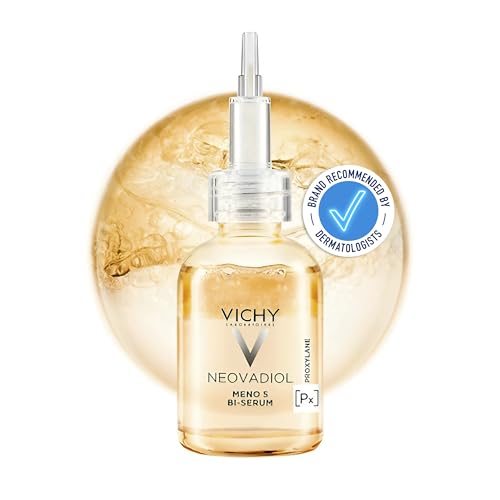
Neovadiol Meno 5 Bi-Serum
serum · 2.4 l · 23 ingredients
£32.25−12%Amazon UK
- No essential oils
- No heavy, pore-clogging emollients such as coconut oil and isopropyl myristate
- With salicylic acid
- With niacinamide
Amazon UK prices as of 6 November 2026, 06:19 GMT; Amazon sets the final price at checkout.
When to see a professional
Consult a dermatologist if hormonal acne includes nodules or cysts, is causing scarring, has not improved after 2–3 months of consistent topical therapy, or is accompanied by signs of a possible hormonal disorder — irregular menstrual cycles, hirsutism (excess facial or body hair), scalp hair thinning, or unexplained weight gain. These signs warrant endocrine evaluation (for PCOS or other conditions) alongside acne treatment. Hormonal therapies such as spironolactone and oral contraceptives require a prescription and clinical assessment. Early intervention significantly reduces the risk of permanent scarring.
Frequently asked questions
What does the latest evidence say about treating hormonal acne in 2026?
The AAD's 2024 updated guidelines confirm that hormonal acne is best managed with a combination approach. Topical retinoids and benzoyl peroxide remain strongly recommended first-line therapy for all patients. For women, spironolactone is now explicitly characterized as a first-line treatment (not merely a fallback), and topical clascoterone 1% cream — the first topical anti-androgen — is an emerging option suitable for both males and females. Three combined oral contraceptives (containing norgestimate/EE, norethindrone/EE, or drospirenone/EE) are FDA-approved specifically for acne. The 2024 guidelines continue to emphasize combining topical agents with benzoyl peroxide to prevent antibiotic resistance.
How do I know if my acne is hormonal or regular acne?
Hormonal acne has a characteristic distribution: predominantly the lower face — jawline, chin, and neck — rather than the forehead, nose, or cheeks. The lesions tend to be deep, inflammatory papules and cysts rather than surface blackheads. A cyclical pattern in women — worsening in the week before menstruation — is a strong indicator. That said, hormonal and non-hormonal acne overlap considerably, and no home test can definitively categorize them. A dermatologist can evaluate your pattern and recommend appropriate treatment. Blood tests are ordered only when an underlying hormonal disorder (like PCOS) is suspected based on accompanying symptoms.
Can I use spironolactone if I am a man?
Spironolactone is not appropriate for men because it blocks androgens systemically, causing side effects including breast tissue development (gynecomastia) and sexual dysfunction. Topical clascoterone 1% cream is the hormonal treatment option that works for both males and females — it blocks androgen receptors locally in the skin without systemic effects. Men with severe hormonal acne unresponsive to topical therapy should discuss options including isotretinoin with a dermatologist.
How long does it take for hormonal acne treatments to work?
Topical treatments typically require 6–8 weeks of consistent use before visible improvement. Hormonal therapies take longer: combined oral contraceptives typically show meaningful benefit at 3–4 months, with continued improvement over 6–9 months. Spironolactone typically shows first results at 3 months with optimal benefit at 6 months. Patience is critical — stopping early because results aren't immediate is the single most common reason hormonal acne remains poorly controlled.
Does diet cause hormonal acne?
Diet can modulate, but does not directly cause, hormonal acne. The most evidence-supported dietary factor is glycemic load: high-glycemic-load foods raise insulin and IGF-1, which stimulate androgen production in the ovaries and skin. Randomized controlled trials have found that low-glycemic diets reduce acne lesion counts. Dairy consumption has also been weakly associated with acne severity. However, dietary changes alone are unlikely to clear moderate or severe hormonally driven acne when an underlying androgen driver is present. They are a useful, low-risk adjunct to evidence-based treatment — not a replacement for it.
Is hormonal acne during pregnancy safe to treat?
Most systemic acne treatments are contraindicated in pregnancy. Oral retinoids (isotretinoin), spironolactone, and COCs cannot be used. Topical retinoids (including adapalene and tretinoin) are also conventionally avoided due to theoretical teratogenicity risk, though the evidence for systemic absorption causing harm from topical use is limited. Topical benzoyl peroxide (at lower concentrations) and azelaic acid are generally considered the safest options during pregnancy. Consult your obstetrician or a dermatologist before starting or continuing any acne treatment while pregnant.
Health information, not medical advice.
Beauty Comparison is an independent editorial publication. This page is researched and sourced to the authorities listed below, but it is general information — not a diagnosis or a substitute for personalised advice from a qualified doctor, dermatologist or pharmacist. If your symptoms are severe, spreading, painful, or not improving, see a healthcare professional.Sources
- 01Hormonal Therapies for Acne: A Comprehensive Update for Dermatologists — PubMed Central / NIH, 2025-01-01. Spironolactone is a first-line treatment for women with acne per AAD 2024 guidelines; topical clascoterone addresses androgen receptors in the skin for both males and females; COCs reduce acne by lowering free androgen levels; PCOS accounts for >90% of hyperandrogenism causes in women.
- 02Guidelines of care for the management of acne vulgaris — Journal of the American Academy of Dermatology, 2024-01-30. AAD 2024 guidelines give strong recommendation for topical retinoids and benzoyl peroxide as first-line; conditionally recommend COCs based on moderate-certainty evidence; characterize spironolactone as first-line for women; include clascoterone as an option for the hormonal pathway.
- 03Polycystic Ovary Syndrome-Associated Acne — PubMed Central / NIH, 2025-06-01. PCOS accounts for >90% of hyperandrogenism causes in women; hormonal acne concentrates along the chin and jawline; characteristic clinical features of PCOS-associated hyperandrogenism include oligomenorrhea, hirsutism, and polycystic ovaries.
- 04Hormonal treatment of acne vulgaris: an update — PubMed Central / NIH (Clinical, Cosmetic and Investigational Dermatology), 2016-09-01. Spironolactone mechanism: blocks androgen receptors competitively against testosterone and DHT, inhibits 5α-reductase, elevates SHBG; dosage 50–200 mg/day for acne; not appropriate for men due to systemic anti-androgen effects.
- 05Oral Spironolactone for Acne Vulgaris in Adult Females: A Hybrid Systematic Review — PubMed Central / NIH (American Journal of Clinical Dermatology), 2017-03-01. Systematic review confirms spironolactone efficacy for adult female acne; retrospective study of 110 patients showed 73% average improvement in facial acne severity; 55% achieved complete clearance.
- 06Stubborn acne? Hormonal therapy may help — American Academy of Dermatology (aad.org). AAD patient guidance: spironolactone is not appropriate for men; three COC formulations FDA-approved for acne; hormonal therapy recommended when topical therapy alone is insufficient for adult women.
- 07Effects of Diet on Acne and Its Response to Treatment — PubMed Central / NIH, 2021-02-01. High-glycemic-load diets raise insulin and IGF-1, stimulating androgen production; RCTs show low-glycemic diets reduce inflammatory and non-inflammatory acne lesion counts; dairy associated with acne via whey protein driving IGF-1.