Is Hyaluronic Acid Safe to Use Every Day?
The short answer
Yes — topical hyaluronic acid is safe for daily use on all skin types.
Is Hyaluronic Acid Safe? The Direct Answer
Yes — topical hyaluronic acid is safe for daily use on all skin types, including sensitive, acne-prone, rosacea-prone, and post-procedure skin. This is not just marketing reassurance. It is backed by:
- The Cosmetic Ingredient Review Expert Panel's safety assessment confirming sodium hyaluronate and related forms at commercial concentrations
- A large body of clinical trials across diverse skin types and ages
- The biological reality that hyaluronic acid is a molecule naturally produced throughout the human body — approximately 50% of the body's total HA pool resides in skin
The safety question for most people is not whether HA can harm them — it cannot, in typical cosmetic use — but how to use it most effectively for hydration and barrier support.
What Is Hyaluronic Acid?
Hyaluronic acid (HA) is a glycosaminoglycan — a long-chain polysaccharide composed of repeating N-acetylglucosamine and glucuronic acid disaccharide units. It is a native component of the extracellular matrix throughout the body:
- Skin: ~50% of the body's total HA pool is in skin, concentrated in the dermis. HA here maintains hydration, structural support, and the hydrated gel matrix that fibroblasts, collagen fibers, and elastin reside in.
- Joints: Synovial fluid is primarily HA — the source of injectable HA's long history in orthopedics.
- Eyes: Vitreous humor of the eye is almost pure HA.
In skin, HA concentration declines with age (UV exposure, aging, and oxidative stress accelerate degradation), which contributes to the loss of volume, elasticity, and hydration characteristic of aging skin. Topical HA aims to replenish surface hydration and, at lower molecular weights, stimulate fibroblast activity.
In cosmetics, HA is most commonly formulated as sodium hyaluronate — the sodium salt form, which is smaller and more water-soluble than pure HA acid. Hydrolyzed hyaluronic acid, acetylated hyaluronate, and cross-linked forms also appear in formulas with different molecular weight profiles.
The Safety Evidence
Cosmetic Ingredient Review Assessment
The Cosmetic Ingredient Review (CIR) Expert Panel — the independent body that reviews cosmetic ingredient safety in the US — has assessed sodium hyaluronate, potassium hyaluronate, hydrolyzed hyaluronic acid, and acetylated hyaluronate at concentrations reported in cosmetic formulations and confirmed their safety for topical cosmetic use. HA has no known direct dermal sensitizing potential — meaning it does not trigger immune-mediated contact allergies.
Clinical Trial Safety Data
A 2025 comprehensive review in PMC (Hyaluronic Acid in Topical Applications, PMC12731180, Cosmetics) synthesized clinical evidence and confirmed that HA is "demonstrated to be safe and biocompatible" due to its natural presence throughout the body, with no significant adverse events in clinical dermatological applications. Multiple trials across sensitive skin, rosacea-prone skin, and photoaged skin populations reported no clinically meaningful adverse effects from topical HA.
Adverse Reactions: What Actually Causes Them
When skin reactions occur with HA products, they are almost invariably caused by other formula ingredients:
- Preservatives (phenoxyethanol, methylisothiazolinone, parabens in sensitive individuals)
- Fragrances and essential oils — primary contact sensitizers in skincare
- Alcohols (denatured alcohol / ethanol at high concentrations — can disrupt barrier)
- Low-quality or oxidized HA — fragmented HA at very low molecular weights can paradoxically be pro-inflammatory in some contexts (primarily relevant to injected, not topical forms)
Hyaluronic acid itself is not a sensitizer. If you react to an HA-labelled product, check other actives and preservatives on the ingredient list before concluding that HA is the problem.
Molecular Weight: The Most Important Variable You're Not Told About
Product labels rarely disclose molecular weight, but it is the primary variable determining what topical HA actually does to your skin.
High-Molecular-Weight HA (>1000 kDa)
- Penetration: Cannot penetrate the stratum corneum; stays on the surface
- Effect: Forms a thin, hydrating film on the skin surface; reduces transepidermal water loss (TEWL) by creating an occlusive-adjacent layer
- Clinical benefit: Immediate plumping appearance, surface hydration; reduced water evaporation
- Safety: Maximum — no interaction with living skin cells
Medium-Molecular-Weight HA (100–500 kDa)
- Penetration: Reaches the superficial epidermis
- Effect: Improves hydration of the stratum corneum and upper epidermis
- Clinical benefit: Improved skin texture, moisture retention beyond the surface film
Low-Molecular-Weight HA (<50 kDa)
- Penetration: Reaches the dermis, where it interacts with living fibroblasts
- Effect: Stimulates fibroblasts to produce new endogenous collagen, hyaluronic acid, and elastin; activates CD44 receptors on keratinocytes
- Clinical benefit: Wrinkle depth reduction, improved elasticity, skin density support
- Note: At very low molecular weights (oligomeric HA, <10 kDa), pro-inflammatory signaling has been observed in some in vitro models — this is primarily a concern for injectable therapeutics and not established as relevant to topical cosmetic use
The Multi-Weight Advantage
Products combining multiple molecular weight fractions address different skin layers simultaneously — surface hydration (HMW-HA), epidermal integration (MMW-HA), and fibroblast stimulation (LMW-HA). A 2024 clinical study in PubMed (Clinical Evaluation of Next-generation, Multi-weight Hyaluronic Acid, PMID 38638188) demonstrated that multi-weight HA formulas produce superior clinical benefits to single-weight HA for overall skin health improvement.
What the Clinical Evidence Shows
Hydration and Elasticity
A 60-day randomized controlled trial in 65 women using sodium hyaluronate formulations showed significant improvement in skin hydration and elasticity versus placebo. This is one of the most commonly cited efficacy trials for topical HA and represents the typical benchmark design.
A broader clinical review (PMC10078143) covering multiple RCTs and open-label studies found consistent improvements in:
- Skin hydration (immediate and sustained)
- Skin elasticity and firmness
- Fine line and wrinkle depth
- Skin barrier function (reduced TEWL)
- Erythema in sensitive and rosacea-prone skin
The 7-Day Accumulation Study
A key finding from the 2025 PMC review (PMC12731180): daily application of topical HA produces cumulative deposition in the stratum corneum. Measurements found HA accumulation rising from below 10 ng/cm² on day 0 to more than 1000 ng/cm² by day 7. This demonstrates that daily use is not redundant — each application builds on the last, creating progressively more hydrated skin.
Anti-Aging Outcomes
A 24-week double-blind trial combining HA serum with botulinum toxin treatment found the HA serum produced approximately 16% improvement in fine lines, 17% in crow's feet, 14% in skin tone, 24% in texture, 24% in radiance, and 20% in elasticity versus the procedure alone — though it is worth noting this was a combination setting, not isolated HA.
A 40-person RCT using six HA types showed improvement in skin appearance versus placebo after 30 days.
How to Use Hyaluronic Acid Correctly
The Right Application Order
In a skincare routine, HA serums and essences perform best when applied:
- After cleansing — clean skin, not makeup or sunscreen
- To damp skin — apply while skin is still slightly damp from cleansing or a spritz of water. HA is a humectant: it draws water toward itself. Damp skin gives it water to draw from; dry skin in a dry environment gives it none.
- Before heavier products — apply HA before oils, moisturizers, and SPF (thinnest to thickest)
- Then seal — apply a moisturizer on top within 60 seconds of applying HA to trap the hydration
The Humidity Caveat
This is the most important usage nuance: in very dry environments (relative humidity below approximately 40%), high-MW hyaluronic acid can draw moisture from the epidermis and dermis upward and outward into the environment — temporarily increasing TEWL. This is why HA in winter or very dry climates can paradoxically make skin feel tighter if not sealed. The fix is simple: always apply to damp skin and immediately follow with a moisturizer containing occlusive or emollient ingredients (ceramides, squalane, shea butter). This closes the hydration loop.
How Much to Use
A few drops to a pump of HA serum is sufficient for the full face. More product does not produce more benefit. HA is not rate-limiting at typical cosmetic concentrations — once the stratum corneum is saturated, additional HA provides no additional benefit from a single application.
Frequency
Daily use — morning and evening — is supported by the cumulative accumulation evidence and clinical trial protocols. Some people use HA only in their evening routine or morning routine; both are effective. There is no evidence of tolerance, tachyphylaxis, or reduced benefit with continuous use.
Is Hyaluronic Acid Safe for Specific Skin Types?
| Skin Type / Condition | Safe? | Notes |
|---|---|---|
| Sensitive skin | Yes | HA is one of the least sensitizing actives in cosmetics |
| Rosacea-prone | Yes | Clinical evidence shows reduced erythema; choose fragrance-free formulas |
| Acne-prone skin | Yes | HA is non-comedogenic; light serums preferable to heavy HA creams for oily skin |
| Eczema / atopic dermatitis | Yes | Barrier-supporting; check other formula ingredients for potential irritants |
| Post-procedure (laser, peel) | Yes | HA is a standard recovery ingredient post-laser; soothes and hydrates compromised skin |
| Pregnancy | Yes | Topical HA poses no systemic absorption concern; safe throughout pregnancy |
| Very dry skin | Yes, with care | Must seal with moisturizer; apply to damp skin; avoid in cold, dry conditions without occlusive on top |
Hyaluronic Acid Compared to Other Humectants
| Humectant | Molecular weight | Penetration | Evidence level |
|---|---|---|---|
| Hyaluronic acid (HMW) | >1000 kDa | Surface only | Strong |
| Hyaluronic acid (LMW) | <50 kDa | Dermis | Strong |
| Glycerin | 92 Da | Stratum corneum | Strong |
| Sodium PCA | 151 Da | Stratum corneum | Moderate |
| Urea (5–10%) | 60 Da | Epidermis | Strong (especially dry/eczema skin) |
| Aloe vera | Variable | Stratum corneum | Limited |
Glycerin and HA are the two most evidence-supported humectants for topical use. They have complementary mechanisms and can be used together. Low-MW HA has a unique advantage in reaching living dermal cells and stimulating endogenous production — no other common cosmetic humectant does this at comparable penetration depth.
HA Serum vs. HA Moisturizer vs. HA Eye Cream
All are valid delivery formats. The key differences:
HA Serum — higher concentration HA, lighter texture, best for layering under moisturizer. Ideal for AM + PM use as the hydration foundation of a routine.
HA Moisturizer — combines HA with emollients and occlusives in a single step; less targeted but more convenient; appropriate for drier skin types who need a single-step approach.
HA Eye Cream — formulated at lower concentrations appropriate for thinner periorbital skin; molecular weight choice matters more around the eyes, where low-MW HA has better evidence for fine line reduction.
Frequently Raised Safety Questions
Can you use too much hyaluronic acid? In topical cosmetic use, no. There is no evidence of systemic absorption from topical HA at cosmetic concentrations, and no mechanism by which exceeding typical quantities is harmful. The main "error" is applying HA to fully dry skin in low humidity without sealing — which affects efficacy, not safety.
Does hyaluronic acid thin the skin? No — this is a misconception sometimes confused with steroid-induced skin thinning. Hyaluronic acid has no mechanism of action that thins the dermis or epidermis. LMW-HA actively stimulates collagen production in fibroblasts — the opposite of thinning.
Is sodium hyaluronate the same as hyaluronic acid? Chemically related but not identical. Sodium hyaluronate is the sodium salt form of hyaluronic acid — it is smaller, more water-soluble, and shelf-stable. It is the form most commonly used in cosmetics because it is easier to formulate and more stable. Its penetration and efficacy are comparable to free HA acid at equivalent molecular weights.
Products that fit: sensitive skin
Picked by code from each product's full ingredient list.

Naturium
Marshmallow Root Barrier Balm
moisturizer · 50 g · 58 ingredients
£21.60−20%Amazon UK
- Fragrance-free
- No essential oils
- No drying alcohol
- No MI/MCI
- No menthol, camphor and witch hazel
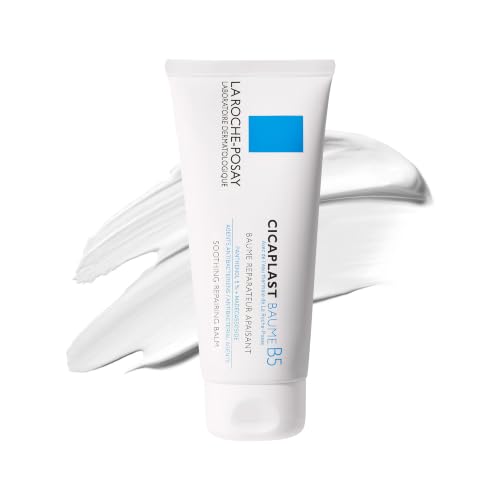
La Roche-Posay
Cicaplast Baume B5 Soothing Repair
moisturizer · 100 ml · 33 ingredients
- Fragrance-free
- No essential oils
- No drying alcohol
- No MI/MCI
- No menthol, camphor and witch hazel

Beauty of Joseon
Red Bean Water Gel
moisturizer · 99.9 ml · 58 ingredients
- Fragrance-free
- No essential oils
- No drying alcohol
- No MI/MCI
- No menthol, camphor and witch hazel

Uriage
Xemose C8+ Lipid-Replenishing Anti-Itch Balm
moisturizer · 500 ml · 24 ingredients
£19.30−17%Amazon UK
- Fragrance-free
- No essential oils
- No drying alcohol
- No MI/MCI
- No menthol, camphor and witch hazel
Amazon UK prices as of 6 November 2026, 06:19 GMT; Amazon sets the final price at checkout.
Frequently asked questions
Is hyaluronic acid safe for daily use in 2025–2026, according to current evidence?
Yes — unchanged from prior years. The Cosmetic Ingredient Review's safety assessment of sodium hyaluronate remains in place, and a comprehensive November 2025 PMC review (PMC12731180) in Cosmetics confirmed hyaluronic acid is 'demonstrated to be safe and biocompatible' across clinical dermatological applications. No new safety signals have emerged. Daily topical HA remains one of the safest evidence-backed ingredients in cosmetics for all adult skin types.
Can hyaluronic acid dry out your skin?
In specific conditions, yes — temporarily. In very low-humidity environments (below ~40% relative humidity), high-molecular-weight HA draws moisture toward itself; if the skin's surface is drier than deeper layers, it can pull moisture upward and outward, increasing transepidermal water loss. The solution is straightforward: apply HA to slightly damp skin (not dry) and immediately seal it with a moisturizer containing emollients or occlusives. This channels the humectant effect toward the skin rather than into dry air.
Can people with sensitive skin or rosacea use hyaluronic acid?
Yes — HA is one of the most appropriate actives for sensitive and rosacea-prone skin. Clinical evidence shows it reduces erythema and supports barrier function in these populations. The caveats are formula-specific: choose fragrance-free, alcohol-free HA products, as reactions in sensitive skin are caused by co-ingredients (fragrances, high-concentration alcohols, certain preservatives) rather than the HA molecule itself.
Is hyaluronic acid safe during pregnancy?
Yes — topical hyaluronic acid is considered safe during pregnancy. HA is a naturally occurring molecule throughout the body with no systemic absorption from topical application at cosmetic concentrations. It does not have the safety concerns associated with retinoids (which are contraindicated in pregnancy) or chemical sunscreen actives (which have raised some questions). It is a recommended option for pregnancy-safe hydration and barrier support.
Does molecular weight matter when buying an HA product, and can I tell from the label?
Molecular weight is the most important variable for what HA actually does in skin, but labels rarely disclose it. Clues: 'sodium hyaluronate' (lower MW than pure HA acid), 'hydrolyzed hyaluronic acid' (LMW fragments), 'low molecular weight HA' or 'micro-HA' (LMW, dermal penetration). Serums marketed with multiple HA forms (e.g., 'multi-weight HA complex') aim to address all skin layers simultaneously. The 2025 PMC review (PMC12731180) provides a useful reference: <50 kDa reaches the dermis; >1000 kDa stays on the surface.
Can you use hyaluronic acid with retinol, vitamin C, or niacinamide?
Yes to all three — HA is compatible with virtually every common skincare active. With retinol: HA is one of the best supporting ingredients during retinol use, mitigating the dryness and irritation of retinization without reducing efficacy. With vitamin C: no compatibility issues; both can be used in the same routine or in sequence. With niacinamide: an excellent pairing for barrier-strengthening and hydration. HA has no pH-sensitive instability or reactive chemistry that creates incompatibilities with other cosmetic actives.
Health information, not medical advice.
Beauty Comparison is an independent editorial publication. This page is researched and sourced to the authorities listed below, but it is general information — not a diagnosis or a substitute for personalised advice from a qualified doctor, dermatologist or pharmacist. If your symptoms are severe, spreading, painful, or not improving, see a healthcare professional.Sources
- 01Hyaluronic Acid in Topical Applications: The Various Forms and Biological Effects of a Hero Molecule in the Cosmetics Industry — PubMed Central / Cosmetics (MDPI), 2025-11-26. Confirms HA safety and biocompatibility; CIR approval for sodium hyaluronate and derivatives; molecular weight classification (HMW surface film vs LMW dermal penetration); 7-day accumulation data showing HA increases from <10 ng/cm² to >1000 ng/cm² in stratum corneum with daily use.
- 02Benefits of topical hyaluronic acid for skin quality and signs of skin aging: From literature review to clinical evidence — PubMed Central / Dermatology and Therapy, 2023-04-01. 60-day RCT (65 women) showed significant improvement in skin hydration and elasticity vs placebo; 40-person RCT with 6 HA types showed improvement in 30 days; 24-week combination study showed ~16–24% improvements across fine lines, texture, radiance, elasticity vs procedure alone.
- 03Clinical Evaluation of Next-generation, Multi-weight Hyaluronic Acid Plus Antioxidant Complex-based Topical Formulations with Targeted Delivery to Enhance Skin Rejuvenation — PubMed / Journal of Cosmetic Dermatology, 2024-04-01. Multi-weight HA formulas combining high, medium, and low molecular weight HA demonstrate clinical benefits for overall improvement in skin health and appearance; daily use well-tolerated with no adverse events reported.
- 04Efficacy Evaluation of a Topical Hyaluronic Acid Serum in Facial Photoaging — PubMed Central / Journal of the American Academy of Dermatology, 2021-01-01. Clinical evaluation of HA serum for facial photoaging showing improvements in hydration, fine lines, and skin texture; HA binds up to 1000 times its weight in water; favorable tolerability across subject population.
- 05How to Pick the Right Moisturizer for Your Skin — American Academy of Dermatology (aad.org). AAD recognizes hyaluronic acid as a safe and effective humectant ingredient in moisturizers; recommends looking for ceramides and hyaluronic acid (which binds up to 1,000 times its weight in water) for all skin types including sensitive and aging skin.