Does Scalp Psoriasis Cause Hair Loss? What to Know
The short answer
Yes, scalp psoriasis can cause temporary hair loss.
Does Scalp Psoriasis Cause Hair Loss?
Yes — hair loss is a recognized complication of scalp psoriasis, and it is more common than many patients and some clinicians realise. However, the critical fact is that psoriasis-related hair loss is almost always reversible. The hair follicles are not typically destroyed by the condition; they are temporarily disrupted by inflammation, and they recover when the inflammation is controlled.
This distinction matters because it changes how you should respond to hair shedding with scalp psoriasis: the focus should be on treating the psoriasis effectively, not on assuming the hair loss is permanent.
The Primary Mechanism: Telogen Effluvium
The predominant cause of hair loss in scalp psoriasis is telogen effluvium — a shift of hair follicles from the active growing phase (anagen) into the resting and shedding phase (telogen), triggered by the inflammatory environment of psoriatic plaques.
Normal hair cycle
Hair follicles cycle through three phases:
- Anagen (growth phase): lasts 2–7 years; the hair actively grows from the follicle
- Catagen (transition phase): a brief 2–3 week phase in which the hair follicle shrinks
- Telogen (resting/shedding phase): lasts approximately 3 months; the old hair is shed and a new anagen hair begins
In a healthy scalp, approximately 10–15% of follicles are in the telogen phase at any given time. This accounts for the normal daily loss of 50–100 hairs.
What psoriatic inflammation does to the hair cycle
The Th17/IL-23 inflammatory axis that drives psoriatic plaques produces a cascade of proinflammatory cytokines — IL-17A, TNF-α, IL-1β, IFN-γ — that interfere with normal hair follicle signalling. These cytokines prematurely push anagen follicles into the catagen and then telogen phase. The result is a disproportionate number of follicles in the resting/shedding phase simultaneously, producing visible hair shedding.
Research has documented telogen rates as high as 86% in active psoriatic scalp lesions — far above the normal 10–15%. A 2025 review of psoriatic alopecia (PMC12185110) notes: "Chronic inflammation prematurely shifts anagen follicles into the telogen phase, leading to a significant increase in telogen hairs, with rates reported as high as 86% in active cases."
Because this process affects the hair cycle rather than destroying the follicle itself, the hair follicles remain intact beneath the plaque and are capable of re-entering the anagen phase and growing new hair once the inflammatory signal is removed.
Additional Mechanisms of Hair Loss in Scalp Psoriasis
Mechanical trauma from scratching
Scalp psoriasis causes significant itch — often severe. Scratching:
- Breaks hair shafts above the scalp surface
- Can dislodge telogen hairs prematurely
- Worsens the psoriatic plaques themselves by triggering the Köbner phenomenon (psoriasis appearing at a site of physical trauma), which then further amplifies inflammation and hair loss
- Causes bleeding, which can damage the scalp microenvironment
Scale adherence and mechanical removal
Thick psoriatic scale can physically adhere to and wrap around hair shafts. Attempts to remove scale by brushing, combing, or picking can pull hairs out along with the scale. This is a particular risk when scale is removed forcefully without prior softening using a keratolytic product (such as salicylic acid or a scale-softening oil).
Sebaceous gland atrophy
In longer-standing psoriatic lesions, histopathological studies have documented sebaceous gland atrophy — the oil glands attached to hair follicles can shrink and lose function within inflamed plaques. Sebum from sebaceous glands normally lubricates and protects the hair shaft; its loss weakens hair integrity.
Is the Hair Loss Permanent?
In the vast majority of cases, no. Psoriatic hair loss is non-scarring (non-cicatricial) alopecia — the follicles are not permanently destroyed, and hair regrows once inflammation is controlled.
When does hair grow back?
Hair regrowth following successful treatment of scalp psoriasis is expected but not immediate. The telogen phase lasts approximately three months, meaning that even after the psoriasis is cleared, hair that is currently in the resting phase will take time to re-enter anagen and grow visibly. Most patients see initial regrowth within 3–6 months of achieving good psoriasis control.
The rare exception: scarring alopecia
Scarring (cicatricial) alopecia from scalp psoriasis is a real but very rare complication. It was first described in medical literature in 1972 and has since been reported in fewer than a small number of published cases. It is associated with:
- Severe, long-standing, untreated or inadequately treated scalp psoriasis
- Prolonged inflammatory destruction of the hair follicle infrastructure
- Perifollicular fibrosis replacing the normal follicular architecture
Even within this very rare category, subsequent case reports — including a documented case of hair regrowth after 10 years — suggest that what appears to be scarring alopecia may not always be irreversible. A 2025 systematic review notes this nuance explicitly.
The practical message: seek effective treatment for scalp psoriasis early, rather than waiting, to prevent the theoretical (rare) risk of permanent hair loss.
Drug-Induced Alopecia: A Separate Consideration
Some of the medications used to treat moderate-to-severe scalp psoriasis can themselves cause hair loss as a side effect:
| Medication Class | Hair Loss Risk |
|---|---|
| TNF-α inhibitors (adalimumab, etanercept, infliximab) | Can paradoxically induce or worsen alopecia in some patients |
| IL-17A inhibitors (secukinumab, ixekizumab) | Less commonly associated with hair loss; may actually improve psoriatic alopecia |
| IL-23 inhibitors (guselkumab, risankizumab) | Generally favorable; not strongly associated with alopecia |
| Methotrexate | Can cause diffuse hair shedding, particularly at higher doses |
| Cyclosporine | Less commonly associated with hair loss |
| Acitretin | Can cause temporary telogen effluvium — often self-limiting |
If you notice significant hair shedding that begins or worsens after starting a new psoriasis treatment, report this to your dermatologist promptly. Switching to an alternative medication — particularly from a TNF-α inhibitor to an IL-23 inhibitor — may resolve the problem. The 2025 psoriatic alopecia review (PMC12185110) specifically notes that IL-17/IL-23 inhibitors are preferred over TNF inhibitors when psoriatic alopecia is a concern.
How to Protect Your Hair During Scalp Psoriasis
While treating the underlying psoriasis is the primary strategy, these practices reduce additional mechanical hair loss:
- Do not scratch — trim nails short to minimize damage from scratching; try pressing gently on itchy areas rather than scratching.
- Soften scale before removal — apply a scale-softening oil (coconut, mineral) or salicylic acid product to the scalp and leave it on for several hours before gently rinsing, rather than picking or brushing dry scale off.
- Be gentle when brushing — use a wide-toothed comb or soft-bristle brush, especially when scale is present; brush gently and never when scale is dry and adherent.
- Avoid harsh chemical treatments — hair coloring, bleaching, perming, and relaxing products can irritate psoriatic plaques, trigger the Köbner phenomenon, and worsen hair fragility.
- Choose gentle, fragrance-free hair products — alcohol-based sprays, fragranced products, and strong surfactant shampoos can irritate inflamed scalp skin.
- Treat the psoriasis effectively — this remains the single most important action for reversing hair loss.
When to Seek Medical Attention
- Significant or rapid hair shedding is occurring alongside scalp psoriasis
- Hair is thinning visibly in areas of psoriatic plaques
- Hair does not appear to be regrowing 3–6 months after psoriasis has been brought under good control
- Hair shedding worsens after starting a new psoriasis medication
- You notice hair loss in areas without obvious psoriatic plaques (which may indicate another concurrent cause such as alopecia areata)
A dermatologist can perform trichoscopy (scalp dermoscopy) and, if necessary, a scalp biopsy to determine whether hair loss is caused by telogen effluvium from psoriasis, mechanical damage, drug effect, or another concurrent condition.
Products that fit: psoriasis
Picked by code from each product's full ingredient list.

Matrix
So Silver Purple Toning Shampoo
shampoo · 300 ml · 17 ingredients
£12.14−24%Amazon UK
- Fragrance-free
- No drying alcohol
- With salicylic acid

Moroccanoil
Dry-No-More Scalp Treatment
scalp treatment · 45 ml · 14 ingredients
£29.50Amazon UK
- Fragrance-free
- No drying alcohol
- With salicylic acid

The Body Shop
Tea Tree Shampoo
shampoo · 400 ml · 22 ingredients
£17.10Amazon UK
- Fragrance-free
- No drying alcohol
- With salicylic acid
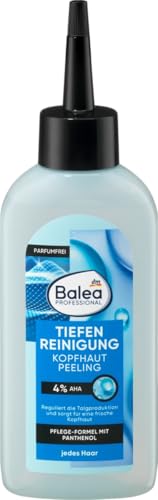
Balea
Professional Scalp Scrub Deep Cleansing
scalp treatment · 150 ml · 10 ingredients
- Fragrance-free
- No drying alcohol
- With panthenol
Amazon UK prices as of 6 November 2026, 06:19 GMT; Amazon sets the final price at checkout.
Frequently asked questions
Does hair always grow back after scalp psoriasis hair loss?
In the vast majority of cases, yes. Psoriatic hair loss is caused primarily by telogen effluvium — a reversible inflammatory disruption of the hair cycle — not by destruction of hair follicles. A 2025 systematic review of psoriatic alopecia (PMC12185110) confirms that hair loss from psoriasis is almost always non-scarring and reversible once inflammation is controlled. Expect regrowth within approximately 3–6 months of achieving good psoriasis control. Permanent scarring alopecia from psoriasis is very rare and associated only with severe, prolonged, untreated disease.
How much hair loss from scalp psoriasis is normal?
Hair shedding in scalp psoriasis varies widely. Active psoriatic plaques have been documented to shift telogen (shedding-phase) hair rates up to 86% in affected areas, compared to a normal scalp rate of 10–15%. Clinically, hair loss presents as diffuse thinning over psoriatic plaques rather than complete bald patches in most cases — though acute episodes (particularly in erythrodermic or generalised pustular psoriasis) can produce more extensive shedding. Any hair loss that is distressing or appears to be worsening warrants evaluation by a dermatologist.
What is the best treatment to stop hair loss from scalp psoriasis?
The primary treatment is controlling the underlying psoriasis. Reducing the inflammatory burden — through topical corticosteroids, vitamin D analogues, phototherapy, or systemic/biologic agents for moderate-to-severe disease — removes the cytokine-driven signal that keeps follicles in the telogen phase, allowing them to re-enter anagen growth. IL-17 and IL-23 inhibiting biologics appear particularly beneficial for psoriatic alopecia. There is no dedicated 'hair loss treatment' that addresses psoriatic alopecia independently — treating the scalp inflammation is the treatment.
Can you develop alopecia areata alongside scalp psoriasis?
Yes — alopecia areata (an autoimmune condition causing patchy hair loss) can coexist with psoriasis, as both are immune-mediated conditions with shared genetic susceptibility. A dermatologist can distinguish psoriatic alopecia from alopecia areata by clinical examination (alopecia areata typically produces discrete, smooth, well-defined bald patches without the scale or inflammation of psoriasis plaques) and, if needed, trichoscopy or biopsy.
Will scratching scalp psoriasis make hair loss worse?
Yes, significantly. Scratching causes direct mechanical hair breakage, can physically dislodge telogen hairs, and — critically — triggers the Köbner phenomenon, in which psoriatic plaques worsen or new plaques appear at sites of skin trauma. Worsening plaques mean increased inflammation and more severe telogen effluvium. Avoiding scratching and gently softening scale before removal are among the most protective actions you can take for scalp hair during active psoriasis.
Health information, not medical advice.
Beauty Comparison is an independent editorial publication. This page is researched and sourced to the authorities listed below, but it is general information — not a diagnosis or a substitute for personalised advice from a qualified doctor, dermatologist or pharmacist. If your symptoms are severe, spreading, painful, or not improving, see a healthcare professional.Sources
- 01Psoriatic Alopecia: Clinical Features, Pathogenesis, and Emerging Treatment Strategies — PMC / NIH, 2025-06-01. Telogen effluvium is the primary mechanism of hair loss in scalp psoriasis; telogen rates up to 86% in active lesions; Th17/IL-23 axis drives follicular disruption; hair loss almost always non-scarring and reversible; TNF-α inhibitors can paradoxically cause alopecia; IL-17/IL-23 inhibitors preferred when psoriatic alopecia is a concern.
- 02Psoriasis and Alopecia: Unveiling the Links — PMC / NIH, 2025-06-01. Scalp psoriasis affects 45–56% of psoriasis patients; hair loss occurs via telogen effluvium from inflammatory cytokines and mechanical trauma; alopecia in psoriasis mostly reversible.
- 03Psoriatic Alopecia: Acute and Chronic Hair Loss in 47 Patients with Scalp Psoriasis — PubMed / NIH, 1992-01-01. Hair loss in 47 scalp psoriasis patients: acute (51%), chronic (36%), chronic recurrent (13%); telogen count increased to 25–86% in florid psoriatic alopecia; hair loss in tufts in 36%.
- 04Psoriatic Scarring Alopecia — PMC / NIH, 2013-01-01. Scarring alopecia from psoriasis first reported in 1972; very rare; associated with severe long-standing disease; subsequent reports including hair regrowth after 10 years suggest it may not always be irreversible.
- 05Scalp Psoriasis: Symptoms — American Academy of Dermatology (AAD). Temporary hair loss is a recognized symptom of scalp psoriasis caused by scratching or forceful scale removal; regrowth typically follows clearing of the condition.
- 06Scalp Psoriasis: A Complete Overview — DermNet NZ. Scalp psoriasis causes temporary localised hair loss in severe cases; Köbner phenomenon (psoriasis at trauma sites) worsens condition; treatment with corticosteroids and biologics controls inflammation.