Scalp Psoriasis: Symptoms, Causes & Treatment Options
The short answer
Scalp psoriasis is an autoimmune condition causing thick.
What Is Scalp Psoriasis?
Scalp psoriasis is a chronic, immune-mediated inflammatory skin disorder that produces raised, well-demarcated red plaques covered with thick silvery-white scale on the scalp. It is not a separate disease from psoriasis — it is plaque psoriasis manifesting on the scalp, and it follows the same pathophysiological mechanism as psoriasis anywhere on the body.
Psoriasis itself affects approximately 7.5 million people in the United States, and at least 50% of those with plaque psoriasis experience scalp involvement at some point. For some people, the scalp is the only site affected; for others, scalp lesions accompany plaques on the elbows, knees, lower back, and nails. The condition is chronic and relapsing, meaning periods of remission are typically followed by flares.
How Scalp Psoriasis Develops: The Immune Mechanism
Understanding the cause of scalp psoriasis requires understanding what psoriasis is: an autoimmune process in which the immune system generates a chronic inflammatory signal that drives keratinocytes (skin cells) to divide far too rapidly.
In healthy skin, new keratinocytes mature and reach the surface over 28–30 days before they shed invisibly. In psoriatic skin, this cycle collapses to just 3–4 days. The skin cannot shed cells fast enough, so they accumulate on the surface as the characteristic thick, white-silvery scale.
The immune cascade responsible centers on the IL-23/IL-17 axis:
- Dendritic cell activation — in genetically predisposed individuals, environmental or internal triggers activate inflammatory myeloid dendritic cells in the skin.
- IL-23 production — activated dendritic cells release IL-23, which drives the maturation of naïve T-cells into Th17 cells.
- IL-17A release — Th17 cells produce IL-17A, the principal effector cytokine of psoriatic disease, alongside TNF-α, IFN-γ, and IL-22.
- Keratinocyte hyperproliferation — these cytokines act on keratinocytes, causing them to proliferate abnormally, recruit more immune cells, and release antimicrobial peptides that sustain the inflammatory loop.
This positive feedback cycle between immune cells and keratinocytes maintains the chronic plaques. Genetic variants in genes regulating the IL-23/IL-17 pathway — including IL-23R, IL-12B, and STAT3 — are strongly associated with psoriasis susceptibility, explaining why the condition runs in families.
Symptoms of Scalp Psoriasis
Scalp psoriasis can range from a single small patch to plaques covering the entire scalp. It frequently extends beyond the hairline onto the forehead, nape of the neck, and behind the ears.
Core symptoms
- Silvery-white scale overlying red, thickened plaques — the most distinctive feature. Scale may accumulate as thick white flakes that shed onto clothing, resembling dandruff but larger and more adherent.
- Itching — one of the most common and distressing symptoms. Severity ranges from mild to intense itching that disrupts sleep.
- Burning or soreness — plaques can feel tender and sore to the touch.
- Bleeding — scratching damages the skin surface and causes pinpoint bleeding, known as the Auspitz sign.
- Temporary hair loss — scratching or forcefully removing scale can disrupt hair follicles; this is almost always reversible once the condition is treated.
- Flaking — shed scale may appear as visible flakes in hair or on dark clothing, often confused with dandruff.
Disease course
Scalp psoriasis is chronic and fluctuating. Many people experience identifiable flare triggers that worsen symptoms, while periods of relative remission may follow adequate treatment or spontaneously.
Common Triggers
Psoriasis flares are driven by both internal and external factors. On the scalp, common triggers include:
| Trigger Category | Examples |
|---|---|
| Infections | Streptococcal throat infection (a well-established flare trigger for guttate and plaque psoriasis), skin infections |
| Stress | Psychological stress raises cortisol and amplifies systemic inflammation |
| Medications | Beta-blockers, lithium, antimalarials, NSAIDs, abrupt oral corticosteroid withdrawal |
| Skin trauma | Scratching, harsh chemical hair products, aggressive brushing (Köbner phenomenon — psoriasis appearing at a site of injury) |
| Lifestyle factors | Obesity, smoking, excessive alcohol consumption |
| Environmental | Cold, dry air; sunburn (moderate sun exposure can improve psoriasis; sunburn can worsen it) |
| Hormonal changes | Puberty, pregnancy, postpartum period, menopause |
Identifying and minimizing personal triggers is a valuable adjunct to medical treatment, though it does not replace it.
Diagnosis
Scalp psoriasis is typically diagnosed clinically by a dermatologist, based on the characteristic appearance of well-demarcated red plaques with thick silvery scale. The distribution — scalp, hairline, behind the ears, nape — is also diagnostically informative.
Dermoscopy (trichoscopy) may be used to examine the scalp more closely: key trichoscopic features of psoriasis include red dots, hairpin vessels, and red globular rings — patterns distinct from those seen in seborrheic dermatitis.
Skin biopsy is occasionally performed when the diagnosis is uncertain, particularly when distinguishing scalp psoriasis from seborrheic dermatitis. Histopathological features specific to psoriasis include mounds of parakeratosis with neutrophils, spongiform micropustules of Kogoj, and evenly elongated rete ridges.
The Psoriasis Scalp Severity Index (PSSI) is a validated clinical scoring tool used to assess and monitor disease severity in clinical practice and research.
Treatment Options
Treatment is tailored to disease severity and scalp coverage. Most people start with topical therapies; moderate-to-severe or refractory disease warrants systemic treatment.
First-line: Topical Treatments
Topical corticosteroids are the most commonly prescribed treatment for scalp psoriasis in both children and adults. They reduce inflammation, redness, itch, and scaling rapidly. Formulations include shampoos, foams, gels, solutions, and oils — formats designed to penetrate the hair-bearing scalp more effectively than cream. Strong corticosteroids (e.g., clobetasol propionate shampoo) may be used daily for up to four weeks, then intermittently to maintain clearance.
Vitamin D analogues (calcipotriol/calcitriol) normalize keratinocyte proliferation and reduce inflammation. Used alone, they are less potent than strong corticosteroids; combined with betamethasone dipropionate (as in licensed fixed-dose combination gels), they outperform either agent alone for both short-term clearance and long-term maintenance.
Coal tar reduces itch and helps normalize the rate of abnormal skin cell production. Available OTC in shampoos at low concentrations (0.5%–1% in the US) and by prescription at higher concentrations. It has an unpleasant smell and can stain hair and fabric.
Salicylic acid (2%–4%) acts as a keratolytic — it softens and loosens scale, making it easier to remove and improving the penetration of other treatments applied afterward. It is most useful as a preparatory step rather than a standalone therapy.
Tazarotene (a retinoid) and calcineurin inhibitors (tacrolimus, pimecrolimus) are used in selected cases.
Second-line: Phototherapy
Targeted UVB phototherapy using a handheld UVB comb device can deliver light directly through hair to affected scalp skin. It is more practical than traditional broadband UVB for scalp-limited disease and is used when topical therapies are insufficient.
Third-line: Systemic Treatments
For moderate-to-severe scalp psoriasis or psoriasis affecting significant body surface area:
Conventional systemics:
- Methotrexate — inhibits immune cell proliferation; taken orally or by injection weekly.
- Cyclosporine — a calcineurin inhibitor that suppresses T-cell activity; used for rapid disease control but not recommended for long-term use due to renal and cardiovascular risks.
- Acitretin — an oral retinoid that normalizes keratinocyte differentiation; useful particularly for pustular variants.
- Apremilast — an oral phosphodiesterase-4 inhibitor with a favorable safety profile, suitable for patients in whom biologics or immunosuppressants are inappropriate.
Biologic agents target specific immune mediators in the IL-23/IL-17 pathway:
| Biologic Class | Examples | Scalp Clinical Trial Data |
|---|---|---|
| Anti-IL-17A | Secukinumab, ixekizumab | Secukinumab 300 mg achieved PSSI 90 in 52.9% vs 2% placebo at 12 weeks (Phase III). Ixekizumab demonstrated rapid clearance across UNCOVER-1, -2, and -3 trials. |
| Anti-IL-23 (p19) | Guselkumab, risankizumab | Guselkumab VISIBLE trial: 68.4% achieved ss-IGA 0/1 at week 16; >80% at week 48. |
| Anti-IL-17A/F | Bimekizumab | Highest IGA clearance rate in network meta-analysis (SUCRA 0.975); effective in patients who failed anti-IL-17A monotherapy. |
| Anti-TNF-α | Adalimumab, etanercept | Effective but generally lower clearance rates than IL-17/IL-23 agents for scalp disease. |
| Anti-IL-12/23 (p40) | Ustekinumab | Effective with favorable long-term safety data; used especially when psoriatic arthritis coexists. |
A 2025 network meta-analysis of RCTs found secukinumab 300 mg Q4W to have the highest PSSI-response SUCRA (0.991) among biologic and non-biologic therapies for scalp psoriasis.
Scalp Psoriasis and Hair Loss
Hair loss is a real but mostly reversible concern. The primary mechanism is telogen effluvium — chronic inflammation from psoriatic plaques prematurely shifts anagen (growing) hair follicles into the telogen (resting/shedding) phase. Rates of telogen hairs as high as 86% have been documented in active psoriatic plaques. Scratching and mechanical trauma from thick scale adhering to hair shafts compound the loss.
The good news: psoriatic hair loss is almost always non-scarring, and hair typically regrows once inflammation is adequately controlled. Scarring (cicatricial) alopecia from psoriasis is a very rare complication of prolonged, severe, undertreated disease.
Full details on this topic are in the dedicated guide: Scalp Psoriasis and Hair Loss.
Living With Scalp Psoriasis: Practical Tips
- Choose gentle hair products. Avoid alcohol-based sprays and harsh detergents that can irritate or trigger the Köbner phenomenon.
- Do not scratch. Scratching thickens plaques (Köbner) and causes bleeding. Keep nails short to reduce damage.
- Soften scale before treatment. Apply a scale-softening oil (coconut, mineral) or salicylic acid product for a few hours before using medicated shampoo. This improves penetration dramatically.
- Apply topicals correctly. Part hair in sections, apply directly to the scalp (not the hair), and leave in for the recommended contact time before rinsing.
- Protect mental health. Visible flaking and scalp soreness carry real psychosocial burden. Dermatological life quality index (DLQI) scores are significantly impaired in scalp psoriasis — this is a valid and recognized reason to escalate treatment.
When to See a Dermatologist
- OTC coal tar or salicylic acid shampoos have been used consistently for 4–6 weeks without meaningful improvement
- Plaques are thick, widespread, or extend significantly beyond the hairline
- Itching is severe enough to disrupt sleep
- Noticeable hair shedding or thinning is occurring
- You are unsure whether the diagnosis is psoriasis, seborrheic dermatitis, or another condition
- Psoriasis is present or suspected elsewhere on the body or in the joints
- Current prescription treatment is not working adequately
Products that fit: psoriasis
Picked by code from each product's full ingredient list.

Matrix
So Silver Purple Toning Shampoo
shampoo · 300 ml · 17 ingredients
£12.14−24%Amazon UK
- Fragrance-free
- No drying alcohol
- With salicylic acid

Moroccanoil
Dry-No-More Scalp Treatment
scalp treatment · 45 ml · 14 ingredients
£29.50Amazon UK
- Fragrance-free
- No drying alcohol
- With salicylic acid

The Body Shop
Tea Tree Shampoo
shampoo · 400 ml · 22 ingredients
£17.10Amazon UK
- Fragrance-free
- No drying alcohol
- With salicylic acid
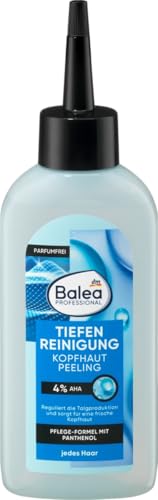
Balea
Professional Scalp Scrub Deep Cleansing
scalp treatment · 150 ml · 10 ingredients
- Fragrance-free
- No drying alcohol
- With panthenol
Amazon UK prices as of 6 November 2026, 06:08 GMT; Amazon sets the final price at checkout.
When to see a professional
See a dermatologist if: OTC coal tar or salicylic acid shampoos produce no meaningful improvement after 4–6 weeks of consistent use; plaques are extensive, thick, or spread significantly beyond the hairline; itching is severe enough to disrupt sleep or daily life; noticeable hair loss is occurring; you are uncertain whether the diagnosis is psoriasis or another scalp condition; psoriasis is present or suspected elsewhere on the body; or joints are stiff, swollen, or painful (possible psoriatic arthritis). Do not wait — effective prescription treatments exist and early control prevents complications including hair loss and psychological distress.
Frequently asked questions
What does the latest evidence say about treating scalp psoriasis in 2026?
A 2025 network meta-analysis of randomised controlled trials found that among biologic and non-biologic treatments, secukinumab 300 mg Q4W achieved the highest PSSI response (SUCRA 0.991), with bimekizumab 320 mg Q4W leading for IGA clearance. The guselkumab VISIBLE Randomised Clinical Trial (2025, PMC12199185) showed over 80% of participants achieved scalp clearance (PSSI 90 and ss-IGA 0/1) by week 48. For mild-to-moderate disease, the evidence still supports topical corticosteroids combined with vitamin D analogues as the most effective first-line combination. These findings do not change the first-line use of topicals but reinforce that biologics — particularly IL-17 and IL-23 inhibitors — are highly effective for severe or refractory scalp disease.
Is scalp psoriasis contagious?
No. Scalp psoriasis is an autoimmune condition caused by immune system dysregulation and genetic predisposition — it is not caused by bacteria, fungi, viruses, or poor hygiene, and it cannot be passed from one person to another by contact. It is safe to share hairbrushes, pillows, hats, or any other contact without risk of transmission.
How do I tell scalp psoriasis apart from dandruff or seborrheic dermatitis?
Dandruff produces fine, white-gray flakes without any redness or inflammation — it is essentially a very mild, uninflamed form of seborrheic dermatitis. Seborrheic dermatitis produces yellowish, greasy scales on a mildly inflamed, pink scalp, driven by Malassezia yeast. Scalp psoriasis is more sharply defined (well-demarcated plaques rather than diffuse scaling), the scale is thicker and more silvery-white, the redness is more pronounced, and plaques may extend beyond the hairline onto the forehead and nape. Full comparison is in the dedicated guides: [Scalp Psoriasis vs. Dandruff](/scalp-psoriasis-vs-dandruff) and [Scalp Psoriasis vs. Seborrheic Dermatitis](/scalp-psoriasis-vs-seborrheic-dermatitis).
Will scalp psoriasis cause permanent hair loss?
In the overwhelming majority of cases, no. Hair loss from scalp psoriasis is driven by inflammation-induced telogen effluvium — a reversible shift of hair follicles into the resting/shedding phase — not by permanent destruction of follicles. Hair typically regrows once inflammation is adequately controlled. Scarring alopecia (permanent hair loss) from psoriasis is very rare and associated with prolonged, severe, untreated disease. See a dermatologist promptly if you notice significant hair thinning alongside scalp psoriasis.
Can scalp psoriasis spread to the face or body?
Scalp psoriasis can extend beyond the hairline onto the forehead, temples, ears, and nape of the neck — these are considered part of the scalp psoriasis presentation, not spread to separate sites. As for the broader body, psoriasis can develop on other locations (elbows, knees, lower back, nails, genitals) either at the same time or later; however, having scalp psoriasis does not inevitably mean it will spread. Psoriatic arthritis — inflammation affecting the joints — develops in around 30% of people with skin psoriasis and warrants specific evaluation.
What triggers scalp psoriasis flares?
The most consistently documented triggers are streptococcal infections (including strep throat), psychological stress, certain medications (beta-blockers, lithium, antimalarials, abrupt corticosteroid withdrawal), skin trauma including scratching (the Köbner phenomenon), obesity, smoking, and heavy alcohol use. Cold, dry weather worsens many people's psoriasis. Hormonal shifts — puberty, postpartum, menopause — are also recognized triggers. Identifying and reducing personal triggers is a useful adjunct to treatment, but most people need medical management regardless.
Health information, not medical advice.
Beauty Comparison is an independent editorial publication. This page is researched and sourced to the authorities listed below, but it is general information — not a diagnosis or a substitute for personalised advice from a qualified doctor, dermatologist or pharmacist. If your symptoms are severe, spreading, painful, or not improving, see a healthcare professional.Sources
- 01Scalp Psoriasis: Symptoms — American Academy of Dermatology (AAD). Clinical symptoms of scalp psoriasis: itch, bleeding, burning, soreness, temporary hair loss, dandruff-like flaking, disease course of flares and remissions.
- 02Scalp Psoriasis: Causes — American Academy of Dermatology (AAD). Scalp psoriasis pathophysiology: immune system misfires causing skin cells to grow too quickly; at least 50% of plaque psoriasis patients experience scalp involvement.
- 03Scalp Psoriasis: Shampoos, Scale Softeners, and Other Treatments — American Academy of Dermatology (AAD). Topical corticosteroids are #1-prescribed treatment; clobetasol shampoo up to 4 weeks; calcipotriene application; coal tar for itch; salicylic acid to soften scale for better penetration.
- 04Scalp Psoriasis: A Complete Overview — DermNet NZ. Well-demarcated red plaques with silvery-white scale; triggers including streptococcal infection, stress, medications, hormonal changes; trichoscopic features (red dots, hairpin vessels); treatment ladder from topicals to biologics; differential from seborrheic dermatitis.
- 05The Immunologic Role of IL-17 in Psoriasis and Psoriatic Arthritis Pathogenesis — PMC / NIH, 2018-11-01. IL-17A is the key effector cytokine in psoriasis; IL-23 drives Th17 cell maturation; dendritic cells, Th17 cells, and keratinocytes form a pathogenic triad; IL-17A inhibitors are clinically effective.
- 06Psoriatic Alopecia: Clinical Features, Pathogenesis, and Emerging Treatment Strategies — PMC / NIH, 2025-06-01. Telogen effluvium is primary mechanism of hair loss in scalp psoriasis; telogen rates up to 86% in active lesions; hair loss almost always non-scarring and reversible; Th17/IL-23 axis drives follicular disruption.
- 07Biologic and Non-Biologic Therapies for Scalp Psoriasis: A Network Meta-analysis of Randomized Controlled Trials — PMC / NIH, 2025-01-01. Network meta-analysis of RCTs: secukinumab 300 mg Q4W had highest PSSI-response SUCRA (0.991); bimekizumab 320 mg Q4W highest IGA clearance rate (SUCRA 0.975); biologics significantly outperform conventional systemic agents for scalp clearance.
- 08Guselkumab for Moderate to Severe Scalp Psoriasis Across All Skin Tones: Cohort B of the VISIBLE Randomized Clinical Trial — PMC / NIH, 2025-06-01. Guselkumab achieved ss-IGA 0/1 in 68.4% vs 11.5% placebo at week 16; >80% clearance by week 48; statistically significant across all scalp psoriasis endpoints.
- 09Scalp Psoriasis: Symptoms, Plaque, Causes & Treatment — Cleveland Clinic. Psoriasis affects ~7.5 million Americans; 80–90% have plaque type; scalp psoriasis skin cell cycle 3–4 days vs normal 28–30 days; treatment escalation from topical to systemic.