Best Shampoos for Scalp Psoriasis: What Actually Works
The short answer
Prescription corticosteroid shampoos are most effective.
The Role of Shampoos in Scalp Psoriasis Management
Shampoos for scalp psoriasis serve two distinct functions, and understanding both helps set realistic expectations:
- Treating the psoriatic plaques themselves — reducing inflammation, itch, and scaling through the active ingredient
- Removing scale (keratolysis) — softening and lifting the thick, adherent scale that accumulates on psoriatic plaques, which in turn allows other treatments (corticosteroid solutions, vitamin D analogues) to contact the skin surface directly
Most people with scalp psoriasis benefit from using shampoos for both functions — a keratolytic shampoo to clear scale, then a medicated treatment for the inflammation underneath.
The Evidence Landscape
It is important to be honest about what the evidence shows: clinical trials of OTC shampoo ingredients specifically for scalp psoriasis are limited in number and quality. The clearest evidence sits at the prescription end — clobetasol propionate shampoo has formal RCT data supporting its use for scalp psoriasis. The OTC options have lower-quality evidence but remain useful, particularly for mild disease and as adjuncts.
This does not mean OTC shampoos are ineffective — it means that for established, moderate-to-severe disease, a prescription treatment is almost always needed. Think of OTC shampoos as valid first steps for mild disease and supportive tools throughout treatment.
OTC Shampoo Ingredients: What Each One Does
Salicylic Acid (2%–4%)
What it does: Salicylic acid is a beta-hydroxy acid that acts as a keratolytic — it dissolves the protein bonds that hold dead skin cells together, softening and loosening the thick scale that accumulates on psoriatic plaques. This is particularly important for scalp psoriasis because thick scale physically prevents topical treatments from reaching the inflamed skin underneath.
Best use case: Applied before or instead of other treatments when scale is thick and adherent. Leave in for 5–10 minutes before rinsing. Following with a prescription corticosteroid treatment after using salicylic acid shampoo can significantly improve the efficacy of the corticosteroid.
Evidence: Salicylic acid (2%–4%) is recognized by the AAD as a scale-softening agent for scalp psoriasis and is used clinically as part of multi-step regimens. It does not treat psoriatic inflammation directly.
Limitations: Can cause scalp irritation at higher concentrations, particularly on broken or very inflamed skin. Not a standalone psoriasis treatment.
Coal Tar (0.5%–5%)
What it does: Coal tar is a complex mixture of thousands of hydrocarbons derived from the distillation of coal. Its mechanism of action in psoriasis is not fully characterized, but it is thought to slow the abnormally rapid rate of keratinocyte proliferation and has anti-pruritic (itch-reducing) properties. It is one of the oldest topical treatments used for psoriasis.
Available formulations: OTC shampoos in the US typically contain 0.5%–1% coal tar (the FDA permits up to 5% in OTC products for psoriasis). Higher-concentration products are available by prescription.
Evidence: Coal tar shampoos have low-quality RCT evidence according to GRADE standards — not because they are clinically inert, but because the trials that exist are small or poorly designed. Clinical experience and long-term use have established them as useful, particularly for itch.
Contact time: Lather the shampoo into the scalp and leave it for at least 5 minutes before rinsing; some products direct longer contact times. Simply working coal tar shampoo through the hair as a standard shampoo without any contact time largely wastes the active ingredient.
Limitations: Unpleasant, distinctive odor; can stain hair (particularly lighter hair colors), pillowcases, and fabric; skin irritation is possible; theoretical concerns about coal tar as a human carcinogen in occupational settings (high-dose, prolonged exposure) have not been substantiated at the low concentrations and short contact times of OTC scalp use, and regulatory agencies have not restricted these products — but it is worth discussing with a dermatologist if you have concerns.
Zinc Pyrithione (1%–2%)
What it does: Zinc pyrithione has antibacterial and antifungal properties and is primarily used for dandruff and seborrheic dermatitis (where it reduces Malassezia). In psoriasis, it has mild anti-inflammatory properties and may reduce some of the surface-level scaling. It is not a first-line psoriasis treatment but is unlikely to cause harm and may provide modest itch relief.
Evidence: Evidence for zinc pyrithione in scalp psoriasis specifically is very limited. It is better supported for dandruff and seborrheic dermatitis.
Best use case: As an alternative to coal tar when odor is a concern, or when it is uncertain whether the diagnosis is psoriasis or seborrheic dermatitis.
Selenium Sulfide (1%–2.5%)
What it does: Selenium sulfide reduces Malassezia overgrowth and slows the rate of scalp cell turnover. Like zinc pyrithione, it is a primary dandruff treatment.
Evidence in psoriasis: No established evidence base for scalp psoriasis specifically. Suitable for managing co-occurring dandruff/seborrheic dermatitis.
Prescription Shampoos: The Gold Standard
Clobetasol Propionate Shampoo (0.05%)
Clobetasol propionate is a Class I (super-potent) topical corticosteroid — the strongest class available. In shampoo formulation, it delivers anti-inflammatory treatment to the scalp while minimizing systemic absorption compared to leave-on formulations of the same potency, because the contact time is limited.
Evidence: The AAD identifies prescription corticosteroids as the #1-prescribed treatment for scalp psoriasis in both children and adults. Research supports clobetasol propionate shampoo used daily for up to four weeks for acute flares, then once or twice weekly as maintenance to sustain clearance. Clinical trials demonstrate significant reductions in itch, redness, and scale versus placebo.
How to use: Apply to wet scalp, lather, leave in for 15 minutes, then rinse. Limit to four weeks of daily use before switching to intermittent maintenance dosing — prolonged daily use of super-potent corticosteroids can cause skin atrophy, though this risk is lower with brief contact shampoo formulations than with leave-on products.
Access: Prescription-only; requires a dermatologist evaluation.
How to Maximize Shampoo Efficacy: Application Technique
Most medicated shampoos fail to deliver their full benefit because they are applied like regular shampoos — quickly lathered and rinsed within 30 seconds. The active ingredients need contact time with the scalp skin to work.
Step-by-step:
- Wet hair thoroughly. Part the hair in sections to expose the scalp.
- Apply the shampoo directly to the scalp, not the hair shaft. Lift hair sections out of the way to contact plaques directly.
- Massage into the scalp. Gently work the shampoo into each affected area.
- Leave on for the directed contact time. This ranges from 5 minutes (most coal tar products) to 15 minutes (clobetasol shampoo). Use a timer.
- Rinse thoroughly to remove all product residue, which can cause irritation if left on.
Using salicylic acid as a preparatory step: If plaques have significant scale buildup, using a salicylic acid shampoo (or a scale-softening oil such as coconut or mineral oil applied to the scalp for a few hours beforehand) before applying the medicated shampoo significantly improves penetration of the active treatment.
Building a Complete Scalp Psoriasis Shampoo Routine
Shampoos work best as part of a comprehensive scalp regimen:
| Step | Product | Frequency |
|---|---|---|
| 1. Scale softening | Salicylic acid shampoo or scale-softening oil | Before medicated treatment when scale is thick |
| 2. Medicated treatment | Clobetasol shampoo (Rx) or coal tar shampoo (OTC) | Daily (Rx) or 2–3x/week (OTC coal tar) |
| 3. Maintenance between flares | Coal tar or zinc pyrithione shampoo | 1–2x/week |
| 4. Adjunct topical treatment | Corticosteroid foam/gel/solution applied directly to scalp | Per dermatologist instruction |
For moderate-to-severe disease, shampoos alone are insufficient — the limited contact time of any shampoo treatment reduces its effectiveness compared to leave-on formulations (corticosteroid foams, calcipotriol solutions) applied directly to the scalp.
What Shampoos Cannot Do
- Treat the immune dysregulation underlying psoriasis — no shampoo ingredient targets the IL-23/IL-17 axis
- Clear extensive or thick plaques reliably without adjunct leave-on treatments
- Prevent all flares — psoriasis is a chronic relapsing condition; ongoing management is typically needed
- Replace systemic treatment for moderate-to-severe disease — patients with extensive scalp involvement, or whose psoriasis is significantly affecting quality of life, typically need prescription systemic or biologic treatment
See the full treatment guide at Scalp Psoriasis Guide for information on systemic and biologic options.
When to See a Dermatologist
- OTC coal tar or salicylic acid shampoos produce no meaningful improvement after 4–6 weeks of consistent use
- Plaques are thick, cover large areas, or significantly impair quality of life
- Itching is severe enough to disrupt sleep
- Significant hair shedding is occurring alongside the scalp scaling
- Psoriasis is present or suspected elsewhere on the body
Products that fit: psoriasis
Picked by code from each product's full ingredient list.

Matrix
So Silver Purple Toning Shampoo
shampoo · 300 ml · 17 ingredients
- Fragrance-free
- No drying alcohol
- With salicylic acid

The Body Shop
Tea Tree Shampoo
shampoo · 400 ml · 22 ingredients
- Fragrance-free
- No drying alcohol
- With salicylic acid
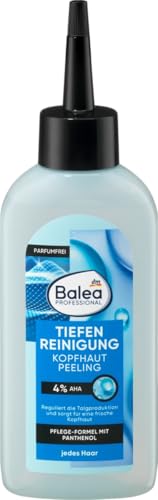
Balea
Professional Scalp Scrub Deep Cleansing
scalp treatment · 150 ml · 10 ingredients
- Fragrance-free
- No drying alcohol
- With panthenol

OGX
ProGrowth + Peptide Scalp Serum
scalp treatment · 10 ml · 16 ingredients
- Fragrance-free
- No drying alcohol
- With niacinamide
- With panthenol
- With peptides
Frequently asked questions
What does current evidence say is the most effective shampoo treatment for scalp psoriasis?
Prescription clobetasol propionate shampoo (0.05%) has the strongest evidence base for scalp psoriasis among shampoo-formulation treatments. It is a super-potent (Class I) topical corticosteroid that the AAD identifies as the number one prescribed treatment for scalp psoriasis. A 2025 network meta-analysis of RCTs (PMC12090945) found that biologic agents (secukinumab, guselkumab, bimekizumab) outperform all topical treatments including corticosteroid shampoos for moderate-to-severe scalp psoriasis, but for mild-to-moderate disease managed topically, prescription corticosteroid shampoos — especially in combination with vitamin D analogues — represent the best-evidenced topical approach. Among OTC ingredients, salicylic acid's role as a keratolytic (scale softener) is the most consistently clinically endorsed, as it improves penetration of all other treatments.
Does ketoconazole shampoo work for scalp psoriasis?
Ketoconazole shampoo is highly effective for dandruff and seborrheic dermatitis — it reduces Malassezia yeast, which drives those conditions. However, scalp psoriasis is autoimmune in origin (IL-23/IL-17 immune dysregulation), not caused by Malassezia. Ketoconazole has no established evidence for treating the inflammatory component of scalp psoriasis. If you try ketoconazole shampoo and see no improvement, this is actually a useful diagnostic signal: it increases the likelihood that your condition is psoriasis rather than seborrheic dermatitis. A dermatologist can confirm.
How long should I leave coal tar shampoo on?
At least five minutes of scalp contact time is required for coal tar to have meaningful activity — many dermatologists recommend working the shampoo into the scalp and leaving it on for 5–10 minutes while bathing before rinsing. Simply applying and rinsing immediately, as with a regular shampoo, dramatically reduces exposure time and efficacy. Check the specific product label for the manufacturer's recommended contact time, as formulations differ.
Can I use medicated shampoo every day?
Prescription clobetasol propionate shampoo is generally safe for daily use for up to four weeks during an active flare, then reduced to once or twice weekly for maintenance — per AAD guidance. OTC coal tar shampoos can be used several times per week as needed. Daily use of very high-concentration coal tar on broken or heavily inflamed skin can cause irritation. For OTC products, follow the label instructions; for prescription products, follow your dermatologist's specific instructions. Using any medicated shampoo far less than instructed — such as once weekly when daily use is recommended — significantly reduces its effectiveness.
Why does scale keep coming back even when I use medicated shampoos?
Scalp psoriasis is a chronic autoimmune condition — shampoos manage symptoms but do not alter the underlying immune dysregulation. Scale returns because the keratinocyte hyperproliferation driven by IL-17A continues unless the immune signal itself is suppressed (which requires systemic or biologic treatment). For mild disease, ongoing maintenance with medicated shampoo (coal tar or prescription corticosteroid shampoo once or twice weekly) is the expected long-term approach. For moderate-to-severe disease that requires more than maintenance shampoo use to stay clear, discussing prescription systemic or biologic options with a dermatologist is appropriate.
Health information, not medical advice.
Beauty Comparison is an independent editorial publication. This page is researched and sourced to the authorities listed below, but it is general information — not a diagnosis or a substitute for personalised advice from a qualified doctor, dermatologist or pharmacist. If your symptoms are severe, spreading, painful, or not improving, see a healthcare professional.Sources
- 01Scalp Psoriasis: Shampoos, Scale Softeners, and Other Treatments — American Academy of Dermatology (AAD). Topical corticosteroids are #1-prescribed treatment for scalp psoriasis; clobetasol propionate shampoo: daily up to 4 weeks, then 1–2x/week maintenance; coal tar for itch; salicylic acid softens thick scale to improve treatment penetration; calcipotriene and tazarotene as adjunct topicals.
- 02Biologic and Non-Biologic Therapies for Scalp Psoriasis: A Network Meta-analysis of Randomized Controlled Trials — PMC / NIH, 2025-01-01. Systematic network meta-analysis establishing relative efficacy of biologic and non-biologic treatments for scalp psoriasis; topical corticosteroids establish first-line evidence baseline; biologics outperform topicals for moderate-to-severe disease.
- 03Scalp Psoriasis: Symptoms — American Academy of Dermatology (AAD). Scalp psoriasis symptom profile: itch, bleeding, burning, flaking, temporary hair loss; clinical context for shampoo treatment rationale.
- 04Scalp Psoriasis: A Complete Overview — DermNet NZ. Coal tar and coconut oil compound ointments; keratolytic agents (salicylic acid, urea); corticosteroid shampoos; antifungal shampoos noted as distinct from psoriasis treatment.
- 05Seborrheic Dermatitis of the Scalp — Evidence for Ketoconazole — PMC / NIH, 2015-06-01. Ketoconazole is most evidence-backed treatment for seborrheic dermatitis/dandruff via Malassezia suppression; context establishing why antifungal shampoos do not apply to psoriasis.
- 06Scalp Psoriasis: Symptoms, Plaque, Causes & Treatment — Cleveland Clinic. Psoriasis skin cell cycle 3–4 days vs normal 28–30; topical and systemic treatment escalation; practical clinical context for shampoo role in management.