Scalp Psoriasis vs. Dandruff: How to Tell Them Apart
The short answer
Scalp psoriasis produces thick, silvery plaques with redness.
The Core Difference in One Sentence
Dandruff is superficial scalp flaking with no significant inflammation; scalp psoriasis is an autoimmune inflammatory condition that produces thick, scaly plaques with visible redness.
If you can see redness — raised, clearly red skin beneath the flaking — that points strongly toward psoriasis. If the scalp skin underneath the flakes looks essentially normal, dandruff (or mild seborrheic dermatitis) is the more likely explanation.
What Is Dandruff?
Dandruff, medically called pityriasis capitis, is the mildest end of a spectrum of conditions related to seborrheic dermatitis. It is extraordinarily common — estimates suggest it affects up to 50% of the adult population at some point.
Dandruff is characterized by:
- Diffuse, fine, white or gray flakes within the hair-bearing scalp
- No visible redness or inflammation underneath the flakes
- Mild or absent itching (though it can be mildly itchy)
- Scale that sheds loosely into hair or onto clothing
- No lesions outside the scalp
The underlying driver is Malassezia, a genus of lipid-dependent yeast that lives on the scalp of virtually all adults. In susceptible individuals, Malassezia releases enzymes that break down sebaceous triglycerides into free fatty acids that mildly irritate the scalp surface, accelerating the normal desquamation (shedding) cycle. The result is visible shedding of clumped dead skin cells — dandruff flakes.
Dandruff is not caused by poor hygiene, dry weather alone, or an unhealthy diet — though stress and infrequent washing can worsen it in susceptible people.
What Is Scalp Psoriasis?
Scalp psoriasis is an autoimmune inflammatory condition — a manifestation of plaque psoriasis on the scalp. The immune system generates dysregulated inflammatory signals (primarily via the IL-23/IL-17 axis) that drive skin cells to divide every 3–4 days instead of the normal 28–30 days. The resulting excess cells accumulate on the scalp surface as thick, adherent, silvery-white scale overlying raised, red, inflamed plaques.
Full detail on the condition, its causes, and all treatment options is in the Scalp Psoriasis Guide.
Head-to-Head: Scalp Psoriasis vs. Dandruff
| Feature | Dandruff | Scalp Psoriasis |
|---|---|---|
| Scale appearance | Fine, white or gray, soft, loose | Thick, silvery-white, dry, adherent |
| Underlying skin | Normal color — no visible redness | Clearly red, raised, inflamed plaques |
| Plaque definition | Diffuse, no clear edges | Well-demarcated, sharply defined borders |
| Location | Within hair-bearing scalp only | Scalp + can cross the hairline to forehead, ears, nape |
| Itch severity | Absent to mild | Often significant; can be intense |
| Burning or soreness | Not typical | Common |
| Flaking pattern | Loose shedding onto hair/clothing | Larger, thicker flakes; scale may visually clump |
| Association with body lesions | None | May coexist with psoriasis on elbows, knees, nails |
| Cause | Malassezia yeast — seborrheic | Autoimmune (IL-23/IL-17 axis, genetic) |
| Responds to antifungal shampoo | Yes, reliably | No meaningful response |
| First-line treatment | Zinc pyrithione, selenium sulfide, ketoconazole shampoos | Prescription topical corticosteroids ± vitamin D analogue |
The Four Clues That Separate Them
1. Redness under the scale
This is the single most useful distinguishing sign. Part the hair and look closely at the scalp skin beneath the flakes.
- Dandruff: the scalp skin looks normal, maybe slightly flushed at worst.
- Scalp psoriasis: distinctly red, raised, inflamed skin is visible beneath the scale.
2. Scale thickness and adherence
Pick up a flake (or note how scale behaves when the scalp is disturbed).
- Dandruff: fine, soft, loose flakes that drift off easily.
- Scalp psoriasis: thicker, drier, more adherent scale that may clump; removing it can cause mild bleeding (the Auspitz sign — a hallmark of psoriasis).
3. Where the flaking occurs
- Dandruff: confined to the hair-bearing scalp.
- Scalp psoriasis: plaques frequently extend beyond the hairline onto the forehead, behind the ears, and down the nape — sometimes visibly outside the hair.
4. Body involvement
- Dandruff: isolated to the scalp (and possibly the face, as dandruff is related to seborrheic dermatitis, which can affect the eyebrows, nose creases, and beard area).
- Scalp psoriasis: may coexist with plaques elsewhere on the body — elbows, knees, lower back, nails — and with psoriatic arthritis (stiff, swollen joints).
Could It Be Both?
Yes, and this is clinically recognized. Sebopsoriasis (or seborrhoeic psoriasis) is a term used when features of seborrheic dermatitis and psoriasis overlap — particularly in the scalp and face. The scale may be less silvery-white and more yellowish than typical psoriasis, and the boundaries may be less sharply defined. This overlap can be genuinely difficult to distinguish clinically, and biopsy may be needed.
Scalp psoriasis and seborrheic dermatitis are compared in depth in the dedicated guide: Scalp Psoriasis vs. Seborrheic Dermatitis.
Why Getting the Diagnosis Right Matters
The treatments for dandruff and scalp psoriasis overlap minimally at the OTC level and diverge completely for more severe presentations.
For dandruff, the mainstay treatments are:
- Zinc pyrithione shampoos (most widely available, e.g., Head & Shoulders) — antibacterial and antifungal; reduce Malassezia and associated inflammation
- Selenium sulfide shampoos — reduce Malassezia overgrowth
- Ketoconazole 1%–2% shampoos — antifungal; most evidence-backed option for persistent dandruff
- Coal tar shampoos — reduce scalp cell turnover; useful adjunct
For mild dandruff, rotating between a zinc pyrithione shampoo and a ketoconazole shampoo every few weeks helps prevent Malassezia adaptation.
For scalp psoriasis, antifungal shampoos produce no meaningful response. First-line treatment is:
- Prescription topical corticosteroids (shampoos, foams, gels)
- Topical vitamin D analogues (calcipotriol)
- Salicylic acid to pre-soften thick scale
Treating scalp psoriasis with dandruff shampoo alone delays appropriate care and can allow the condition to worsen and spread.
When to See a Dermatologist
- Medicated dandruff shampoos (zinc pyrithione, selenium sulfide, ketoconazole) have been used consistently for 4–6 weeks without improvement
- There is visible redness or raised skin beneath the flaking
- Itching is severe or persistent
- Scale extends onto the forehead, ears, or nape of the neck
- You have plaques or skin changes elsewhere on the body
- You notice joint pain or stiffness alongside the scalp condition
- You are uncertain about the diagnosis
A dermatologist can examine the scalp, use dermoscopy for detailed assessment, and confirm the diagnosis with a biopsy if needed.
Products that fit: psoriasis
Picked by code from each product's full ingredient list.

Matrix
So Silver Purple Toning Shampoo
shampoo · 300 ml · 17 ingredients
£12.14−24%Amazon UK
- Fragrance-free
- No drying alcohol
- With salicylic acid

Moroccanoil
Dry-No-More Scalp Treatment
scalp treatment · 45 ml · 14 ingredients
£29.50Amazon UK
- Fragrance-free
- No drying alcohol
- With salicylic acid

The Body Shop
Tea Tree Shampoo
shampoo · 400 ml · 22 ingredients
£17.10Amazon UK
- Fragrance-free
- No drying alcohol
- With salicylic acid
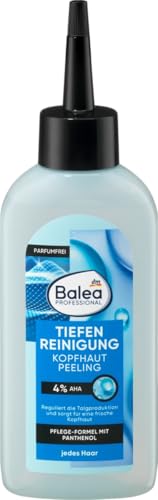
Balea
Professional Scalp Scrub Deep Cleansing
scalp treatment · 150 ml · 10 ingredients
- Fragrance-free
- No drying alcohol
- With panthenol
Amazon UK prices as of 6 November 2026, 06:08 GMT; Amazon sets the final price at checkout.
Frequently asked questions
What does the current evidence say about distinguishing dandruff from scalp psoriasis?
Clinically, the key distinguishing features remain the presence of well-demarcated red plaques (psoriasis) versus diffuse flaking with no underlying redness (dandruff). Trichoscopy (dermoscopy of the scalp) has advanced the ability to differentiate the two: scalp psoriasis shows characteristic red dots, hairpin vessels, and red globular rings on trichoscopy, while seborrheic dermatitis (the inflammatory form of dandruff) shows arborizing red lines and comma vessels. A 2022 AI-assisted dermoscopy study (PMC9669613) demonstrated 96.1% sensitivity and 88.2% specificity in distinguishing scalp psoriasis from seborrheic dermatitis — though expert clinical assessment and biopsy remain the gold standard in ambiguous cases.
Can the same shampoo treat both dandruff and scalp psoriasis?
Partially. Coal tar shampoos and salicylic acid shampoos appear in management of both conditions — coal tar reduces scalp cell turnover and itch in psoriasis while also addressing Malassezia in dandruff; salicylic acid softens scale in both. However, the antifungal shampoos that are most effective for dandruff (ketoconazole, selenium sulfide, zinc pyrithione) have no meaningful impact on the immune-mediated inflammatory component of psoriasis. For scalp psoriasis, prescription-strength treatments targeting inflammation are almost always necessary.
Is severe dandruff the same as scalp psoriasis?
No. Severe dandruff is a more pronounced form of seborrheic dermatitis — still driven by Malassezia yeast causing an inflammatory reaction on the scalp. Even extensive dandruff does not have the thick, silvery-white, plaque-forming scale of psoriasis, and it does not involve the autoimmune IL-23/IL-17 immune cascade. The two conditions can coexist, and sebopsoriasis (an overlap presentation) is a recognized entity, but severe dandruff does not become scalp psoriasis.
Does dandruff cause hair loss?
Dandruff itself is not a direct cause of significant hair loss. Excessive scratching of a very itchy scalp can cause some mechanical hair breakage, but dandruff does not trigger the inflammation-driven telogen effluvium that scalp psoriasis can. If you are experiencing significant hair shedding alongside scalp flaking, this increases the likelihood that the underlying condition is scalp psoriasis or another inflammatory scalp disorder rather than simple dandruff, and warrants dermatological evaluation.
How quickly does dandruff respond to treatment?
Most people see noticeable improvement in dandruff within 2–4 weeks of consistent use of an appropriate medicated shampoo (zinc pyrithione, ketoconazole, selenium sulfide). Because Malassezia persists on the scalp, dandruff tends to recur after stopping treatment — maintenance use (e.g., once weekly) is usually needed to prevent relapse. Scalp psoriasis, by contrast, typically requires ongoing management with prescription-strength treatments and may take longer to achieve clearance.
Health information, not medical advice.
Beauty Comparison is an independent editorial publication. This page is researched and sourced to the authorities listed below, but it is general information — not a diagnosis or a substitute for personalised advice from a qualified doctor, dermatologist or pharmacist. If your symptoms are severe, spreading, painful, or not improving, see a healthcare professional.Sources
- 01Seborrheic Dermatitis of the Scalp — PMC / NIH, 2015-06-01. Dandruff is the mildest, uninflamed form of seborrheic dermatitis; Malassezia species (M. globosa, M. restricta) drive both; distinguishing features from psoriasis: psoriasis shows more prominent erythema, hairline involvement, silvery scale, and body site lesions; ketoconazole is most evidence-backed treatment for dandruff/seborrheic dermatitis.
- 02Scalp Psoriasis: Symptoms — American Academy of Dermatology (AAD). Scalp psoriasis: silver-white scale, redness, itching (mild to intense), bleeding, burning, temporary hair loss; plaques can extend beyond hairline.
- 03Histopathological Differential Diagnosis of Psoriasis and Seborrheic Dermatitis of the Scalp — PMC / NIH, 2016-06-01. Mounds of parakeratosis with neutrophils, Kogoj micropustules, clubbed and evenly elongated rete ridges significantly more frequent in psoriasis; follicular plugging, shoulder parakeratosis, lymphocytic exocytosis more common in seborrheic dermatitis — histopathological basis for differential diagnosis.
- 04A Deep Learning-Based Approach Toward Differentiating Scalp Psoriasis and Seborrheic Dermatitis from Dermoscopic Images — PMC / NIH, 2022-11-01. AI-assisted dermoscopy achieved 96.1% sensitivity and 88.2% specificity in differentiating scalp psoriasis from seborrheic dermatitis; trichoscopic patterns differ between conditions.
- 05Scalp Psoriasis: A Complete Overview — DermNet NZ. Scalp psoriasis: well-demarcated red plaques with silvery-white scale; differential diagnosis includes seborrheic dermatitis; trichoscopic features (red dots, hairpin vessels, red globular rings) distinguish psoriasis from seborrheic dermatitis.
- 06Scalp Psoriasis: Shampoos, Scale Softeners, and Other Treatments — American Academy of Dermatology (AAD). Coal tar and salicylic acid as OTC scalp psoriasis aids; corticosteroids as #1-prescribed treatment; antifungal shampoos not indicated for psoriasis.