Dandruff vs. Seborrheic Dermatitis: What's the Difference?
The short answer
Dandruff is scalp-only flaking without redness.
Two Names, One Spectrum
Dandruff and seborrheic dermatitis are frequently discussed as separate conditions, but in reality they represent different positions on a single disease spectrum. The underlying biology is identical: Malassezia yeast (primarily M. globosa and M. restricta) colonises sebum-rich skin, metabolises sebum lipids into irritating free fatty acids, and in susceptible individuals triggers an immune response that accelerates skin-cell shedding and produces the signs we see.
The difference between dandruff and seborrheic dermatitis is therefore a matter of severity and inflammatory response, not a fundamentally different disease:
- Dandruff: the immune response is sub-clinical — enough to accelerate shedding and cause itch, but not enough to produce visible inflammation
- Seborrheic dermatitis: the immune response is overt — producing visible redness, heavier scaling, and potentially spreading to other sebum-rich areas of the body
Understanding this spectrum has direct practical value: it explains why both conditions respond to the same class of treatments (antifungals), why the same person can have dandruff for years before developing SD, and why events that alter immune function (illness, stress, HIV) can shift someone from dandruff to SD rapidly.
Side-by-Side Comparison
| Feature | Dandruff | Seborrheic Dermatitis |
|---|---|---|
| Biological cause | Malassezia yeast + sebum + susceptibility | Malassezia yeast + sebum + susceptibility |
| Inflammation (erythema) | Absent — the key distinguishing sign | Present — defines the diagnosis |
| Location | Scalp only | Scalp, face, ears, beard, upper chest, skin folds |
| Scale character | Loose, white-yellow, dispersed | Greasy, yellowish, may be adherent or crusted |
| Itch severity | Absent to mild | Moderate to severe |
| Prevalence | ~50% of adults globally | 3–10% of adults |
| Age peak | Around age 20 | After age 40 (bimodal with infancy) |
| Sex predominance | Males more affected | Males more affected |
| Immune compromise | Not significantly elevated | Dramatically elevated (85% in AIDS) |
| OTC antifungal shampoo | First-line, usually sufficient | First-line — may need stronger or prescription agents |
| Topical corticosteroids | Rarely needed | Used short-term for acute flare control |
| Self-resolving? | No (chronic but mild) | No (chronic; infantile form does resolve) |
Where Do They Appear?
Dandruff is, by definition, confined to the scalp. Flakes may fall onto clothing and shoulders, giving the visual impression that more of the body is involved — but the active disease process is only on the scalp.
Seborrheic dermatitis can extend wherever sebaceous glands are dense:
- Scalp and hairline (most common — 70% of adult SD cases)
- Face: Eyebrows, glabella (between the brows), nasolabial folds, sides of the nose
- Ears: External ear canal, behind the ears
- Beard and mustache areas in men
- Upper chest (a V-shaped distribution)
- Skin folds (axillae, groin, under the breasts) — more common in severe or immunocompromised cases
When SD affects the face simultaneously with the scalp — a common pattern — it is easy to mistake facial SD for dry skin, eczema, or rosacea. The presence of a greasy scale with erythema in the nasolabial folds is quite characteristic of SD.
How Do the Scales Look and Feel?
Flake character is a useful diagnostic clue:
Dandruff flakes:
- White to pale yellow
- Fine, powdery, or small and discrete
- Easily loosened and fall freely (the "snow on the shoulders" effect)
- Scalp does not look actively inflamed beneath the flakes
Seborrheic dermatitis scales:
- Yellow to yellowish-brown
- Larger, greasier, may clump or adhere to the scalp and hair shaft
- In severe cases: thick, crusted plaques that mat the hair
- Underlying scalp skin visibly red
The Role of Malassezia in Both
Malassezia is ubiquitous on human skin — it is part of normal skin flora in virtually all adults. Its ability to cause either dandruff or SD depends not on simple overgrowth, but on a specific immune-metabolic interaction:
- Malassezia lipases cleave sebum triglycerides into free fatty acids (particularly oleic acid)
- Oleic acid penetrates the stratum corneum in susceptible individuals
- In dandruff: this triggers sub-clinical accelerated shedding (flakes without inflammation)
- In seborrheic dermatitis: this activates the NLRP3 inflammasome, triggering IL-1β release, and engages the Th17/IL-17 immune axis — producing visible inflammation
This is why seborrheic dermatitis can be thought of as the "full inflammatory version" of the same process that causes dandruff. The switch between states is individual susceptibility — genetic, immune, and environmental.
Diagnosis: How to Tell Them Apart
In most cases, you can distinguish dandruff from seborrheic dermatitis by answering three questions:
1. Is there visible redness?
- No redness = dandruff
- Visible erythema = seborrheic dermatitis
2. Is the scaling limited to the scalp?
- Scalp only = consistent with dandruff
- Involvement of face, ears, or chest = seborrheic dermatitis
3. How severe is the itch?
- Absent or mild = more typical of dandruff
- Moderate-to-severe = more consistent with SD
A formal diagnosis is made clinically by a dermatologist. KOH microscopy of scrapings may occasionally be used to rule out tinea capitis (scalp ringworm), which can mimic SD — especially in children.
Conditions that can mimic seborrheic dermatitis:
| Condition | Key Distinguishing Feature |
|---|---|
| Scalp psoriasis | Thicker, silvery-white plaques; well-defined edges; often involves elbows, knees, nails |
| Tinea capitis | Primarily in children; broken hair shafts; KOH shows hyphae |
| Atopic dermatitis | Personal/family history of eczema; different distribution; dry rather than greasy scale |
| Contact dermatitis | Acute onset after new product exposure; burning > itch |
| Pityriasis rosea | Herald patch followed by widespread trunk eruption; generally self-limiting |
Treatment: Similarities and Differences
Shared treatment principle: Both conditions are primarily managed with antifungal shampoos that reduce Malassezia populations. See the full treatment breakdown in the dedicated Dandruff Guide and Seborrheic Dermatitis on the Scalp articles.
Where treatment diverges:
| Treatment | Dandruff | Seborrheic Dermatitis |
|---|---|---|
| Antifungal shampoo (ketoconazole, zinc pyrithione, ciclopirox, selenium sulfide) | First-line; usually sufficient | First-line; prescription strength more often needed |
| Topical corticosteroids (scalp lotion, foam) | Rarely necessary | Short-term use for acute flare; not for maintenance |
| Calcineurin inhibitors (tacrolimus, pimecrolimus) | Not needed | Steroid-sparing option, especially for facial SD |
| Systemic antifungals (itraconazole, fluconazole) | Not used | Reserved for severe or refractory cases |
| Maintenance schedule | Once-weekly antifungal shampoo | Once-weekly antifungal shampoo; may need more frequent if prone to rapid relapse |
When to See a Doctor
See a dermatologist if:
- You have visible redness or swelling of the scalp (suggesting SD rather than simple dandruff)
- Scaling extends to the face, ears, or chest
- Symptoms persist after 4–6 weeks of consistent OTC antifungal shampoo use
- You suspect the diagnosis — scalp psoriasis, tinea capitis, and contact dermatitis can all mimic SD and need specific treatment
- Onset is sudden and severe, particularly in an adult without prior history (possible immune compromise)
- Hair loss accompanies the scalp condition
Products that fit: dandruff
Picked by code from each product's full ingredient list.

Vichy
Dercos Anti-Dandruff Water
scalp treatment · 200 ml · 20 ingredients
£18.49Amazon UK
- No essential oils
- With piroctone olamine
- With salicylic acid
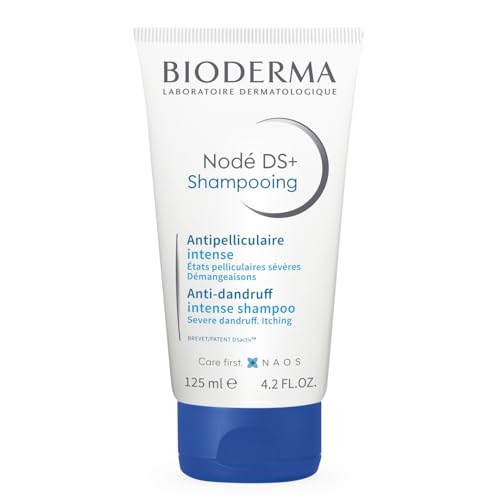
Bioderma
Node DS+ Anti Dandruff Shampoo
shampoo · 125 ml · 26 ingredients
- No essential oils
- With piroctone olamine
- With salicylic acid
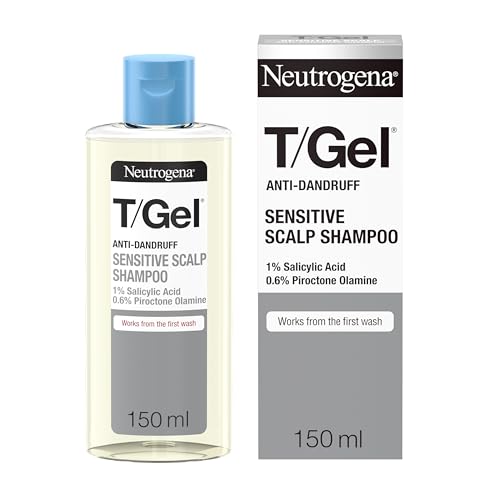
Neutrogena
T/Gel Anti Dandruff Shampoo
shampoo · 150 ml · 15 ingredients
£5.62−13%Amazon UK
- Fragrance-free
- No essential oils
- With piroctone olamine
- With salicylic acid

Vichy
Dercos PSOlution Kerator-Reducing Treatment Shampoo Psoriatic-Prone Scalps
shampoo · 200 ml · 31 ingredients
£10.45Amazon UK
- No essential oils
- With piroctone olamine
- With salicylic acid
Amazon UK prices as of 6 November 2026, 06:08 GMT; Amazon sets the final price at checkout.
Frequently asked questions
Is dandruff just mild seborrheic dermatitis?
Essentially yes — dermatologists and major reviews treat dandruff and seborrheic dermatitis as a continuous spectrum driven by the same pathological mechanism (Malassezia yeast metabolising sebum). Dandruff is the non-inflammatory end of that spectrum (scalp only, no redness, milder itch and scale) while seborrheic dermatitis represents a more pronounced immune-inflammatory response with visible erythema and potential spread beyond the scalp. The distinction is clinically useful because it guides treatment intensity, but the underlying biology and first-line treatments are identical.
Can dandruff turn into seborrheic dermatitis?
Yes — someone who has had mild dandruff for years can develop seborrheic dermatitis if their immune reactivity to Malassezia increases. This can happen with age, psychological stress, illness, immune-suppressing medications, or immune-compromising conditions including HIV. Going in the other direction — SD resolving back to simple dandruff — can occur when the inflammatory trigger is addressed. Neither direction of change alters the underlying biology; it reflects shifts in the immune response.
Do I need a prescription for seborrheic dermatitis but not dandruff?
Not necessarily for mild SD. Ketoconazole 1% shampoo is OTC and often effective for mild scalp seborrheic dermatitis. However, more severe or widespread SD may require ketoconazole 2% (prescription in the US), ciclopirox 1% (prescription), topical corticosteroids, or systemic antifungals — none of which are available OTC. Dandruff typically responds well to OTC zinc pyrithione, 1% ketoconazole, or selenium sulfide without needing a prescription visit.
I have flaky skin between my eyebrows and on my nose — is that dandruff?
No — dandruff is confined to the scalp. Flaking on the eyebrows, sides of the nose, and nasolabial folds is a characteristic distribution of seborrheic dermatitis involving the face. Facial SD may appear alongside scalp SD or independently. It is common for people to mistake facial SD for dry skin; unlike dry skin, facial SD has a greasy quality to the scale, is often accompanied by mild redness, and responds to antifungal treatments rather than just moisturizers.
How do I know if I have scalp psoriasis or seborrheic dermatitis?
Both produce scalp scaling and redness, but psoriasis typically produces thicker, well-demarcated silvery-white plaques with sharply defined edges, whereas seborrheic dermatitis produces greasy yellowish scale with less distinct borders that tends to follow the hairline. Psoriasis also commonly involves the elbows, knees, and nails — areas not typically affected by SD. If both are possible, a dermatologist can usually distinguish them clinically and, if needed, by skin biopsy. Treatment differs: psoriasis requires different agents including tar products, vitamin D analogues, and biologics for severe cases.
Health information, not medical advice.
Beauty Comparison is an independent editorial publication. This page is researched and sourced to the authorities listed below, but it is general information — not a diagnosis or a substitute for personalised advice from a qualified doctor, dermatologist or pharmacist. If your symptoms are severe, spreading, painful, or not improving, see a healthcare professional.Sources
- 01Seborrheic Dermatitis and Dandruff: A Comprehensive Review — PubMed Central / International Journal of Trichology, 2015-11-01. Dandruff and SD are a disease spectrum with the same pathogenesis; dandruff = scalp only, no erythema, ~50% prevalence; SD = inflammation, multi-site involvement, 1–3% prevalence; both driven by Malassezia, sebum, and individual susceptibility.
- 02Seborrheic Dermatitis — StatPearls (NIH Bookshelf) — National Institutes of Health / NCBI Bookshelf, 2023-07-31. SD defined by papulosquamous morphology in sebaceous-gland-rich areas; scalp involved in 70% of adult SD; bimodal age distribution; SD affects 35–85% of HIV patients; facial involvement pattern (eyebrows, nasolabial folds, ears); distinguishing clinical features from psoriasis and tinea capitis.
- 03Seborrheic Dermatitis: Exploring the Complex Interplay with Malassezia — PubMed Central / Journal of Fungi, 2025-03-01. NLRP3 inflammasome activation by Malassezia in SD distinguishes inflammatory SD from sub-clinical dandruff; Th17/IL-17 axis drives chronic inflammation; immune dysregulation is central to SD pathogenesis.
- 04Seborrheic Dermatitis: Overview — American Academy of Dermatology — American Academy of Dermatology (aad.org). AAD distinguishes SD from dandruff by presence of inflammation; SD involves face, ears, and other body sites beyond scalp; treatment differs (SD may need prescription agents); dermatologist evaluation recommended for diagnosis.