Best Mascara for Sensitive Eyes & Contact Lens Wearers
The short answer
The best mascara for sensitive eyes is fragrance-free, benzalkonium-chloride-free, and ophthalmologist-tested.
Why Mascara Can Be a Problem for Sensitive Eyes
The eye is one of the most sensitive surfaces of the body. The tear film — a three-layer structure covering the corneal surface — is easily disrupted by chemicals, particles, and preservatives. Mascara is applied millimeters from this surface, and every blink creates the opportunity for product migration toward the tear film, waterline, and conjunctiva.
For most people with healthy eyes, this is not an issue. But for people with:
- Dry eye disease
- Blepharitis (chronic eyelid inflammation)
- Contact lens wear
- Ocular allergies
- Rosacea with ocular involvement
- Known cosmetic sensitivities
...the specific ingredients in mascara matter considerably. The good news is that ingredient science has advanced enough that highly effective mascara is available without the problematic compounds.
Ingredients to Avoid: The Sensitive-Eye Watch List
1. Benzalkonium Chloride (BAC / BAK)
This is the single most important ingredient to avoid if you have dry eyes, sensitive eyes, or wear contact lenses. Benzalkonium chloride is a quaternary ammonium preservative used in approximately 70% of ophthalmic preparations. Peer-reviewed research published in Eye (Nature, PMC8277985, 2021) documents that BAC:
- Damages corneal epithelial cells and causes dose-dependent apoptosis
- Destabilizes the tear film, increasing tear break-up time
- Reduces goblet cell density, which is essential for the mucin layer of the tear film
- Binds to soft contact lens materials and releases slowly throughout the day — concentrating exposure at the lens-cornea interface
If your mascara contains benzalkonium chloride and you experience eye dryness, grittiness, or irritation, this is the most likely culprit. Switch to a formula preserved with phenoxyethanol, ethylhexylglycerin, or other BAC-free systems.
2. Fragrance / Parfum
Fragrance is one of the most common contact allergens in cosmetics. In eye-area products, fragrance compounds can irritate the conjunctiva and cause allergic contact dermatitis around the eyelid — which presents as redness, itching, and swelling. There is no functional need for fragrance in mascara (you do not apply it to skin you smell). Any mascara for sensitive eyes should be explicitly fragrance-free.
3. Formaldehyde Releasers
Preservatives that slowly release formaldehyde — DMDM hydantoin, imidazolidinyl urea, quaternium-15, and diazolidinyl urea — are present in some mascara formulations. Formaldehyde at concentrations above 0.2% is associated with contact dermatitis, skin irritation, and ocular surface irritation. These preservatives are legal in cosmetics at regulated concentrations but are worth avoiding in eye-area products for sensitive individuals.
4. Thimerosal
A mercury-based preservative documented by WebMD to cause conjunctivitis (eye inflammation) and eyelid dermatitis. While now rare in modern formulas, some older products still contain it. Check the ingredient list if you are buying older stock or less-mainstream brands.
5. Loose Fibers (Fiber Mascaras)
Short synthetic fibers — nylon, rayon, or cotton — used in fiber mascaras and some lengthening formulas shed from the lash during application and wear. For contact lens wearers, these particles can become trapped between the lens and the cornea, causing irritation, corneal micro-abrasion, or lens discomfort. Optometry clinical guidelines (PMC6118862) note that mascara particles are among the materials most commonly found deposited on contact lens surfaces.
Avoid fiber mascaras if you wear contact lenses.
What to Look For: Positive Indicators
- "Ophthalmologist tested" — The product has been evaluated by an eye doctor for ocular surface irritation. This is a meaningful designation, though not a regulatory standard.
- "Fragrance-free" — Not "unscented" (which can mean fragrance was added to mask another odor); specifically "fragrance-free."
- Tubing formula — As explained below, tubing mascaras are structurally superior for sensitive-eye applications.
- Hypoallergenic — A marketing term but one that responsible brands use to signify testing against common sensitizers.
- No benzalkonium chloride on the ingredient list — Look for this by name; it may appear as "benzalkonium chloride," "BAC," or "BAK."
Why Tubing Mascaras Are the Top Recommendation
Tubing mascaras — which form polymer sleeves around each lash rather than depositing a wax-pigment film — offer three specific advantages for sensitive eyes and contact lens wearers:
1. Minimal particle shedding. Because the polymer forms a solid, coherent tube around the lash, there is significantly less particulate migration than from a conventional wax-based formula. Optometry guidelines consistently flag mascara particle deposits on lens surfaces as a hygiene concern; tubing mascaras reduce this risk.
2. No oil-based remover required. Removing mascara with oil-based products around a contact lens wearer's eye creates risk: oils can deposit on the lens surface, altering its optical properties and surface wettability. Tubing mascaras remove with warm water and light pressure alone — eliminating this removal complication.
3. Reduced preservative load. Because the formula doesn't require the heavy preservative load some conventional mascaras use (the polymer tube technology creates a more hygienic product environment than a wax emulsion), many tubing mascaras are formulated with milder preservation systems.
For a full guide to how tubing mascaras work, see /tubing-mascara-guide.
Contact Lens Wearers: The Non-Negotiable Rules
These guidelines are consistent across peer-reviewed optometry literature, the FDA, and ophthalmology professional bodies:
Insert lenses before applying makeup
Contact lenses must be inserted before any eye makeup is applied. The rationale from the optometry literature (PMC6118862):
- Inserting lenses after makeup deposits makeup residue from fingers onto the lens surface
- The lens itself serves as a barrier that could prevent micro-abrasions from mascara brushes if worn during application
- Cosmetic particles on the finger are among the most common sources of lens contamination
Remove lenses before removing makeup
Lenses must come out before you remove eye makeup. Removing eye makeup over lenses means the remover, makeup particles, and dissolved pigment are all in contact with the lens surface.
Apply mascara from the mid-lash outward, not from the root
Starting from the root — especially on lower lashes — increases the chance that the wand touches the waterline or deposits product into the space between the lid and the lens. Apply from mid-lash to tip.
Do not apply mascara to the inner corner or waterline
The inner corner and waterline are directly adjacent to the tear film; any mascara that touches these areas will directly enter the tear film and potentially reach the lens surface or the corneal epithelium.
The 3-Month Replacement Rule: Non-Negotiable for Sensitive Eyes
A PubMed-indexed study (Salvaggio et al., 2013) found Staphylococcus aureus — a pathogen that can cause blepharitis and keratitis — in 79% of used mascara samples. Pseudomonas aeruginosa, capable of causing severe and rapid corneal infection, was found in 13% of samples. Bacterial and fungal populations reached approximately 10,000 colony-forming units per mL.
For people with healthy eyes, this is concerning but manageable with proper hygiene. For contact lens wearers and people with compromised ocular surface integrity, it is clinically serious. Pseudomonas keratitis can cause corneal scarring and permanent vision loss if not treated rapidly.
Replace mascara every three months, without exception. Do not add water or saliva to extend the life of a drying tube — this dilutes preservatives and introduces bacteria from your mouth or water source.
Additional Sensitive-Eye Mascara Hygiene Rules
- Never share mascara. Each mascara wand deposits the user's eyelid and conjunctival microbiome into the tube.
- Do not pump the wand. Pumping the applicator in and out of the tube introduces air and bacteria and accelerates drying.
- Do not apply mascara in a moving vehicle. An unexpected bump that drives the wand into the eye can cause corneal abrasion.
- Store mascara at room temperature. Heat and cold affect the preservative efficacy and formula stability.
What About "Natural" or "Clean" Mascaras?
"Natural" mascara is not automatically safer for sensitive eyes than conventional mascara. Some natural preservatives — lavender essential oil, rosemary extract — are actually more likely to cause allergic reactions than the synthetic preservatives they replace. "Clean" is not a regulatory term and does not guarantee the absence of irritating ingredients.
The correct approach for sensitive eyes is to read the ingredient list and check specifically for the ingredients listed above — regardless of whether the product is marketed as natural, clean, or conventional.
Summary: What to Buy
For sensitive eyes and contact lens wearers, the safest mascara is one that:
- Is explicitly ophthalmologist-tested
- Contains no fragrance/parfum
- Contains no benzalkonium chloride
- Contains no loose fibers
- Is a tubing formula (polymer-sleeve, not wax-film)
- Has been purchased recently (within the last three months)
These criteria narrow the field considerably and reliably exclude the most common ocular surface irritants. See also /mascara-types-guide for an overview of how formulas differ, and /waterproof-vs-regular-mascara for guidance on when each type is appropriate.
Products that fit: sensitive skin
Picked by code from each product's full ingredient list.

Catrice
Lash Brow Designer Shaping And Conditioning Mascara Gel
mascara · 6 ml · 9 ingredients
- Fragrance-free
- No essential oils
- No drying alcohol
- No MI/MCI
- No menthol, camphor and witch hazel

Catrice
Super Boost Lash & Brow Serum
brow product · 6 ml · 15 ingredients
£4.99Amazon UK
- Fragrance-free
- No essential oils
- No drying alcohol
- No MI/MCI
- No menthol, camphor and witch hazel
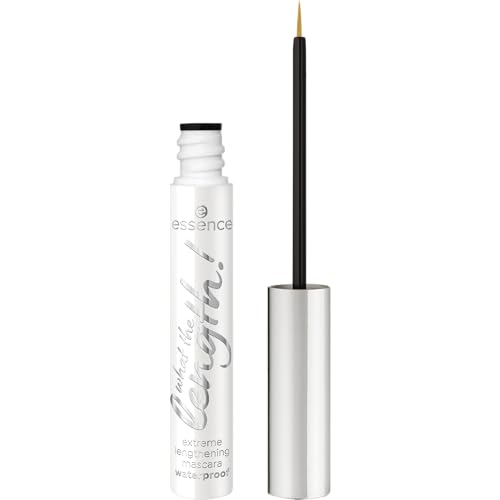
Essence
What The Length! Lash Growth Serum
brow product · 4 ml · 19 ingredients
£4.99Amazon UK
- Fragrance-free
- No essential oils
- No drying alcohol
- No MI/MCI
- No menthol, camphor and witch hazel

Essence
All Eyes On Me Waterproof Mascara
mascara · 8 ml · 20 ingredients
- Fragrance-free
- No essential oils
- No drying alcohol
- No MI/MCI
- No menthol, camphor and witch hazel
Amazon UK prices as of 6 November 2026, 06:08 GMT; Amazon sets the final price at checkout.
Frequently asked questions
What is the most important ingredient to avoid in mascara for sensitive eyes in 2026?
Benzalkonium chloride (BAC/BAK) is the highest-priority ingredient to avoid, particularly for contact lens wearers and people with dry eye. A 2021 review in the journal Eye (Nature) documented that BAC causes corneal epithelial cell damage, disrupts the tear film, and binds to soft contact lens materials — releasing slowly and concentrating against the cornea. Fragrance is the second most important to avoid, as it is a leading contact allergen in eye-area cosmetics.
Is tubing mascara safe for sensitive eyes?
Yes, and it is the most commonly recommended category for sensitive eyes and contact lens wearers. Tubing mascaras form solid polymer sleeves around lashes rather than a loose wax-pigment coat, significantly reducing particle migration into the eye and the tear film. They also remove cleanly with warm water rather than oil-based removers, eliminating one route of ocular surface contamination. Look for tubing formulas that are additionally fragrance-free and ophthalmologist-tested.
Can I wear mascara with dry eye syndrome?
With careful product selection, many people with dry eye disease can wear mascara. The critical exclusions are benzalkonium chloride (documented to worsen dry eye symptoms), fragrance, and any formula that requires aggressive oil-based removal. A tubing mascara or ophthalmologist-tested regular mascara free of BAC and fragrance, replaced every three months, is the standard recommendation. If symptoms worsen on days you wear mascara, try a different product or consult your ophthalmologist about specific recommendations for your severity of dry eye.
Do I need to put my contact lenses in before or after mascara?
Always insert contact lenses before applying any eye makeup, including mascara. This is unanimous guidance from the FDA, the American Optometric Association, and the peer-reviewed optometry literature. Inserting lenses after applying mascara deposits makeup residue from your fingers onto the lens surface and bypasses the lens's protective barrier role during application. Remove lenses at the end of the day before removing makeup.
How often should I replace my mascara if I have sensitive eyes?
Every three months, strictly. This is the same guideline that applies to all mascara use, but it is more important for sensitive eyes because the bacteria documented in expired mascaras — Staphylococcus aureus (found in 79% of used samples) and Pseudomonas aeruginosa (found in 13%) — can cause blepharitis, conjunctivitis, and in worst cases corneal infection, particularly in eyes that are already compromised by dryness, allergy, or contact lens wear.
Sources
- 01Ocular benzalkonium chloride exposure: problems and solutions — PubMed Central / Eye (Nature Publishing Group), 2021-07-01. Benzalkonium chloride causes corneal epithelial cell damage, tear film instability, and goblet cell loss; binds to soft contact lens materials; adverse effects at cosmetic-use concentrations documented in clinical and in vitro studies.
- 02Contact lens care tips for patients: an optometrist's perspective — PubMed Central, 2018-08-01. Contact lenses must be inserted before applying makeup; mascara is a common lens surface deposit; the lens protects the cornea from applicator abrasion; fiber mascara particles are among materials found on lens surfaces.
- 03Investigation on the use of expired make-up and microbiological contamination of mascaras — PubMed, 2013-04-01. Staphylococcus aureus found in 79% of mascara samples; Pseudomonas aeruginosa in 13%; high microbial load documented in used mascara — supports the 3-month discard rule, especially for contact lens wearers.
- 04Eye Cosmetic Safety — Cosmetics Safety Q&A — U.S. Food and Drug Administration. FDA guidance: insert contact lenses before applying makeup; discard mascara three months after purchase; never add saliva or water to mascara; do not share eye cosmetics; most eye-area cosmetics are safe when used properly.
- 05Mascara Ingredients, Waterproof Mascara, History of Mascara, and More — WebMD. Thimerosal in mascara can cause conjunctivitis and eyelid dermatitis; mascara ingredients include preservatives, waxes, pigments, and film formers; fragrance and certain preservatives are common sensitizers in eye-area cosmetics.