Tubing Mascara: What It Is & Why It's the Smudge-Proof Hero
The short answer
Tubing mascara wraps each lash in a polymer sleeve that resists smudging all day.
What Is Tubing Mascara?
Tubing mascara is a category of mascara distinguished by its film-forming technology rather than its cosmetic goal. Where conventional mascaras coat each lash with a wax-and-pigment film, tubing mascaras use flexible polymers — most commonly aliphatic polyurethane resins or acrylate copolymers — to form hollow, cylindrical "tubes" around each individual lash fiber.
The result looks similar to conventional mascara when applied. The key difference is invisible in the mirror: the structural integrity of those polymer tubes is what makes tubing mascara resistant to smudging throughout the day, and what allows it to be removed so easily.
How Tubing Mascara Works: The Chemistry
Standard mascara is essentially a wax emulsion with pigment. When it contacts moisture — tears, sweat, humidity — the wax softens slightly, and the pigment can transfer to the lower lid. The well-known "panda eye" effect is the visual result of this pigment migration combined with blinking friction.
Tubing mascara substitutes flexible film-forming polymers for the wax-heavy base. When applied to the lash:
- The polymer-rich formula coats the lash shaft on contact.
- As the solvent (typically water) evaporates, the polymer cross-links and sets into a rigid-yet-flexible tube around the lash.
- The tube is not water-soluble — it cannot smear when it contacts moisture.
- However, the tube can be softened and released by sustained contact with warm water, making removal clean and precise.
The key property is that the tubes hold their structural integrity during normal wear but release from the lash when you add heat (warm water) and gentle mechanical action (pressing a damp cloth to the lashes). When you remove tubing mascara, you see small cylindrical clumps come off — intact tubes, not smeared pigment.
Tubing Mascara vs. Regular Mascara vs. Waterproof Mascara
| Property | Regular Mascara | Tubing Mascara | Waterproof Mascara |
|---|---|---|---|
| Film mechanism | Wax-pigment coat | Polymer tubes | Water-insoluble wax or volatile solvent |
| Smudge resistance | Low–moderate | High | Very high |
| Tear/sweat resistance | Low | High | Very high |
| Removal method | Water or mild cleanser | Warm water + light pressure | Oil-based remover required |
| Particle shedding risk | Moderate | Low | Low |
| Lash stress from removal | Low | Low | Moderate–high |
| Sensitivity suitability | Variable | Generally good | Variable |
The comparison above shows why tubing mascara occupies a useful middle ground: smudge resistance close to waterproof, with removal ease close to regular mascara.
Who Benefits Most from Tubing Mascara
Oily Eyelids
Oily skin produces more sebum around the orbital area. This sebum softens wax-based mascara films throughout the day, accelerating smudging. Because tubing mascara's polymer tubes adhere directly to the lash shaft and don't interact with sebum in the same way, they hold up significantly better on oily lids.
Contact Lens Wearers
Ophthalmology and optometry guidance consistently recommends formulas that minimize particle shedding around the eye for contact lens wearers. The Contact Lens Care guidelines from the peer-reviewed optometry literature note that mascara particles are among the materials commonly transferred to lens surfaces. Tubing mascaras, because they form a solid tube rather than a loose wax-pigment coat, shed fewer particles throughout the day. See /mascara-for-sensitive-eyes for full criteria.
Sensitive Eyes and Allergy-Prone Wearers
Many tubing mascara formulas are ophthalmologist-tested and free of common irritants (fragrance, harsh preservatives). The polymer tubes also mean less product migration toward the waterline and tear film, reducing the chance of irritation.
High-Humidity Environments, Exercise, and All-Day Wear
Humidity, perspiration, and long wear times all accelerate conventional mascara failure. Tubing mascaras are the professional and backstage beauty industry's default for event coverage — theatre, live television, weddings — precisely because they remain intact under conditions that cause regular mascara to fail.
Lash Extension Wearers (with Caveat)
Some lash extension wearers use tubing mascara on their natural lower lashes. Avoid using any mascara on lash extensions themselves — the formula can weaken the extension adhesive bond.
How to Apply Tubing Mascara
Step 1: Start with a Completely Clean Lash Line
Unlike regular mascara, which will adhere to lashes that have been conditioned with oils or serums, tubing mascaras require a clean, product-free lash as a substrate. Oily residue from eye creams, serums, or makeup primers applied too close to the lash base prevents the polymer from gripping the hair shaft. Apply tubing mascara before any heavy moisturizer reaches the lash line.
Step 2: Apply from Root to Tip in a Single Zigzag Motion
Start the wand at the base of the lashes and pull through to the tip using a slight side-to-side zigzag motion. This ensures the polymer coats the full length of each lash, including the base where tubes must anchor firmly to resist smudging.
Step 3: Apply a Second Coat While the First Is Still Slightly Tacky
Unlike some mascaras where you want the first coat dry before the second, tubing mascaras layer best when the first coat is still slightly damp. Apply the second coat immediately or within 30 seconds to ensure tubes build on each other rather than sticking to each other in clumps.
Step 4: Allow to Fully Dry Before Blinking Vigorously
Give the formula 60 seconds to set. The polymer needs to complete its cross-linking and form a rigid tube; if you rub your eye or blink hard immediately after application, the tubes may deform or smear.
How to Remove Tubing Mascara
This is where tubing mascara distinguishes itself most clearly. The removal process is genuinely different from conventional mascara:
- Dampen a cotton pad or your fingertips with comfortably warm water.
- Hold the pad gently against the closed eye for 10–15 seconds. The warmth softens the polymer-lash bond.
- Slide the pad downward with light, even pressure. You will see cylindrical tube segments come off intact on the pad.
- Repeat until all tubes are removed. There is no smearing.
- No oil-based or surfactant-heavy remover needed.
Why this matters beyond convenience: A peer-reviewed study (Kanlayavattanakul et al., PMC3927173) identified improper removal — specifically using water alone on waterproof mascara, which requires aggressive rubbing — as the removal method associated with the highest rate of eyelash loss. Tubing mascara's clean removal mechanism removes this risk category entirely.
Limitations of Tubing Mascara
Less dramatic volume. Because tubing mascaras rely on polymer tubes rather than heavy wax coats, they do not build the same level of dense volume that a high-wax volumizing formula can. Users who prioritize maximum thickness may prefer conventional volumizing mascara for occasions and tubing mascara for daily wear.
Pre-oiled lash lines prevent adhesion. Heavy lash serums containing oils (castor oil, peptide serums in an oil base) applied directly to the lashes can interfere with tube formation. Apply lash serums at night; apply tubing mascara to clean morning lashes.
Warm water removal can be a surprise. Users accustomed to conventional mascara may be caught off guard by their tubes sliding off in the gym or shower. For very intense water exposure (swimming, water sports), a properly waterproof formula remains the more reliable choice.
Not all products labeled "tubing" are true tubing formulas. Some brands use the term loosely to describe water-resistant conventional mascaras. True tubing mascaras should slide off in visible cylindrical clumps with warm water — if yours smears or requires oil to remove, it is not a true tubing formula.
Ingredients to Look For (and Avoid)
Positive indicators of a true tubing formula:
- Aliphatic polyurethane resin (or diisocyanate-based polymers)
- Acrylates copolymer listed high in the ingredients
- Low or absent beeswax and paraffin compared to a conventional mascara
Ingredients worth checking on the label:
- Benzalkonium chloride (BAC/BAK): A preservative documented to destabilize the tear film and damage corneal epithelial cells. A 2021 review in Eye (Nature Publishing) documented adverse ocular surface effects at concentrations found in cosmetics. If you have dry eyes or wear contact lenses, look for products preserved with alternatives (phenoxyethanol, dehydroacetic acid).
- Fragrance/parfum: A common sensitizer for the eye area; avoid in mascara if you have sensitive or reactive eyes.
Tubing Mascara and Lash Health
Tubing mascara does not damage lashes during normal use. Because it removes without aggressive rubbing or oil-dissolving solvents, it is arguably less stressful to the lash lifecycle than daily waterproof mascara use. The peer-reviewed evidence on mascara-induced eyelash loss (milphosis) consistently identifies improper removal — not the formula type itself — as the primary mechanical risk to lash retention.
For further context on mascara type selection, see /mascara-types-guide and /why-does-mascara-smudge.
Products that fit this guide
Picked by code from each product's full ingredient list.

Catrice
Brow Fix Shaping Wax
brow product · 1 g · 11 ingredients
- Fragrance-free
- No essential oils

Catrice
Drunk'n Diamonds Eyeshadow Stick
eyeshadow · 2.5 g · 17 ingredients
£4.82Amazon UK
- Fragrance-free
- No essential oils
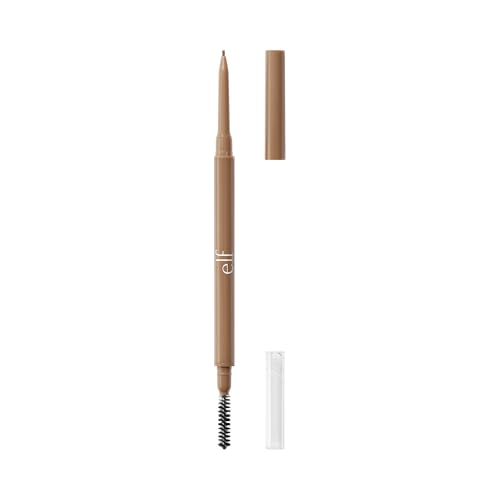
e.l.f.
Micro-Fine Brow Pencil
brow product · 0.03 g · 16 ingredients
£7.75−3%Amazon UK
- Fragrance-free
- No essential oils
- With vitamin E

Essence
All Eyes On Me Waterproof Mascara
mascara · 8 ml · 20 ingredients
- Fragrance-free
- No essential oils
- With glycerin
Amazon UK prices as of 6 November 2026, 06:08 GMT; Amazon sets the final price at checkout.
Frequently asked questions
Is tubing mascara still the best option for smudge-proof wear in 2026?
Yes, for most everyday use cases. Tubing mascara technology has continued to improve, and it remains the most practical combination of all-day smudge resistance and gentle removal. For extreme conditions — swimming, prolonged water exposure, very intense exercise — a true waterproof formula may still outperform, but for normal daily wear including humid weather and light sweating, tubing mascara is the superior choice due to its gentler removal process.
Why does my tubing mascara smudge even though it's supposed to be smudge-proof?
The most common cause is oily residue on the lash line at the time of application. Heavy eye creams, serums, or makeup primers applied close to the lash base can prevent the polymer from fully adhering to the lash shaft, which means the tubes form incompletely and can migrate. Apply tubing mascara before heavy moisturizer or on completely clean lashes. Another cause: the product may not be a true tubing formula despite the label.
Can I use tubing mascara with lash extensions?
You can use it on your natural lower lashes, but avoid applying any mascara directly to lash extensions. Most lash extension adhesives are weakened by makeup removers and repeated wet contact. On the natural lashes, a tubing mascara's easy warm-water removal is arguably preferable to oil-based removers, which can accelerate extension bond degradation if they reach the extension adhesive.
Does tubing mascara make lashes longer or just more defined?
The tubes add a small amount of dimension to each lash, making them appear slightly longer and more uniformly coated than bare lashes. However, tubing mascaras are not primarily engineered for dramatic length extension the way fiber mascaras or high-volume formulas are. They excel at clean definition and smudge resistance. For maximum length, pair a lengthening formula occasion or use a lash primer under your tubing mascara.
Sources
- 01Mascara Induced Milphosis, an Etiological Evaluation — PubMed Central, 2014-01-01. Improper waterproof mascara removal with water alone — requiring aggressive rubbing — was associated with the highest eyelash loss rate among removal methods; waterproof mascaras require oil-based removal to avoid mechanical lash damage.
- 02Ocular benzalkonium chloride exposure: problems and solutions — PubMed Central / Eye (Nature Publishing Group), 2021-07-01. Benzalkonium chloride (BAC) in cosmetics and ophthalmic preparations causes adverse ocular surface effects including tear film instability, corneal epithelial cell damage, and increased OSD symptoms — relevant for mascara ingredient selection by sensitive-eye wearers.
- 03Contact lens care tips for patients: an optometrist's perspective — PubMed Central, 2018-08-01. Contact lenses should be inserted before applying makeup; mascara is among the materials commonly deposited on lens surfaces; formulas that minimize particle shedding are preferred for contact lens wearers.
- 04Investigation on the use of expired make-up and microbiological contamination of mascaras — PubMed, 2013-04-01. Mascara contamination with Staphylococcus aureus (79%) and Pseudomonas aeruginosa (13%) documented in expired and used mascara samples; supports the 3-month discard recommendation regardless of mascara formula type.