Types of Mascara Explained: Volumizing, Lengthening, Tubing
The short answer
Mascara types differ by formula and effect: volumizing adds bulk, lengthening extends lash tips.
What Is Mascara, and What Is It Made Of?
Mascara is a cosmetic applied to the eyelashes to darken, define, lengthen, volumize, or curl them. Every mascara, regardless of type, is built on the same foundational chemistry: pigment to color, wax to build body, polymer to form a film that adheres to lashes, and a liquid carrier (water or solvent) to keep the formula flowable during application.
Core Mascara Ingredients
According to WebMD and cosmetic formulation literature, a standard mascara contains:
- Pigments: Carbon black (deep black) or iron oxides (brown, black, blue, colored). Concentration ranges from around 0.5% for natural-look formulas to 10% for midnight-black pigmentation.
- Film-forming polymers: Acrylate copolymers, polyurethane resins, or vinyl polymers form the flexible film that binds pigment to the lash shaft.
- Waxes: Beeswax, carnauba wax, candelilla wax, or paraffin provide structural body and control the thickness of the coat.
- Emollients and humectants: Castor oil, mineral oil, dimethicone, or glycerin help the formula glide on without dragging and keep lashes flexible rather than brittle.
- Preservatives: Prevent microbial contamination inside the tube (more on this below).
The proportions and specific ingredients in each category are what separate volumizing from lengthening, tubing from waterproof. Understanding these differences makes it far easier to choose the right mascara for your lashes and lifestyle.
The Main Types of Mascara
1. Volumizing Mascara
What it does: Creates the appearance of thicker, fuller lashes by depositing a heavier coat of product around each hair shaft.
How it's formulated: Volumizing mascaras use a higher wax-to-water ratio. The heavier wax load increases the diameter of each coated lash, and thicker film formers create a more substantial shell. Some formulations include microfibers — typically shorter nylon particles — that mat between lashes to enhance the illusion of density.
Best for: Fine or sparse lashes that need maximum visual impact. The heavier formula can sometimes cause lashes to appear clumped if applied in too many coats; applying in short zigzag strokes from root to tip helps prevent clumping.
Trade-off: Higher wax concentrations are more likely to flake, especially as the mascara dries out over time.
2. Lengthening Mascara
What it does: Adds apparent length to the lash tip, creating a longer, more elongated look.
How it's formulated: Lengthening formulas use lighter, more fluid film formers that coat the entire lash — including the very tip — without adding excessive bulk. Some include synthetic fibers (see fiber mascara below) or elongating polymers that pull the formula further up the lash as the brush passes through. The lower wax content means the formula flows easily to the lash tip without dragging.
Best for: Short lashes or anyone seeking definition rather than drama. Lengthening mascaras often look more natural and are less likely to clump.
Trade-off: Less volumizing effect; may not deliver the bold look of a volumizing formula on very sparse lashes.
3. Tubing Mascara
What it does: Wraps each individual lash in a cylindrical polymer "tube" rather than coating it with a wax-pigment film. The result is lashes that appear longer and more defined, with virtually no smudging throughout the day.
How it's formulated: Instead of relying on wax for adhesion, tubing mascaras use flexible polymers — often aliphatic polyurethane resins or acrylate copolymers — at relatively high concentrations. When applied, these polymers form hollow cylindrical sleeves around each lash. Because the tubes are not water-soluble but do soften with warm water, they slide off in one piece rather than smearing.
Key advantages over conventional mascara:
- Resistant to sweat, tears, and humidity without the harsh solvents of waterproof formulas
- Removes cleanly with warm water and light pressure — no oil-based remover needed
- Less likely to cause the "panda eye" smudging under the lower lid
- Often recommended for contact lens wearers because the formula is less likely to shed particles into the eye
Best for: Oily lids, humid climates, long days, emotional occasions, and contact lens wearers. See the full guide at /tubing-mascara-guide.
4. Waterproof Mascara
What it does: Resists water, sweat, tears, and humidity significantly better than conventional formulas.
How it's formulated: Waterproof mascaras use one of two main approaches:
- No-water formulas: The water phase is replaced entirely with volatile solvents (isododecane, cyclopentasiloxane). This creates a water-insoluble film from the outset.
- High-wax, silicone-rich formulas: Water-insoluble waxes and silicone elastomers create a hydrophobic barrier. Styrene/acrylate/ammonium methacrylate copolymers are commonly used film formers that perform excellent molecular-level water resistance.
Waterproof mascaras typically require an oil-based makeup remover or a dedicated eye makeup remover for effective removal. The mechanical rubbing required to remove them is the primary concern: a peer-reviewed study in PMC (Kanlayavattanakul et al.) found that using water alone to remove waterproof mascara was associated with the highest rate of eyelash loss among removal methods studied.
Best for: Swimming, high-humidity environments, events where you may cry, or outdoor occasions.
Trade-off: Harder to remove, and daily aggressive removal can stress lash follicles over time. Dermatologists generally recommend reserving waterproof mascara for occasions rather than daily use.
For a full comparison, see /waterproof-vs-regular-mascara.
5. Fiber Mascara
What it does: Uses short synthetic fibers (typically nylon or rayon) to extend the apparent length of each lash beyond what the formula alone achieves.
How it's formulated: Fiber mascaras either mix fibers directly into the formula or come in a two-step system (a fiber coat followed by a sealing mascara coat). The fibers adhere to wet lash tips and are then sealed with the mascara film former.
Caution for contact lens wearers: Because fiber mascaras shed small fibrous particles, they carry a higher risk of particles migrating into the eye. Contact lens wearers should consider tubing or regular lengthening formulas instead — the lens can trap particles against the cornea.
6. Curling Mascara
What it does: Helps lashes maintain a lifted, curled appearance after application — or amplifies the results of an eyelash curler.
How it's formulated: Some curling mascaras use thermoresponsive polymers that respond to the temperature difference between the mascara formula and the lash. Research published in Colloids and Surfaces B: Biointerfaces (PubMed ID 32516453) demonstrated that a methoxy-PEG-PLA thermoresponsive polymer in an oil-in-water mascara emulsion increased viscosity significantly when heated and produced a more pronounced and longer-lasting curl compared to control formulas. As the formula cools on the lash, it locks in the curve.
Best for: Straight or downward-pointing lashes. Using an eyelash curler before applying any mascara — then applying a curling or volumizing formula — produces the best and most durable curl.
7. Defining / Natural Mascara
What it does: Separates, darkens, and defines lashes without adding dramatic volume or length. Often marketed as "natural-look" or "everyday" mascara.
How it's formulated: A lighter wax load and thinner film former coat each lash individually without depositing much additional bulk. Often closer to a tinting formula than a volumizing one.
Best for: Makeup minimalists, natural daytime looks, and anyone who already has decent lash thickness and wants clean definition rather than drama.
Mascara Wand Shape: The Under-Discussed Variable
The brush applicator is as important as the formula in determining the final result. Key wand designs:
| Wand Style | Best Effect |
|---|---|
| Dense, curved bristle brush | Volume and curl |
| Comb-style (separated teeth) | Separation and definition, minimal clumping |
| Ball-tip wand | Lower lashes and inner corners |
| Tapered wand (thin tip, wide base) | Both volume and tip length |
| Straight, dense wand | Maximum coat saturation — volume |
How to Choose the Right Mascara Type
For fine or sparse lashes: Start with a volumizing formula; apply two coats using a dense curved brush, letting the first coat dry before the second.
For short lashes: A lengthening formula with a tapered wand, or a tubing mascara (which can make lashes appear longer because the tube extends the width of each hair uniformly).
For oily lids or humid environments: Tubing mascara is the most reliable smudge-proof option — it performs without the harsh formulation of waterproof mascaras. See /why-does-mascara-smudge for a detailed breakdown.
For contact lens wearers or sensitive eyes: Tubing mascara or an ophthalmologist-tested regular mascara without benzalkonium chloride (BAC). Avoid fiber mascaras. Full guide at /mascara-for-sensitive-eyes.
For swimming or water sports: Waterproof mascara, but use a dedicated oil-based eye makeup remover to remove it gently.
Mascara Hygiene: The 3-Month Rule
Regardless of the type you choose, replace your mascara every three months. A PubMed study on mascara contamination (Salvaggio et al., 2013) found Staphylococcus aureus in 79% of used mascara samples and Pseudomonas aeruginosa — a pathogen capable of causing severe corneal infection — in 13% of samples. Another study found bacterial and fungal populations at approximately 10,000 colony-forming units per mL in used mascaras.
Hygiene rules that apply to every mascara type:
- Never add water or saliva to the tube to thin dried formula — this dilutes preservatives and introduces bacteria
- Never pump the wand in and out of the tube (this introduces air and bacteria)
- Do not share mascara
- Discard immediately if you develop an eye infection
Products that fit this guide
Picked by code from each product's full ingredient list.

Catrice
Brow Fix Shaping Wax
brow product · 1 g · 11 ingredients
- Fragrance-free
- No essential oils

Catrice
Drunk'n Diamonds Eyeshadow Stick
eyeshadow · 2.5 g · 17 ingredients
£4.82Amazon UK
- Fragrance-free
- No essential oils
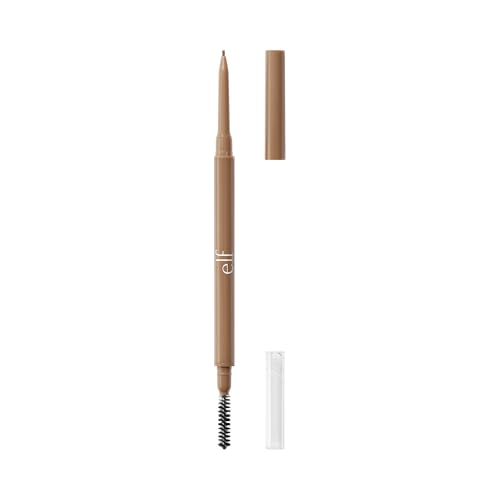
e.l.f.
Micro-Fine Brow Pencil
brow product · 0.03 g · 16 ingredients
£7.75−3%Amazon UK
- Fragrance-free
- No essential oils
- With vitamin E

Essence
All Eyes On Me Waterproof Mascara
mascara · 8 ml · 20 ingredients
- Fragrance-free
- No essential oils
- With glycerin
Amazon UK prices as of 6 November 2026, 06:19 GMT; Amazon sets the final price at checkout.
Frequently asked questions
Which type of mascara is best for everyday wear in 2026?
For most people, a tubing or lengthening mascara offers the best combination of performance and ease of removal for daily use. Tubing mascaras have grown in popularity because they resist smudging throughout the day — comparable to waterproof formulas — but remove cleanly with warm water, avoiding the aggressive rubbing that waterproof removal requires. Volumizing formulas are excellent for impact but can flake more as they age in the tube.
What is the difference between volumizing and thickening mascara?
Volumizing and thickening are often used interchangeably by brands and describe the same functional effect: making each lash appear wider or denser by depositing a heavier wax and polymer coat. Some brands distinguish 'thickening' (lash-by-lash coating) from 'volumizing' (overall fullness including layering of lashes), but there is no standardized industry definition.
Is tubing mascara actually waterproof?
Tubing mascara is highly water-resistant but technically not waterproof. The polymer tubes hold up well to humidity, sweat, and light moisture — often better than many labeled 'waterproof' formulas — but they will slide off with sustained warm water and mild pressure. This is actually the design intent: you get all-day smudge resistance with a gentler removal process.
Can I mix mascara types — e.g., a primer then a volumizing formula?
Yes. A lash primer (typically a white or clear coat with conditioning and gripping agents) applied first can enhance the performance of any formula applied over it. It adds a tacky layer for the pigmented mascara to grip, increases apparent volume, and some primers condition lashes over time. This is a common technique in professional makeup. Apply primer, let it dry to near-tacky, then apply one or two coats of your chosen mascara.
Are fiber mascaras safe for contact lens wearers?
Fiber mascaras are generally not the best choice for contact lens wearers. The short synthetic fibers can shed during application or wear and be trapped between the lens and the cornea, causing irritation. Optometry guidelines recommend contact lens wearers choose mascara types less prone to shedding particles — specifically tubing mascaras or standard lengthening formulas from fragrance-free, ophthalmologist-tested lines.
Sources
- 01Mascara Ingredients, Waterproof Mascara, History of Mascara, and More — WebMD. Core mascara ingredients include carbon black or iron oxide pigment, film-forming polymers, preservatives, and thickening waxes or oils (lanolin, mineral oil, paraffin, petrolatum, castor oil, carnauba wax, candelilla wax); extra removal effort for waterproof mascara can damage lashes.
- 02Design of high-performance curling mascara through thermoresponsive polymer — PubMed / Colloids and Surfaces B: Biointerfaces, 2020-06-01. A thermoresponsive mPEG-PLA polymer at 0.8–1.0% in an oil-in-water mascara emulsion produced a more pronounced and longer-lasting curl versus control formulas when applied with a heated applicator, demonstrating a polymer-based mechanism for curling mascara.
- 03Mascara Induced Milphosis, an Etiological Evaluation — PubMed Central, 2014-01-01. Daily mascara users experienced 30% eyelash loss rate vs 13.6% for occasional users; using water alone to remove waterproof mascara showed the highest eyelash loss rate of all removal methods; mascara typically contains waxes, pigments, resins, and petroleum distillates.
- 04Investigation on the use of expired make-up and microbiological contamination of mascaras — PubMed, 2013-04-01. Staphylococcus aureus found in 79% of mascara samples tested; Pseudomonas aeruginosa in 13%; bacterial and fungal populations of approximately 10,000 CFU/mL in used mascaras; 97.9% of participants reported using makeup past its expiry date.
- 05Contact lens care tips for patients: an optometrist's perspective — PubMed Central, 2018-08-01. Contact lenses should be inserted before applying makeup; commonly transferred materials include mascara; the lens serves as a barrier preventing abrasions from mascara brushes; fiber mascaras and particulate-shedding formulas pose higher risk for contact lens wearers.