Your Scalp Microbiome: What It Is & Why It Matters
The short answer
The scalp microbiome is the community of bacteria and fungi living on your scalp.
What Is the Scalp Microbiome?
Your scalp is not sterile. It is home to a dense and dynamic community of microorganisms — bacteria, fungi, and to a lesser extent viruses and mites — collectively called the scalp microbiome. Like the gut microbiome, it is not a problem to be eliminated but an ecosystem to be maintained in balance.
The scalp presents a uniquely favorable habitat for microorganisms. It is warm, moist (hair traps humidity), and lipid-rich — sebaceous glands attached to every hair follicle produce approximately 115 µg/cm² of sebum, roughly five times the output of facial skin. This lipid-rich environment particularly favors organisms that feed on fats, which is why fungi dominate the scalp mycobiome in ways they do not on other body surfaces.
Who Lives on Your Scalp?
Bacteria
The bacterial microbiome of the scalp is dominated by two genera:
Cutibacterium (formerly Propionibacterium acnes) Cutibacterium thrives in the sebum-rich, anaerobic environment inside hair follicle canals. Research consistently identifies it as a marker of healthy scalp ecology. It produces short-chain fatty acids that lower scalp pH, creating conditions inhospitable to pathogenic overgrowth. Its relative abundance is higher in oily scalps, where sebum provides abundant nutrition.
Staphylococcus Multiple Staphylococcus species colonize the scalp surface. Staphylococcus epidermidis — a benign commensal in most contexts — is found at elevated levels in dandruff-affected scalps compared to healthy ones. The ratio of Cutibacterium to Staphylococcus appears to be a meaningful marker of scalp health: higher Cutibacterium relative to Staphylococcus correlates with a healthy, non-dandruff state.
Other bacteria present in smaller proportions include Micrococcus (enriched on dry scalps), Streptococcus, and various Actinobacteria. The dominant bacterial phylum is Actinobacteria.
Fungi
The scalp mycobiome is dominated overwhelmingly by Malassezia — a genus of lipophilic yeasts that are obligate commensals of human skin. Malassezia restricta and M. globosa are the two species most consistently identified, though population studies reveal substantial genetic diversity including many uncultured, unnamed variants.
Malassezia is universally present on the scalp — even in healthy individuals — and is not inherently pathological. Its transition from commensal to disease-driving organism depends on abundance, strain type, and the host's immune and sebum context.
The dominant fungal phylum is Ascomycota.
How a Balanced Microbiome Supports Scalp Health
In a balanced state, the scalp microbiome:
-
Regulates sebum metabolism. Cutibacterium breaks down triglycerides in sebum into free fatty acids at a rate that keeps the scalp surface slightly acidic (pH 4.5–5.5), inhibiting pathogenic growth.
-
Maintains barrier integrity. Commensal bacteria produce antimicrobial peptides and lipids that reinforce the scalp's skin barrier, reducing transepidermal water loss (TEWL) and preventing pathogen entry.
-
Suppresses opportunistic pathogens. The density and diversity of commensal organisms outcompete potential pathogens for space and nutrients — a mechanism called colonization resistance.
-
Supports hair follicle health. The bacterial microbiome in healthy scalps is enriched in metabolic pathways involved in biotin and B-vitamin synthesis — nutrients essential for hair growth and follicle cycling.
What Happens When the Microbiome Is Disrupted
Dandruff: A Microbiome Imbalance
Dandruff is the most common consequence of scalp microbiome disruption. The pathogenic sequence:
- Excess sebum production (driven by androgens, stress, or genetic tendency) provides an expanded nutrient base for Malassezia.
- Malassezia proliferates and produces lipase enzymes that hydrolyze sebum triglycerides into free fatty acids, particularly oleic acid.
- Oleic acid penetrates the scalp skin barrier and triggers an inflammatory keratinocyte response — including accelerated cell division and abnormal desquamation.
- Corneocytes clump rather than shedding individually, producing the visible flakes of dandruff.
- Barrier dysfunction follows: depleted ceramides, elevated TEWL, and increased scalp permeability — creating a feedback loop that sustains the imbalance.
Studies comparing healthy and dandruff scalps consistently find: higher Malassezia abundance, higher Staphylococcus epidermidis, lower Propionibacterium/Cutibacterium, and enriched fungal adhesion pathways in the dandruff state. This is a microbiome-level pattern, not just the presence of a single species.
Seborrheic Dermatitis
A more severe form of Malassezia-driven inflammation, seborrheic dermatitis involves red, scaly patches on the scalp, hairline, and sometimes face. The same sebum–Malassezia cycle is operative, but with heightened immune activation. Scalp microbiome diversity is further reduced; the imbalance is more entrenched and requires antifungal intervention (ketoconazole, ciclopirox) rather than just maintenance washing. See seborrheic dermatitis scalp guide for treatment details.
Scalp Sensitivity and Barrier Disruption
Scalp sensitivity emerges from population research as the strongest single determinant of overall microbial community structure (beta-diversity). Sensitive scalps show reduced Cutibacterium and increased Staphylococcus relative to non-sensitive scalps. This suggests that scalp barrier impairment — regardless of sebum level — disrupts the microbial niche in a distinct way from oiliness alone.
What Influences Your Scalp Microbiome
| Factor | Effect |
|---|---|
| High sebum (oily scalp) | Favors Cutibacterium colonization; increases Malassezia fuel |
| Scalp sensitivity / barrier dysfunction | Strongest driver of microbial diversity loss |
| Psychological stress | Increases Malassezia abundance (fungal, not bacterial pathway) |
| Insufficient sleep | Increases Malassezia |
| High-sugar or high-fat diet | Increases Malassezia |
| Wash frequency | Higher frequency reduces dandruff flaking and scalp odor; very low frequency lets sebum accumulate as Malassezia substrate |
| Antifungal shampoo | Reduces Malassezia, permits rebalancing toward commensal diversity |
| Antibiotics | Disrupts bacterial balance; may worsen fungal dominance |
Importantly, lifestyle factors (stress, diet, sleep) influence the fungal microbiome component more than the bacterial one — a specific and clinically relevant finding from recent scalp microbiome research.
The Scalp Microbiome vs. the Skin Microbiome
The scalp is technically skin, but its microbiome is distinct from body skin in several important ways:
| Feature | Scalp | Body Skin |
|---|---|---|
| Sebum output | ~115 µg/cm² | Much lower (varies by site) |
| Dominant fungi | Malassezia (overwhelming majority) | Malassezia + other fungi |
| Dominant bacteria | Cutibacterium, Staphylococcus | Varies by body site |
| Follicle density | Extremely high (~100,000 follicles total) | Lower |
| Hair structure influence | Hair traps moisture, provides microbial niche | Absent |
| Barrier ceramide composition | Lower than body skin when disrupted | Higher |
This is why general skin-microbiome products (probiotics, prebiotic moisturizers) designed for face or body may not translate directly to scalp use. The scalp's sebum density, follicle ecology, and Malassezia dominance make it a distinct environment.
Scalp Microbiome Research and Future Treatments
Scalp microbiome science is evolving rapidly. Current areas of active investigation include:
- Prebiotic scalp formulations — ingredients that selectively feed commensal organisms (particularly Cutibacterium) to crowd out Malassezia.
- Postbiotic treatments — applying by-products of commensal metabolism (e.g., short-chain fatty acids) to replicate the protective effects without live organisms.
- Probiotic scalp applications — live microbial additions to shift the scalp ecology; clinical trials are underway (e.g., NCT06166979 evaluating Micrococcus luteus Q24 serum).
- Personalized microbiome profiling — sequencing an individual's scalp microbiome to guide product selection and treatment.
These approaches build on the principle that the goal is microbiome rebalancing, not microbial elimination. Broad-spectrum antifungals and harsh surfactants reduce disease-driving organisms but also reduce overall diversity — temporary solutions that work best when combined with conditions that favor commensal recovery.
Practical Takeaways for Scalp Microbiome Health
- Wash regularly but not abusively. Increasing wash frequency reduces sebum load and dandruff flaking without damaging microbial balance in most scalp types.
- Use targeted antifungals when Malassezia overgrowth is the issue (dandruff, seborrheic dermatitis) rather than broad-spectrum antibacterials that disrupt the whole ecosystem.
- Address lifestyle factors. Stress management and adequate sleep have a direct and measurable effect on scalp Malassezia abundance.
- Support the scalp barrier. Products containing ceramides, fatty acids, or niacinamide that reinforce the stratum corneum reduce the barrier vulnerability that sustains microbial imbalance.
- Do not strip the scalp repeatedly. Over-clarifying or over-exfoliating removes protective sebum and ceramides that commensals depend on.
For the product side of scalp buildup management, see the scalp buildup guide and scalp exfoliation guide.
Products that fit: itchy, sensitive scalp
Picked by code from each product's full ingredient list.
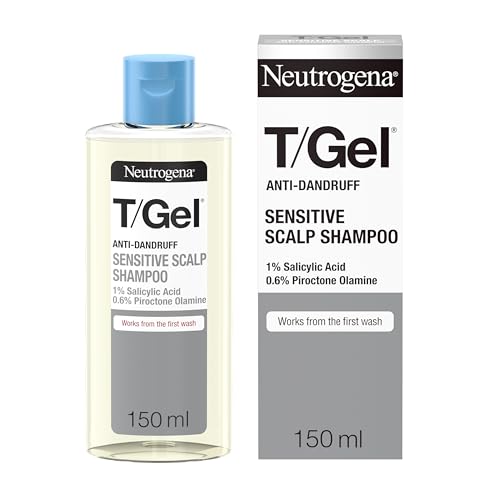
Neutrogena
T/Gel Anti Dandruff Shampoo
shampoo · 150 ml · 15 ingredients
£5.62−13%Amazon UK
- Fragrance-free
- No essential oils
- No MI/MCI
- With piroctone olamine
- With salicylic acid
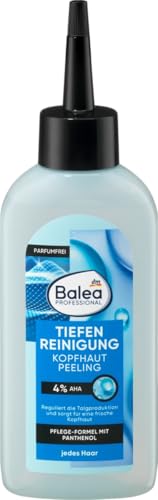
Balea
Professional Scalp Scrub Deep Cleansing
scalp treatment · 150 ml · 10 ingredients
- Fragrance-free
- No essential oils
- No MI/MCI
- With panthenol

OGX
ProGrowth + Peptide Scalp Serum
scalp treatment · 10 ml · 16 ingredients
- Fragrance-free
- No essential oils
- No MI/MCI
- With panthenol

Vanicream
Free & Clear Shampoo
shampoo · 355 ml · 16 ingredients
- Fragrance-free
- No essential oils
- No MI/MCI
- With panthenol
Amazon UK prices as of 6 November 2026, 06:19 GMT; Amazon sets the final price at checkout.
Frequently asked questions
What does the latest research say about the scalp microbiome in 2026?
The most significant recent advance is the characterization of lifestyle factors — particularly stress, sleep deprivation, and high-fat/high-sugar diet — as selectively increasing scalp Malassezia abundance through fungal rather than bacterial pathways (PMC12843290, 2025). This provides a mechanistic explanation for why stress and poor sleep worsen dandruff and scalp oiliness. Research is also clarifying that scalp sensitivity (barrier dysfunction) is the strongest overall determinant of microbial diversity, stronger than sebum level alone. Active clinical trials are exploring probiotic topical applications as a scalp treatment modality.
Is Malassezia always harmful?
No. Malassezia is a universal commensal — it is present on virtually every person's scalp and is not inherently pathogenic. It becomes problematic when its population expands beyond normal levels (driven by excess sebum or immune changes) and its lipase activity produces inflammatory fatty acids in quantities that overwhelm the scalp's tolerance. A healthy, diverse microbiome with adequate Cutibacterium keeps Malassezia in check through competitive inhibition and pH maintenance.
Can diet really change my scalp microbiome?
Evidence suggests yes, specifically for the fungal component. Studies on scalp microbiome composition find that high-sugar and high-fat diets correlate with increased Malassezia abundance — likely because dietary substrates affect sebum composition and quantity, which is Malassezia's primary food source. Stress and sleep deprivation show similar associations. These are observational findings, not controlled trials, but they align with the mechanism: Malassezia thrives on lipids, and systemic metabolic state affects scalp lipid availability.
Do probiotic shampoos actually help the scalp microbiome?
Probiotic scalp products are promising but still early in clinical evidence. A live probiotic applied to skin faces survival challenges (pH, surfactants, storage stability). Postbiotics (fermentation by-products like lactic acid, short-chain fatty acids) and prebiotics (nutrients targeting specific commensals) may be more practically deliverable than live organisms. Clinical trials are underway. Current evidence supports antifungal actives (ketoconazole, zinc pyrithione) as the most evidence-backed way to modulate the scalp microbiome in a disease state.
How does the scalp microbiome affect hair growth?
The connection is indirect but real. Healthy scalp bacteria (particularly Cutibacterium-dominated communities) maintain enriched pathways for biotin and B-vitamin synthesis — nutrients directly involved in follicle cycling and hair shaft formation. Dandruff-state microbiomes lose this enrichment. Chronic Malassezia-driven inflammation, as in untreated seborrheic dermatitis, is associated with diffuse hair thinning. Restoring microbiome balance does not regrow hair, but it removes one obstacle to healthy follicle function.
Sources
- 01Comparison of Healthy and Dandruff Scalp Microbiome Reveals the Role of Commensals in Scalp Health — PubMed Central / PMC6180232, 2018-10-08. Propionibacterium acnes is associated with healthy scalps; Staphylococcus epidermidis is elevated in dandruff; bacterial commensal communities in healthy scalps are enriched in biotin and B-vitamin synthesis pathways; uncharacterized Malassezia species are elevated in dandruff mycobiome.
- 02Scalp Microbiome Composition in Young Women: Associations with Scalp Type, Sensitivity, and Lifestyle Factors — PubMed Central / PMC12843290, 2025-01-01. Scalp sensitivity is the strongest determinant of microbial beta-diversity; psychological stress, insufficient sleep, and high-fat/high-sugar diets increase Malassezia abundance via fungal rather than bacterial pathways; dominant bacteria are Cutibacterium and Staphylococcus; dominant fungi are Malassezia.
- 03An In Vivo Approach for Revealing Physiological Properties of Human Scalp Microbiome — PubMed Central / PMC11626314, 2024-12-01. High scalp sebum output (640 arbitrary units in biofilm-positive individuals vs. 361 in controls) strongly correlates with microbial biofilm development; scalp microenvironment is distinct from other skin sites due to sebum content, moisture, and topography.
- 04Stratum Corneum Dysfunction in Dandruff — PubMed Central / PMC3494381, 2012-11-01. Dandruff scalp ceramide levels are 50% of healthy scalp; elevated TEWL and disorganized intercellular lipids confirm barrier dysfunction as a primary (not secondary) pathogenic mechanism in dandruff, creating the permeable environment for Malassezia metabolite penetration.
- 05Physiology, Sebaceous Glands — StatPearls — NCBI Bookshelf / StatPearls. Sebaceous glands produce 90% of skin surface lipids; scalp sebum output far exceeds facial skin output; androgens via 5-alpha-reductase regulate sebum production, driving the lipid-rich habitat for scalp microbiome.